Crypto Decentralized Storage Explained for Beginners

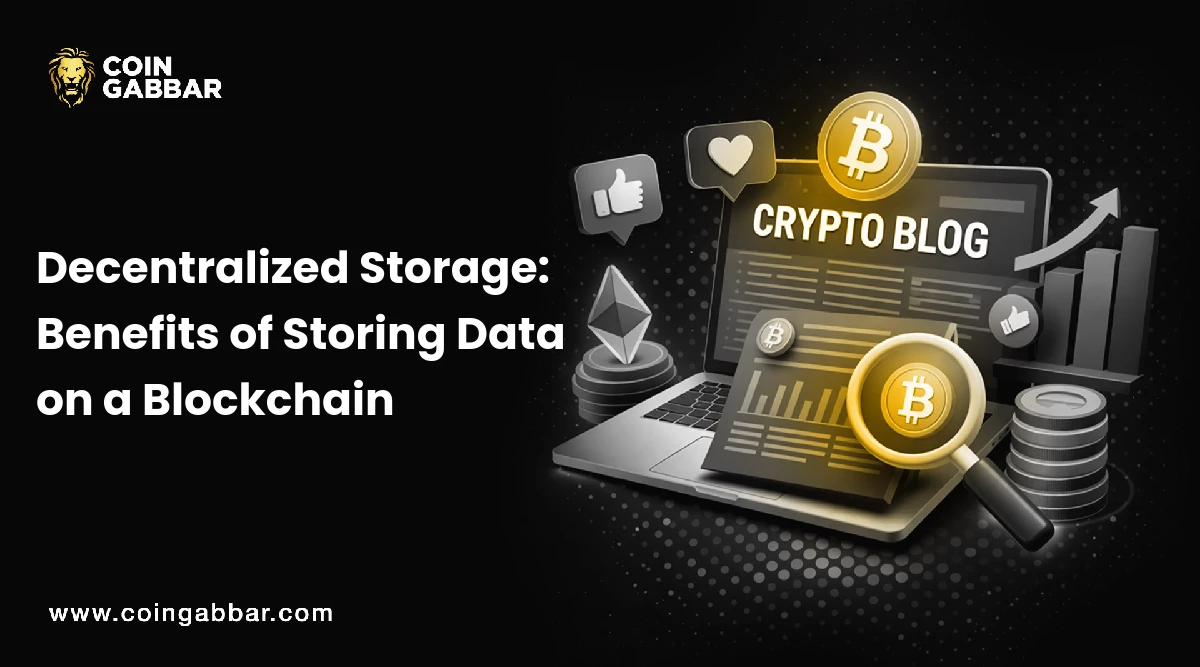
The Future of Decentralized Storage Blockchain : Secure & Efficient
Your photos, files, and records need a home.
Most people still use one company to store them. That feels easy. It also creates one weak spot. If that company fails, gets hacked, or blocks access, your data can become harder to reach.
That is where decentralized storage comes in.
It spreads files across many computers instead of one main server. This model can improve resilience, privacy, and control when it is built well.
What is decentralized storage?
Decentralized storage is a way to keep files across many devices.
Those devices may sit in different cities or even different countries. No single server holds everything. No single company owns every piece of the system.
That is the basic idea.
A simpler way to say it is this. Your file gets split, copied, encrypted, or distributed across a wider network. The exact design depends on the crypto platform.
What is blockchain storage?
Many people search for crypto blockchain storage or blockchain data storage.
Those terms are related, though they do not always mean the same thing. In most real systems, the blockchain itself does not hold large files like full videos or giant photo folders. That would be slow and expensive.
Instead, the chain often stores proof, payment records, file references, or access rules.
The file data usually sits in a separate decentralized layer. The blockchain acts like the control layer. The storage network acts like the file layer.
That distinction matters.
If you are asking about data storage in blockchain, the honest answer is that blockchains usually store small, important pieces of information, not all raw content.
Why centralized storage has limits
IBM’s Cost of a Data Breach Report found that the average data breach cost reached $4.45 million globally, showing the risk of centralized data storage systems.
Decentralized storage works well for convenience.
It also has clear weak points. A company can suffer a breach. A provider can change prices. A policy change can block your account. A server outage can cut access for thousands or millions of users at once.
That is the main trade-off.
One company can make things smooth. One company can also become the single point of failure.
To better understand how centralized and decentralized models differ across crypto systems, you can explore how listings work in both environments.
The main advantage of decentralized storage
The primary advantage of decentralized storage over centralized storage is simple.
It removes the single point of failure.
If one machine goes offline, the network can still serve your file from other machines. That does not mean every platform is perfect. It does mean the risk is spread out instead of stacked in one place.
That is the core benefit.
When readers ask, what is the primary advantage of decentralized storage over centralized storage, this is the cleanest answer: resilience through distribution.
How the of decentralized storage model works
A decentralized storage system usually follows a few steps.
First, you upload a file. Then the network may break that file into pieces, encrypt it, and distribute those pieces across multiple nodes. A node is just a computer in the network.
Later, when you ask for the file, the system pulls the pieces back together.
Many platforms also add proof systems. These checks help show that storage providers still hold the data they promised to keep. Some use tokens to reward providers for keeping data available.
Why blockchain helps
A blockchain can add trust and coordination.
It can record who pays, who stores, and who proves availability. It can also track agreements without needing one company to run the whole system. That is why many people use the phrase blockchain for data storage, even though the chain usually works as the ledger layer.
Think of it like this.
The blockchain keeps the rules, proofs, and payments visible. The wider network handles the heavy file storage.
If you want to go deeper into the core technology behind these systems, you can learn how blockchain works as a decentralized ledger.
You can also explore how blockchain improves financial record-keeping through concepts like triple-entry accounting.
Five big examples to know
You do not need to guess what this looks like in real life.
Several large projects already show different versions of decentralized storage. Each one handles the problem in its own way.
Here are five of the biggest names:
-
Filecoin focuses on open storage markets and proof-based storage deals.
-
IPFS helps users address files by content, not by one server location.
-
Arweave focuses on long-term or permanent-style data archiving.
-
Storj uses distributed cloud storage with encryption and node sharing.
-
Sia uses smart contracts to connect users with storage providers.
These examples matter because they show there is no one single design.
Some focus on cloud-style file access. Some focus on archival records. Some focus more on market pricing and proof systems.
Filecoin in plain language
Filecoin is one of the best-known examples in this space.
It lets storage providers offer disk space to users through a market model. Providers earn rewards for storing data and proving that they still hold it.
That proof is important.
Without proof, anyone could claim they stored your file. Filecoin tries to solve that trust problem with onchain verification.
IPFS in plain language
IPFS stands for InterPlanetary File System.
It helps you find a file by what it is, not just by where it sits. That means if many nodes have the same content, the network can pull it from more than one place.
This is a big idea.
It changes the way files are addressed. Instead of pointing to one location, IPFS points to the content fingerprint itself.
Arweave in plain language
Arweave is known for long-term data storage.
It is often used for files or records that users want to preserve for a very long time. Some projects use it for NFT media, archives, documents, or public records.
That makes it different.
It is less about standard cloud replacement and more about durable publishing and preservation.
If you want to understand how digital assets use these storage systems, you can explore how NFTs work and why they depend on decentralized file networks.
Storj in plain language
Storj feels closer to cloud storage for many readers.
It distributes encrypted file pieces across many nodes and then rebuilds them when needed. This gives users a familiar storage feel, while still spreading risk across a larger network.
That mix is useful.
It can help people understand decentralized storage without learning every technical detail first.
Sia in plain language
Sia uses a contract-style model between users and hosts.
Hosts rent out spare storage space. Users pay to store files. The platform uses agreements and proof checks to reduce trust problems.
It is another good example of data storage blockchain design in practice.
The chain handles the logic and payment rules. The storage layer handles the file pieces.
What are the key benefits?
The strongest benefits of decentralized storage are easy to understand.
They are not magic. They are trade-offs that can make sense in the right use case.
Here are the main ones:
-
less reliance on one company
-
lower single-point failure risk
-
stronger censorship resistance
-
better user control in some setups
-
more open storage markets
-
stronger audit trails in some designs
These advantages explain why interest in blockchain database storage keeps growing, especially for records, archives, and digital ownership use cases.
Better resilience
Resilience is a major strength of decentralized storage.
If one provider disappears in a centralized model, access can break fast. In a decentralized model, the data may still remain reachable through other nodes.
That does not mean infinite safety.
It does mean failure does not have to come from one server room going dark.
Better censorship resistance
A wider network in decentralized storage can make censorship harder.
If many independent nodes hold file pieces or published content, one single actor may find it harder to remove everything at once. This matters for public records, open publishing, and cross-border access.
This is one reason these systems attract attention.
They can reduce dependence on one gatekeeper.
Better user control
One key benefit of decentralized storage is greater user control. Some systems give users more direct control over keys, access, or file permissions.
That can be a major benefit for people who do not want one company deciding every rule. It can also fit teams that want stronger audit trails and less platform lock-in.
Still, more control also means more responsibility.
If you lose your keys or recovery details, you may not get easy customer support in the same way you would from a big cloud company.
Better data integrity
Integrity means the data stays correct and unchanged.
Many decentralized storage systems use hashing. A hash is a unique digital fingerprint of a file. If the file changes, the fingerprint changes too.
That helps with trust.
You can often verify whether a file is the same one that was first uploaded.
What are the downsides?
No storage model is perfect.
Decentralized storage systems also come with real limits. Some are slower for large retrieval tasks. Some are harder for beginners to use. Some depend on token economics that average users may not enjoy dealing with.
The main drawbacks include:
-
more setup complexity
-
weaker user experience on some platforms
-
slower access in some cases
-
payment or token friction
-
key management risk
-
uneven performance across providers
That is why this topic needs balance.
A decentralized storage model can be powerful. It is not automatically the best fit for every user or every file.
Is it always cheaper?
Not always.
Some services can be cost-effective. Others may become more expensive depending on redundancy, retrieval speed, and storage duration. Long-term archival systems may price differently than active cloud-style access systems.
So avoid blanket claims.
“Cheaper” depends on what you store, how often you retrieve it, and what service level you need.
Is it always faster?
Usually not.
A traditional cloud giant can often serve files faster because it controls its own infrastructure tightly. A distributed network may trade some speed for resilience, transparency, or openness.
That is a fair trade in some cases.
It may not be the right trade for every workload.
Who should care most?
This topic matters to more than crypto users.
These groups often care most about decentralized storage:
-
developers building Web3 apps
-
teams storing NFT media
-
projects publishing public records
-
users who want more control over files
-
organizations that want stronger redundancy
-
communities that care about censorship resistance
If you only want family photos stored with one-click sharing, a standard cloud tool may still feel easier.
If you want stronger independence, public verifiability, or long-term digital permanence, decentralized options become more interesting.
Good use cases
Some use cases fit especially well.
Here are strong examples:
-
NFT images and metadata
-
public archives
-
legal or historical records
-
research data sets
-
app back-end file layers
-
backup copies of critical files
These are areas where blockchain storage and decentralized file networks often make more sense than simple consumer cloud storage.
When should you stay cautious?
Stay cautious when the data is sensitive.
If you store medical records, financial documents, or private company files, you need to understand encryption, access control, and legal requirements very well. A “decentralized” label does not remove privacy risk by itself.
Cybersecurity Ventures estimates cybercrime damages could reach $10.5 trillion annually by 2025, reinforcing the need for more secure data storage approaches.
That is an important YMYL point.
The storage method matters. The encryption method matters too. So do the laws that apply to the data.
How should beginners evaluate a platform?
Use a simple checklist.
Before you trust a service, ask:
-
What exactly goes onchain?
-
What stays offchain?
-
How are files encrypted?
-
Who controls the access keys?
-
What happens if nodes go offline?
-
How do you recover access?
-
Is pricing clear?
-
Is the project still active?
This process will help you judge blockchain data storage platforms more carefully.
Final thoughts
Decentralized storage is not a buzzword anymore.
It is a real design choice with real trade-offs. The biggest strength is simple: it reduces dependence on one central provider. That is also the easiest answer to the question about the primary advantage of decentralized storage over centralized storage.
Still, you should stay realistic.
This model can improve resilience, integrity, and user control. It can also add complexity, key risk, and slower performance in some cases. The best choice depends on what you store, how often you need it, and how much control you want.
To stay updated on how decentralized storage and blockchain technologies continue to evolve, you can follow the latest crypto news and industry insights.
Disclaimer
This article is for educational and informational purposes only. It is not legal, financial, cybersecurity, or investment advice. Storage design, encryption methods, and data rules can vary widely by platform and by country. If you plan to store sensitive records, business files, medical data, or financial documents, speak with a qualified security or legal professional before choosing any storage system.