The Rise of Tokenization and Its $30 Trillion Opportunity

The Tokenization Revolution: How 2025 Will Shape Financial Future
Imagine a world where owning a piece of a Picasso painting or a share in a luxury apartment far away is as easy as owning a stock.
Where old, slow financial systems are replaced by quick, cheap transactions.
Tokenization makes this possible—a world full of exciting opportunities.
2025 is looking like a big year for tokenized assets. Banks and financial institutions are speeding up their tokenization efforts, thanks to clearer rules and more interest from big investors.
But is this the big change we’ve been waiting for? Or just another overhyped trend?
The Current State
Tokenization means turning real-world things into digital versions on a blockchain.
Think of it like slicing your favorite pie into pieces you can trade—except, instead of pie, we’re talking about things like bonds, property, or even Picasso paintings.
Despite its potential, tokenization is still in its infancy.
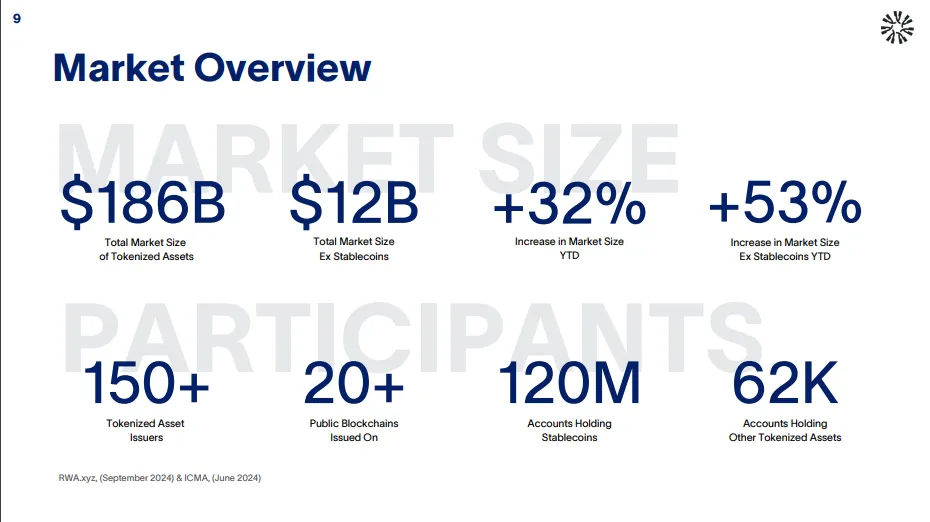
According to the Tokenized Asset Coalition’s (TAC) State of Asset Tokenization 2024 report, only 0.003% of global assets have been tokenized, representing just $12 billion excluding stablecoins.
For context, the global equity market alone stands at $109 trillion, while real estate investments add up to $11 trillion.
This stark contrast underscores how far tokenization must go to become mainstream.
But here’s the good news: the market is growing.
In 2024, tokenized assets grew 53% year-to-date, driven by increasing adoption, regulatory clarity, and the participation of financial heavyweights.
What’s Driving the Momentum?
Regulation has long been the elephant in the room for blockchain. For years, unclear policies stifled tokenization’s growth, forcing projects to navigate a fragmented legal environment.
But 2025 is shaping up to be a turning point.
1. The U.S.: A New Era Under Trump
With Donald Trump’s re-election, the crypto market is brimming with optimism.
Bitcoin has surged past $100K, institutional adoption is rising, and the incoming administration’s stance on financial innovation could reshape tokenization’s future.
Key regulatory shifts include:
A - SEC Leadership Overhaul
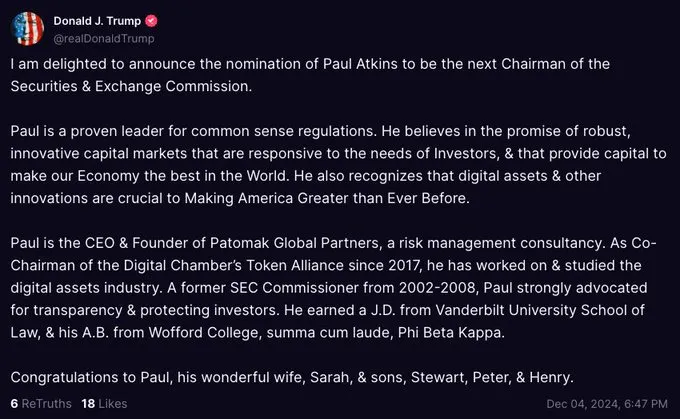
Paul S. Atkins has taken over as the new SEC chairman, signaling a pro-crypto stance.
Under his leadership, the focus is likely to shift from enforcement-driven regulation to a more innovation-friendly approach.
B - New Crypto Task Force
The SEC has launched a dedicated digital asset task force, led by Commissioner Hester Peirce, to establish clear regulatory guidelines for tokenized assets, DeFi, and blockchain-based financial products.
C - Strategic Bitcoin Reserve (SBR)
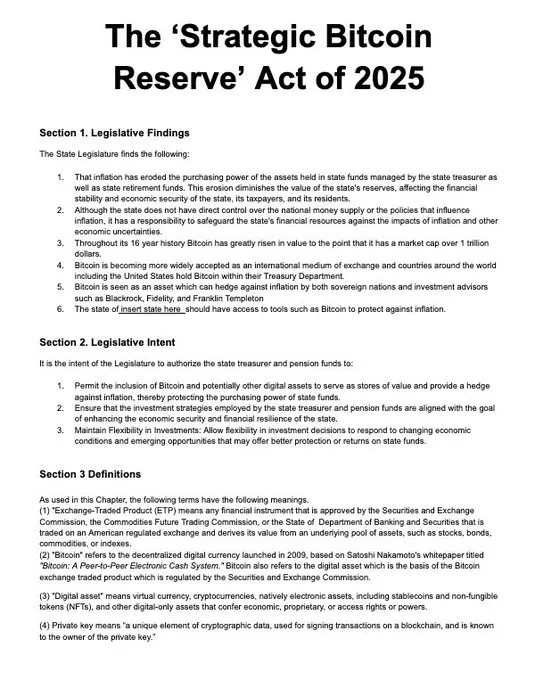
The U.S. government is now actively considering accumulating Bitcoin as part of its national reserves—a move that could reinforce America’s leadership in digital finance.
In addition, a new executive order—"Strengthening American Leadership in Digital Financial Technology"—aims to position the U.S. as the global hub for blockchain and tokenization.
The order focuses on regulatory clarity, stablecoin integration, and public blockchain access, setting the stage for institutional participation at an unprecedented scale.
2. Institutional Adoption
When industry giants like BlackRock and Visa step in, you know the tide is shifting.
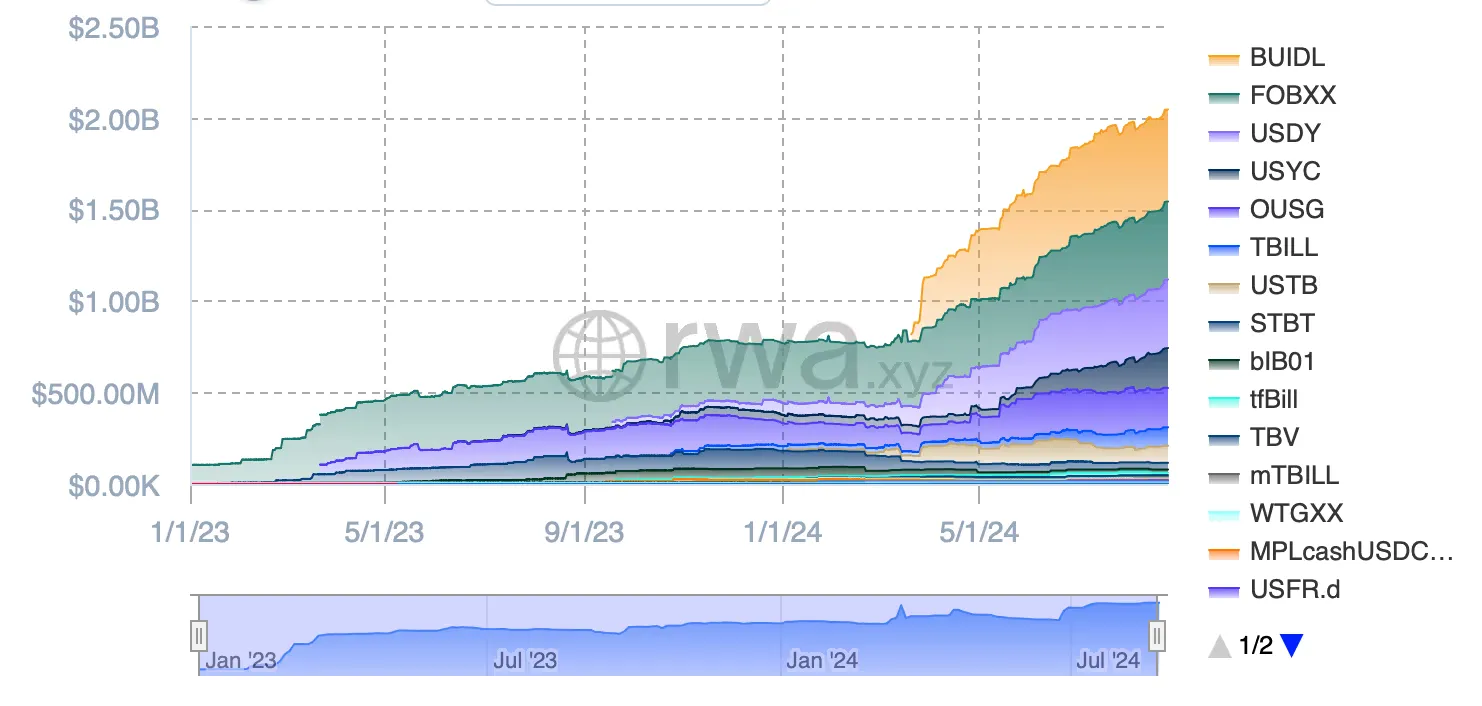
BlackRock’s tokenized Treasury fund, BUIDL, crossed $500 million in market cap within five months, delivering $7 million in dividends.
Visa launched platforms enabling banks to issue fiat-based tokens, while Mastercard partnered with JPMorgan’s Kinexys platform to process $2 billion daily in blockchain-based transactions.
Even beyond traditional finance, companies like Franklin Templeton and Ondo Finance are driving innovation.
Ondo’s tokenized treasury products now boast over $560 million in total value locked (TVL).
3. Market Potential
According to TAC, the addressable market for tokenized assets is enormous.
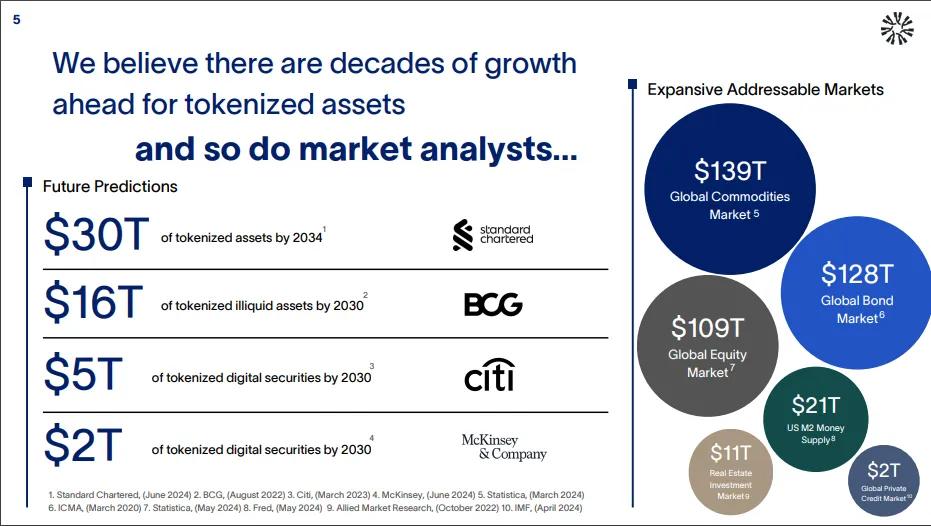
By 2030, predictions include:
$16 trillion in tokenized illiquid assets.
$5 trillion in tokenized digital securities.
$30 trillion in total tokenized assets by 2034.
These numbers aren’t just optimistic projections.
They’re backed by the real-world utility of tokenization—unlocking liquidity, reducing inefficiencies, and democratizing access to investments.
Key Use Cases — Where Tokenization Shines
Treasuries: The Star Performer
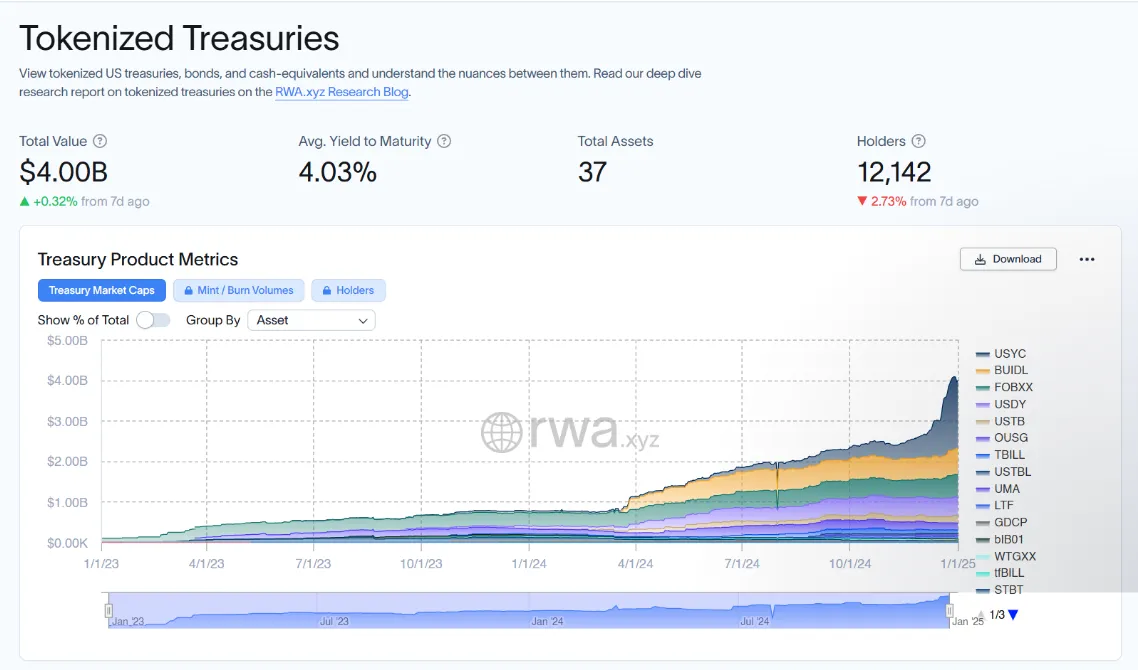
Tokenized treasuries have emerged as a flagship use case.
These products offer features traditional markets can’t match, such as 24/7 liquidity, programmable automation, and peer-to-peer transfers.
For instance, Ondo Finance’s USDY integrates seamlessly with DeFi, bridging traditional finance and blockchain.
Private Credit: A $2 Trillion Market
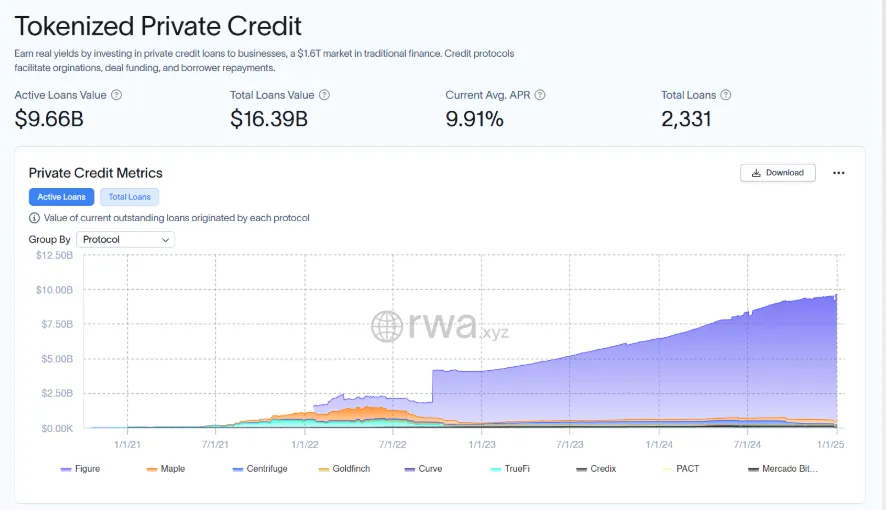
Private credit tokenization is gaining momentum, with platforms like Centrifuge leading the charge.
In 2024, Centrifuge tokenized over $8 billion in loans, offering investors exposure to high-yield assets traditionally reserved for institutions.
Commodities: Gold Goes Digital
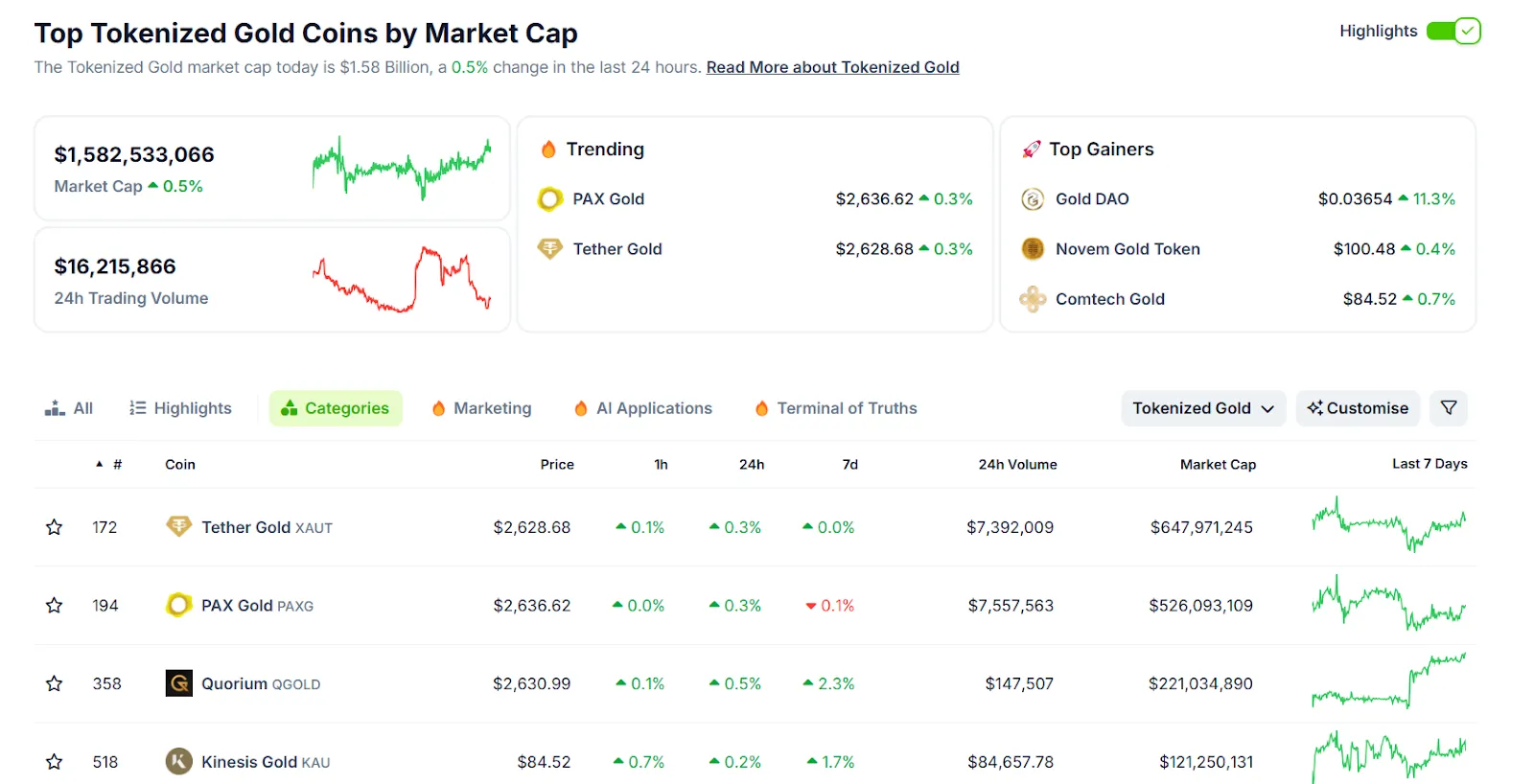
Tokenized gold-backed products like Paxos Gold and Tether Gold have a combined market cap nearing $1 billion.
These assets provide a new way to trade commodities, blending stability with digital convenience.
Real Estate: Unlocking Liquidity
While real estate tokenization faces hurdles, it remains a promising sector.
Projects like tokenized REITs (Real Estate Investment Trusts) aim to make property investments more accessible and liquid.
Challenges: The Roadblocks Ahead
Tokenization isn’t without its challenges. Here’s what we’re up against:
1. Liquidity Illusions
While tokenization promises liquidity, poorly designed projects can lead to illiquid markets.
As TAC notes, many early tokenization projects struggled with low-quality assets and high fees, discouraging investors.
2. Regulatory Uncertainty
Despite progress, the regulatory landscape remains fragmented.
Countries are at different stages of adopting tokenization frameworks, creating compliance challenges for global projects.
3. Investor Education
Tokenization introduces new complexities. Educating investors—especially retail participants—is critical to ensure widespread adoption.
Insights from the TAC Report
The State of Asset Tokenization 2024 report by TAC offers invaluable insights:
1 - Market Growth
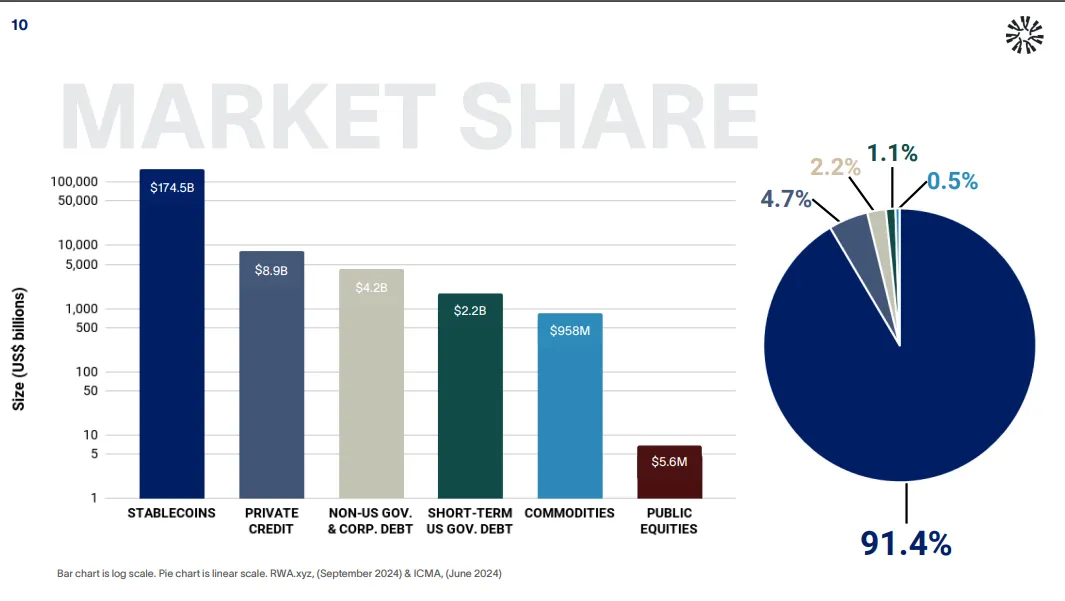
The total tokenized asset market, including stablecoins, reached $186 billion, showing a 53% year-over-year increase.
This is a significant leap considering the nascent stage of the industry.
2 - Diverse Applications
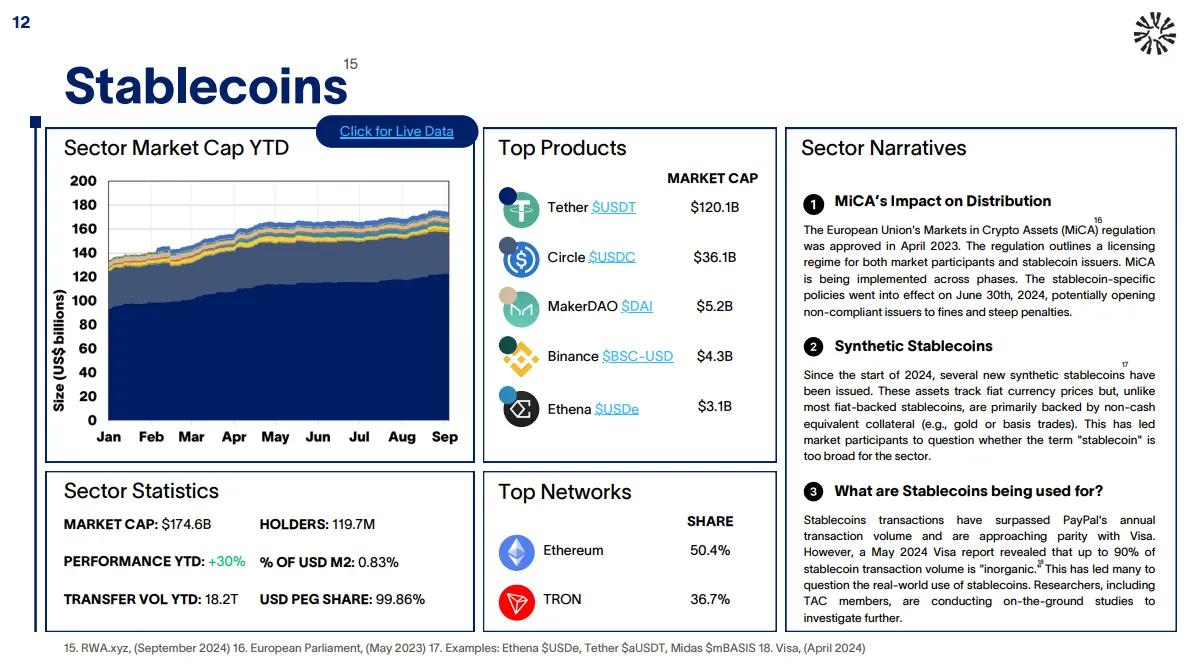
Tokenized assets span various categories, with stablecoins dominating at $120 billion, followed by tokenized treasuries and private credit.
3 - Participation Metrics
Over 150 issuers are now actively involved in tokenized asset projects, leveraging 20+ public blockchains to facilitate transactions.
4 - Regional Leaders
Asia and Europe are leading the tokenization charge, with regulatory sandboxes enabling pilots in markets like Singapore and Switzerland.
5 - Institutional Trust
Surveys conducted for the report reveal that 70% of financial institutions view tokenization as a viable solution for unlocking illiquid assets.
6 - Tokenized Treasury Growth
This category alone surpassed $2 billion in market cap, with innovative products offering unprecedented liquidity and efficiency.
What the Future Holds
As we look ahead, the trajectory of tokenization seems clear:
DeFi Integration: The fusion of tokenized assets with decentralized finance will unlock new opportunities for lending, staking, and trading.
Institutional Scaling: Expect more Fortune 500 companies to explore tokenization. A recent survey found that 35% of executives are planning tokenization projects, and 86% recognize its potential.
Emerging Markets: Tokenization can democratize access to global markets, particularly in emerging economies where traditional infrastructure is lacking.
What We Are Doing at Kalp Studio
At Kalp Studio, we’re focused on making Real-World Assets (RWA) easier to manage by turning them into digital tokens. This helps make assets more accessible and easier to trade, unlocking new opportunities for liquidity.
We combine blockchain technology with real-world needs to provide businesses with strong tools and solutions, no matter where they are in the world.
Innovative Solutions for RWA Tokenization
Liquidity Enhancement
We help businesses turn their physical assets into digital tokens, allowing them to tap into new markets and trade assets that were once hard to sell.
Automated Compliance
Our smart contract solutions make sure that businesses follow the rules and regulations, so they don’t have to worry about legal issues.
Fractional Ownership
High-value assets like real estate can now be shared among many smaller investors, making it easier for everyone to get involved.
Secure and Transparent Transactions
Blockchain makes every transaction safe and easy to trace. This builds trust and makes sure everyone’s information stays protected.
Rapid Deployment
With our easy-to-use tools, businesses can set up blockchain networks quickly and start using them faster, cutting down on time and costs.
Enabling Global Accessibility
We want to make RWA tokenization available to everyone, everywhere. Using blockchain’s decentralized nature, we are breaking down barriers and offering investment opportunities to a wider range of people.
Enterprise-Grade Features
At Kalp Studio, we offer:
Single Sign-On (SSO) for secure access to important data.
Smart Contract Templates that can be easily customized and used.
Interoperability through APIs and IPFS, ensuring everything works smoothly with existing systems.
So far, we’ve helped over 349 businesses worldwide, from real estate to finance, use tokenization in their systems.
Beyond the Hype
Tokenization isn’t just a buzzword—it’s a big change in how we handle finance. But like any new technology, it comes with challenges. The key isn’t whether tokenization will change finance; it’s how we will all work together to make it happen.