Is Base Network Safe? 33-Min Halt Raises Questions, Team Responds


Base Network Block Halt Issues, Reasons, Action, Preventions Explained
On 5 August 2025, there was a 33-minute block production stop on the Coinbase Base Network. This interference touched upon the key activities of deposits, withdrawals, and block production. The team solved the issue within a short amount of time and subsequently published a comprehensive incident report.
This is the full account of what went wrong, the cause of the glitch, the way it was solved, and how it plans to prevent such occurrences in the future.
What Happened to Base Network Yesterday?
At 6:07 AM UTC on August 5, the mainnet abruptly halted block generation because of a problem in its sequencer system. The sequencer is one of the most important elements that assist in maintaining the blockchain's functionality by creating new blocks.
This event resulted in a temporary halt of activity and a lot of users' questions. In a few minutes, the staff were notified and started solving the problem.
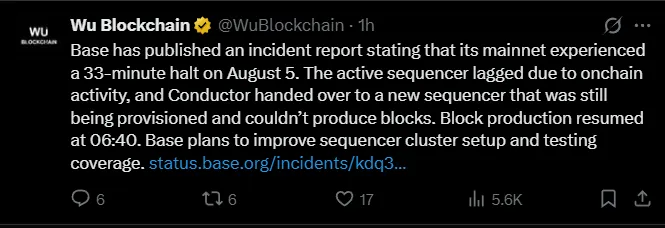
Source: X
What Are the Confirmed Reasons Behind the Issues?
The team’s postmortem revealed a clear chain of events that led to the disruption:
Network runs on a Highly Available (HA) cluster of sequencers managed by a system called Conductor.
At 6:07 AM UTC, the active sequencer lagged behind due to heavy on-chain activity.
The conductor triggered an automatic handoff to another sequencer.
Unfortunately, the new sequencer was not fully ready, so it couldn’t create blocks.
Worse, the new sequencer couldn’t trigger another handoff because it didn’t have full Conductor access.
This led to a complete pause in block production until the team manually took over. So, the team confirmed that issues came from a misconfigured automatic handoff process.

Source: Official Base Network Status Page
What Steps Were Taken to resolve the Issue?
Once the issue was identified, the team paused the Conductor system to prevent more faulty handoffs. Then, they manually transferred leadership to a healthy sequencer. Proper care is taken to avoid chain reorganisation, which could have led to further issues. Around 6:40 AM UTC, the Mainnet was up and running again. The incident was declared resolved, and operations resumed normally.
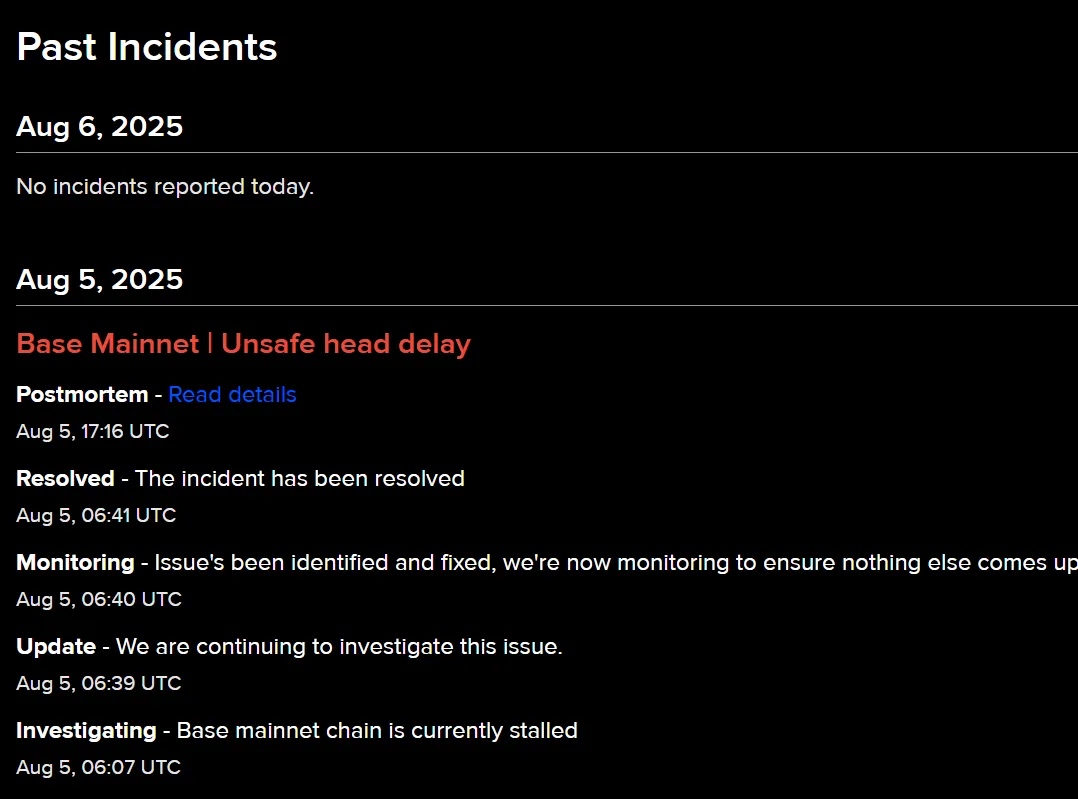
Source: Official Base Network Status Page
What Are the Loopholes The Team Is Working On?
The team has identified key improvement areas to stop the same issue from happening again:
Upgrade Infrastructure: Ensure any newly added sequencer is always ready to lead.
Improve Testing: Deploy updates with more real-world testing to ensure automated systems don’t fail.
Views on Management Capabilities
This incident has sparked discussions around "Is Base Network safe?" Based on their fast response and detailed transparency, many feel it showed strong operational maturity. Their quick fix and immediate postmortem show they are open, prepared, and serious about reliability.
Despite the incident, the way the managemnet handles the disruption today reflects an efficient and clear management system. Instead of hiding the issue, they shared detailed insights and outlined the fix and future improvements.
Conclusion
The issue was resolved within 33 minutes, thanks to a fast and skilled response. The Base network news today reminds users and developers to stay updated and rely on teams that are quick to respond and open about internal issues. With the upcoming changes, the new block production is expected to be more stable than ever.
As of now, the Base Mainnet latest news suggests it is fully operational, and the team continues to monitor for any further problems.