Can Tokenized Carbon Credits Fix ESG’s Transparency Crisis?

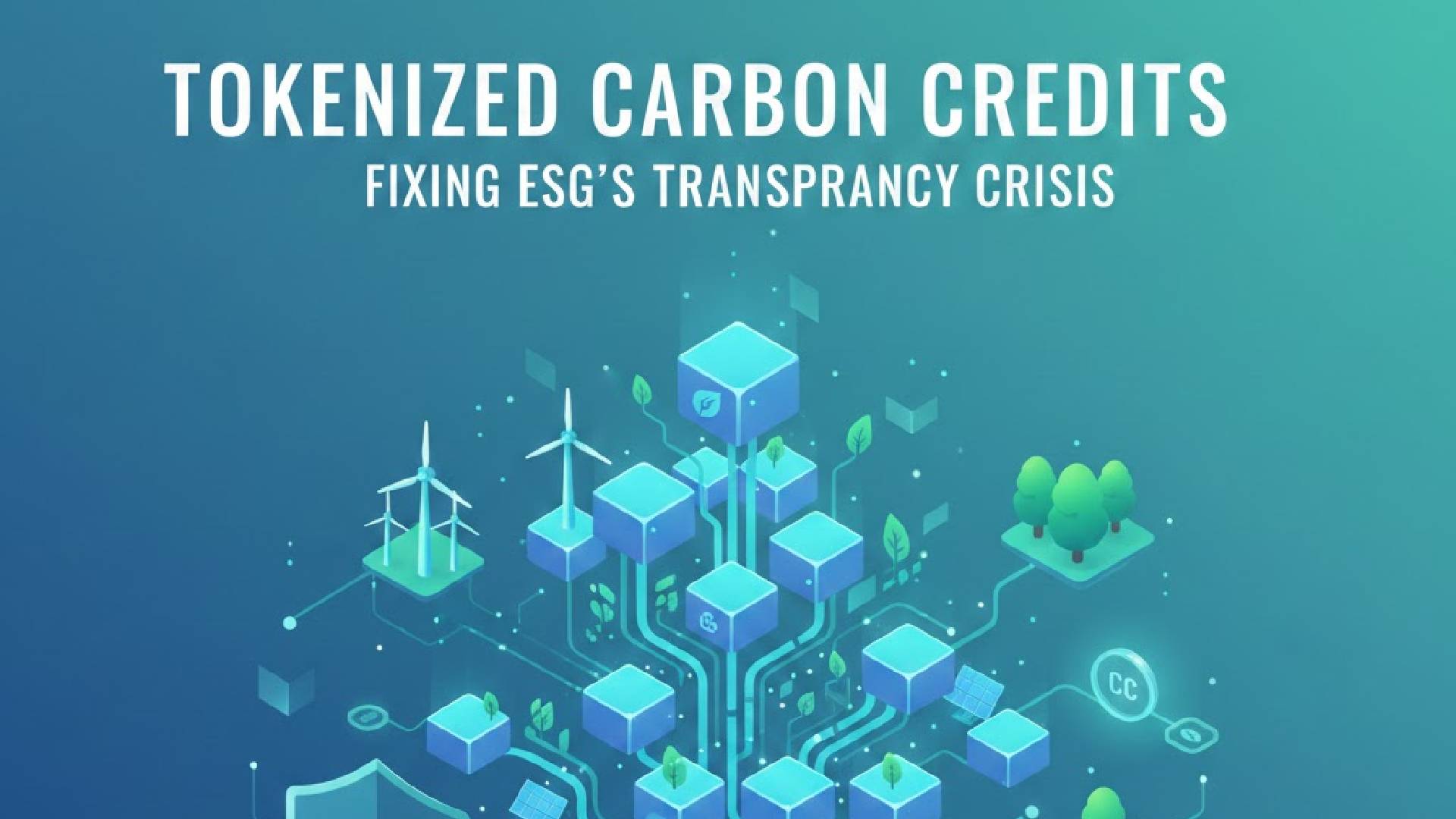
Can Tokenized Carbon Credits Solve ESG’s Transparency Crisis?
The Tokenized Carbon Credits market was created to help reduce climate change by letting companies buy credits to balance the pollution they produce. While the idea worked at first, the system now faces several major problems. Some credits are counted more than once, others are fake or poorly checked, and many companies use weak credits to appear “green.” These issues have caused a serious loss of trust in the entire market.
Because of this, governments and investors want stronger rules and clearer oversight. Many people believe blockchain and tokenization could help improve transparency and tracking. Still, there are questions about whether technology alone can repair deeper issues in the carbon credit system.
Not Clear Enough: Some credits are sold again and again, making their real impact hard to measure.
Greenwashing: Companies may claim to help the planet even when they do very little.
Weak Rules: Different countries follow different standards, which creates confusion.
Slow Trading: Many deals happen privately, slowing the entire market.
After COP29, stricter rules increased the need for better tracking tools. This is where blockchain may help.
How Blockchain & Tokenization Could Help
Blockchain works like a public digital ledger that is open for everyone to see. Once carbon credits become digital tokens, their entire history can be tracked. This reduces errors and makes the market more transparent.
Benefits
More Transparency: Every trade is recorded, which helps prevent fraud and double-counting.
Faster Trading: Digital credits move quickly and do not require slow manual processes.
Smart Contracts: Automated rules ensure that credits are handled or retired correctly.
Better Checking: Regulators can see accurate data at any time, which improves oversight.
However, blockchain cannot confirm whether a climate project is truly real or effective. Human experts must still inspect and verify the work done on the ground.
Leaders in Tokenized Carbon Credits
Several companies are already using blockchain to improve the carbon market:
Fedrok AG uses a low-energy Proof of Green (PoG) system backed by verified credits.
Toucan Protocol l turns older carbon credits into digital tokens.
Flowcarbon creates smaller digital units so more people can trade carbon credits.
KlimaDAO encourages the purchase and support of carbon credits through blockchain tools.
These projects show progress, but the market still needs time and stronger rules to grow.
Will Governments and Investors Trust This?
Trust is still the biggest issue for tokenized carbon credits.
Rules Are Not Clear: The U.S. CFTC has released some guidance, but many rules are still missing.
Big Investors Are Careful: Large financial groups want clear laws before entering the market.
Energy Use: Some older blockchains use too much energy, but newer systems like PoG are more efficient.
Because of these challenges, the future of tokenized credits depends on strong regulation and improved confidence.
The Future of Tokenized Carbon Markets
Tokenized carbon credits may become an important part of ESG finance, but they cannot solve every problem alone. The system still needs clear global rules, stronger support from major investors, and reliable inspections to confirm that climate projects are real. Blockchain improves transparency, but the entire market must improve for tokenization to succeed.
Final Thoughts
Tokenized carbon credits cannot fix every issue in the current carbon market, but they can make it faster, clearer, and more trustworthy. Projects like Fedrok AG, Toucan, and Flowcarbon show how blockchain can support real progress. The future of the system depends on strong rules, honest verification, and trust built through reliable technology and oversight.
Also read: