Sanket Sharma
 14-06-2025
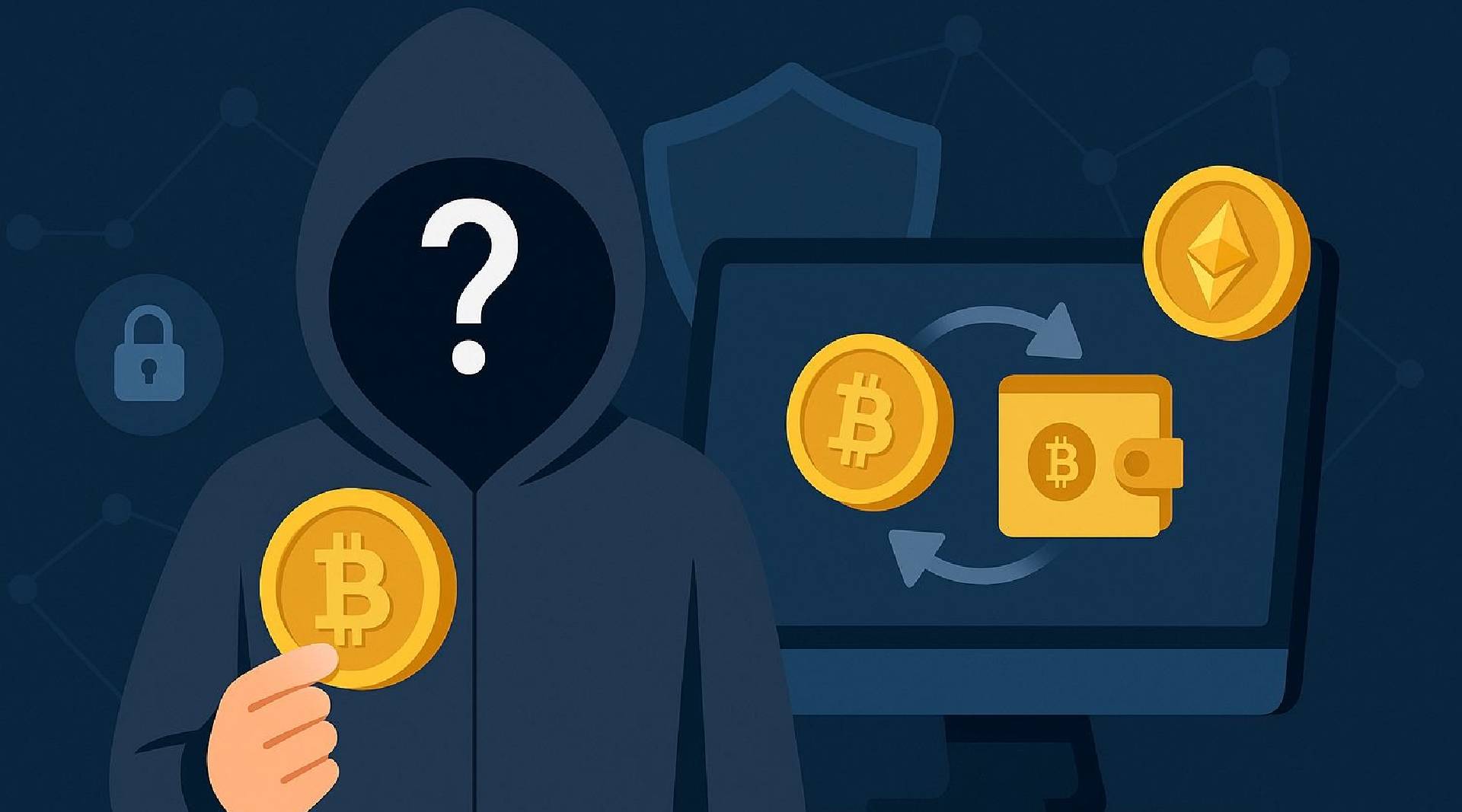
Cryptocurrencies were created as peer-to-peer assets, and some platforms today try to preserve that spirit by allowing trades without identity checks. No KYC crypto trading has become quite popular due to trading platforms requiring no personal information. These non-KYC exchanges let users register with minimal information (often just an email) and begin trading immediately, helping users keep their identities hidden. But are these non‑KYC exchanges truly anonymous, and do they really help with privacy? In this article, we will try to answer these questions, along with many others: security, funding the account, and how you can trade cryptocurrencies anonymously.
To understand the concept of anonymity, we first need to see how we give away our identities in the first place. When working with exchanges or any other financial institutions, we often encounter the process known as KYC (Know Your Customer). This involves providing details such as name and address, along with documentation that can include your national ID or driver’s license, in order to register. These checks are in place to prevent or reduce illegal activities such as money laundering.
Now that we understand the basic concept, how can we avoid KYC? Some exchanges offer this option. With growing interest, and by definition crypto being a peer‑to‑peer asset, these platforms often let you get started without any KYC process. You can simply provide an email address and begin trading. There are several limitations, but for someone looking to acquire Bitcoin or other cryptocurrencies, these exchanges can be ideal.
But are they safe? One infamous case is the Thodex exchange, which exit‑scammed users out of $2 billion worth of crypto back in 2011. It wasn’t a hack; it was an exit scam. We’ve also seen platforms being hacked, like the recent FTX incident where $477 million was lost. So yes, security is a must, and you should understand that if you’re not registered and something goes wrong, you’re using these services at your own risk. Thorough research is therefore crucial to find the best non‑KYC crypto exchanges for anonymous trading.
Non‑KYC exchanges allow users to access their trading platforms without any identity checks; an email ID is usually all you need to register and begin your experience. But there are often a few limitations, like withdrawal caps and restricted features, so before starting out, make sure to read their full terms of service to avoid any last‑minute surprises. Here is how your typical journey with a non‑KYC exchange looks:
Register: Provide basic information (usually only an email or username).
Deposit: Fund your account with cryptocurrency to begin trading.
Trade: Place buy/sell orders on the exchange’s markets. Non‑KYC platforms often support many crypto pairs with no verification delays.
Withdraw: Transfer assets out to a personal wallet after trading. Withdrawals on non‑KYC exchanges generally occur immediately and without identity checks.
You may be wondering about those mentioned limitations, and, more importantly, how you actually fund your account. Keep reading to get all the details.
Non-KYC platforms almost always impose limits and restrictions to balance privacy with regulatory caution. For example, many exchange sites cap the daily withdrawal amount for unverified accounts (a common figure is about 1 BTC per day, roughly the equivalent in other coins). Going over that usually triggers a KYC request. Likewise, these accounts tend to be restricted to the basic tier of service. Advanced features, such as copy-trading, lending, or staking programs, are often unavailable without verification. In practice, a non-verified user might only be able to execute spot trades between cryptocurrencies.
Other services like fiat on-ramps, advanced order types, or participation in initial offerings are usually locked until KYC is done. In short, many non-KYC exchanges offer an intro level with crypto-only spot trading, and require ID checks to unlock higher tiers or larger trades
Staying anonymous translates to no access to an exchange’s fiat on‑ramps, meaning there’s no direct way to fund your account. There is a workaround: many exchanges offer P2P (peer‑to‑peer) trading, which allows users to trade cryptocurrencies directly with one another without intermediaries such as banks. For example, a trader might buy crypto with cash or a local bank transfer through the platform, then deposit those coins into a trading account. Because no central bank or financial institution is involved, this avoids linking the deposit to a personal identity.
Trading anonymously may carry legal risks. Regulations vary by jurisdiction, and non-KYC platforms can fall outside local compliance requirements. Experts note that “anonymous crypto trading exposes users to legal, financial and security risks” due to lack of regulatory oversight. In some regions, using an anonymous exchange could be interpreted as facilitating illicit activity. Before you try any anonymous trading methods, it’s a good idea to check what’s legal in your country.
Non-KYC exchanges and P2P deposits allow privacy-minded traders to operate without revealing their identity. However, these options impose strict caps and limited features compared to fully verified accounts. It is essential to know each platform’s withdrawal limits and feature restrictions in advance. When used responsibly and legally, this combination of methods enables a user to trade cryptocurrencies anonymously, provided they heed the rules and understand the trade-offs involved.

Sanket Sharma is an experienced crypto writer with five years of expertise in blockchain technology and digital assets. He specializes in translating complex concepts into clear, accessible insights, catering to both novice and seasoned investors.With a keen focus on Bitcoin, altcoins, NFTs, and DeFi, Sanket provides in-depth analysis of market trends, price movements, and emerging developments. His work is rooted in thorough research and a deep understanding of the evolving crypto landscape.Passionate about blockchain’s transformative potential, he is committed to delivering well-researched, informative content that empowers readers to navigate the fast-paced world of cryptocurrency with confidence. Through his writing, Sanket continues to educate and engage audiences, helping them stay ahead in the digital asset space.
Sanket Sharma is an experienced crypto writer with five years of expertise in blockchain technology and digital assets. He specializes in translating complex concepts into clear, accessible insights, catering to both novice and seasoned investors.With a keen focus on Bitcoin, altcoins, NFTs, and DeFi, Sanket provides in-depth analysis of market trends, price movements, and emerging developments. His work is rooted in thorough research and a deep understanding of the evolving crypto landscape.Passionate about blockchain’s transformative potential, he is committed to delivering well-researched, informative content that empowers readers to navigate the fast-paced world of cryptocurrency with confidence. Through his writing, Sanket continues to educate and engage audiences, helping them stay ahead in the digital asset space.


Owned by:-
DCG Tech FZCO, UAE
Delivery Partner:-
Gabbar MediaTech Pvt Ltd.
Copyright © 2025 Coin Gabbar. All Rights Reserved.