Best Crypto Exchange Indonesia 2026: BAPPEBTI-Registered Picks

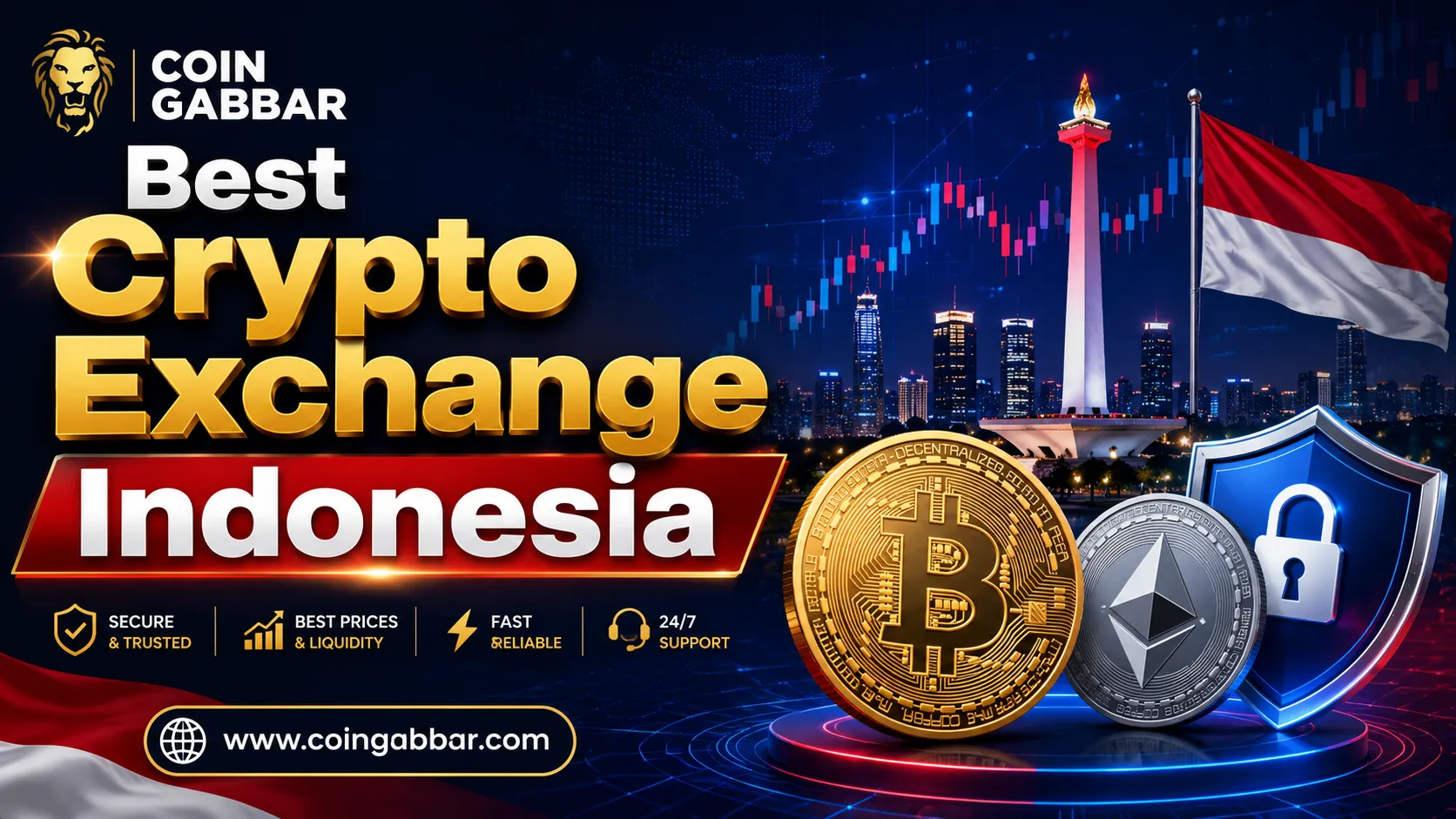
Best Crypto Exchange Indonesia Guide for 2026
Choosing the best crypto exchange Indonesia investors can use in 2026 requires more than checking fees, coin count, or app popularity. Indonesian users should compare OJK status, legacy Bappebti registration, IDR deposit access, bank transfer support, e-KTP or KITAS KYC, wallet withdrawals, proof of reserves, tax collection, customer support, liquidity, spreads, and platform security before opening an account.
This guide reviews 10 platforms used by Indonesian traders and investors: Indodax, Tokocrypto, Pintu, Reku, Bittime, Pluang, Ajaib Kripto, Triv, Binance, and OKX. The article is written from a global perspective and removes India-centric paragraphs, FIU-IND references, expat notes, and India-versus-Indonesia comparison sections from the earlier draft.
Indonesia is one of Southeast Asia’s largest digital asset markets by user count and transaction value. Adoption is shaped by mobile-first finance, young retail users, stablecoin demand, local bank transfers, IDR access, and a regulatory model that has shifted from a commodity-market structure toward financial-sector supervision.
For years, digital assets were supervised through Bappebti under the Ministry of Trade. Since January 2025, supervision of digital financial assets, including crypto assets, has moved to OJK and Bank Indonesia under the wider financial-sector reform framework. This shift makes compliance checks more important because exchange operators, traders, clearing institutions, custodians, and payment-linked services may face different oversight standards.
Readers can also compare CoinGabbar resources, including the crypto platform listing, proof of reserves tracker, platform news updates, best crypto wallets, regulated trading platforms, and verify a platform.
Indonesian Digital Asset Platform Comparison
| Platform | Best For | Main Strength | Main Limitation | User Level |
|---|---|---|---|---|
| Indodax | Local exchange users | Large domestic brand, IDR markets, broad retail familiarity | Users should compare spreads and withdrawal fees | Beginner to intermediate |
| Tokocrypto | Binance-linked local access | Strong brand, Binance investment link, IDR access | Product terms and local rules need review | Beginner to advanced |
| Pintu | Mobile-first beginners | Simple app, educational design, selected earning tools | Advanced order-book depth may be limited | Beginner |
| Reku | Simple investing and selected yield tools | Easy app, IDR access, selected asset coverage | Users should review product risks and fees | Beginner to intermediate |
| Bittime | Altcoin-focused local users | Local app, IDR support, growing asset list | Liquidity should be checked for smaller assets | Beginner to intermediate |
| Pluang | Multi-asset app users | Investment app structure and easy portfolio access | Not built for deep professional trading | Beginner |
| Ajaib Kripto | Retail finance app users | Investment-app familiarity and simple digital asset access | Feature depth may be lower than specialist venues | Beginner |
| Triv | Payments and practical conversion | Long-running local access, payment-style use cases | Trading depth should be compared | Beginner to intermediate |
| Binance | Global liquidity and P2P users | Large markets, broad asset range, proof-of-reserves disclosures | Local access and regulatory position must be checked | Intermediate to advanced |
| OKX | Spot and Web3 users | Trading tools, Web3 wallet, proof-of-reserves focus | Web3 tools require careful wallet safety | Intermediate to advanced |
Indonesia Crypto Regulation: OJK, BI and Bappebti Transition
Indonesia’s digital asset rules have changed significantly. Under the older framework, Bappebti treated crypto assets as commodities and supervised approved assets, licensed traders, custodians, exchanges, clearing institutions, and related market infrastructure. This created a formal route for local platforms while keeping digital assets outside payment-currency status.
From January 2025, supervisory responsibilities for digital financial assets moved from Bappebti to OJK and Bank Indonesia. OJK now plays a central role for digital financial asset trading, platform licensing, trader supervision, customer protection, governance, and risk controls. Bank Indonesia remains important where payment systems, monetary stability, rupiah use, and payment-linked digital financial activity are involved.
This transition means investors should not rely only on old Bappebti references. A platform may have legacy approval, ongoing transition obligations, OJK-linked licensing, clearing arrangements, or updated operational duties. Users should verify whether the provider is listed as a licensed or registered operator under the current framework before depositing funds.
Indonesia does not allow crypto to be used as legal tender. Rupiah remains the only legal payment currency. Digital assets can be traded as financial or investment assets through permitted channels, but using them directly for payments can create legal and compliance issues.
For official checks, review the OJK transition update and the Bappebti website before opening an account.
Key Local Rules for Digital Asset Investors
- Check whether the provider is licensed, registered, or transitioning under the current OJK framework.
- Review old Bappebti registration, but confirm whether it remains valid under updated supervision.
- Confirm whether IDR deposits and withdrawals are available to your account type.
- Use platforms that clearly explain bank transfer, e-wallet, QRIS, or other local funding routes.
- Complete e-KTP, selfie, address, bank account, tax ID, or KITAS checks accurately.
- Understand that regulation improves oversight but does not guarantee profits or deposit recovery.
Indonesia Income Tax Rules for Digital Asset Investors
Indonesia’s tax rules for digital asset transactions changed in 2025. From August 1, 2025, seller-side transaction tax on domestic platforms increased to 0.21% of transaction value, while overseas platform transactions became subject to a higher 1% rate. Buyer-side VAT on the asset sale was removed, but services linked to trading activity may still face VAT treatment.
This model is different from many countries that tax only net gains. The Indonesian system can apply tax to transaction value, not only profit. That means frequent traders may pay more through repeated turnover even if individual trades produce small gains or losses.
Mining tax treatment also changed. VAT on mining activity was increased, while the previous special income tax treatment for mining was removed, with mining income moving toward regular individual or corporate income tax treatment from 2026. Users who mine, operate validator infrastructure, run business wallets, or receive assets as business income should get professional tax advice.
Investors should keep complete records from the first transaction. Important documents include IDR value, acquisition cost, sale value, transaction date, platform statement, wallet address, network ID, transfer fee, bank transfer record, e-wallet receipt, staking reward, airdrop reward, and tax withholding evidence.
Common Tax Events to Track
- Selling Bitcoin, Ethereum, USDT, or another asset for IDR
- Swapping one digital asset for another
- Using offshore platforms that may trigger higher transaction tax exposure
- Receiving staking, referral, campaign, or airdrop rewards
- Mining or validating digital assets
- Receiving assets as salary, freelance income, merchant payment, or business revenue
- Moving assets between wallets, which still requires records
1. Indodax: Best Large Local Platform
Indodax is one of the country’s most recognised digital asset platforms and is often reviewed by users who want IDR access, local onboarding, broad retail familiarity, and a long operating history. It can suit beginners and intermediate users who want a domestic route into Bitcoin, Ethereum, stablecoins, and selected altcoins.
For readers comparing the best crypto exchange Indonesia options, Indodax stands out because of its brand recognition, large user base, IDR rails, and local market experience. Users should still compare fees, spreads, wallet withdrawal rules, supported assets, reserve transparency, and customer support before larger transfers.
Indodax Key Features
- Large domestic brand recognition
- IDR deposit and withdrawal support where available
- Bitcoin, Ethereum, USDT, and selected altcoin access
- App and web trading access
- Useful for retail users
- Transaction records for tax tracking
Indodax Limitations
Users should compare spread, order depth, network withdrawal fees, and supported networks before using one platform for every transaction.
2. Tokocrypto: Best Binance-Linked Local Platform
Tokocrypto is widely known because of its Binance link and local platform presence. It may suit users who want IDR access, global-brand familiarity, a broader trading interface, and selected assets through a domestic structure.
The platform can be useful for both retail and more active users, but investors should check current licensing, product terms, tax handling, withdrawal rules, supported networks, and whether each feature is available under Indonesian rules.
Tokocrypto Key Features
- Binance-linked brand familiarity
- IDR funding routes where available
- Spot trading access
- App and web platform experience
- Selected asset and stablecoin access
- Useful for intermediate users
Tokocrypto Limitations
Users should verify the local legal entity, fee schedule, product availability, and withdrawal networks before making large transfers.
3. Pintu: Best Mobile-First App for Beginners
Pintu is a mobile-first platform designed for simple investing, user education, easy IDR access, and selected digital asset exposure. It may suit first-time buyers who prefer a clean interface rather than a professional trading terminal.
Pintu may also appeal to users interested in simple portfolio tracking and app-based education. Active traders should still compare order execution, spreads, wallet rules, tax exports, and advanced tools with larger trading venues.
Pintu Key Features
- Beginner-friendly app design
- IDR-funded buying flow
- Education-focused experience
- Selected asset access
- Portfolio tracking tools
- Useful for regular small purchases
Pintu Limitations
Users who need deep order books, professional charting, or very broad altcoin coverage may prefer another platform.
4. Reku: Best for Simple Investing and Selected Yield Tools
Reku is a domestic platform that can suit users who want simple app access, IDR deposits, major assets, and selected earning or staking-style products where available. It is useful for users who prefer a simpler route than offshore platforms.
Investors should review all product-level risks before using earning tools. Yield-style services can involve platform risk, smart contract risk, liquidity risk, lock-up terms, and tax consequences.
Reku Key Features
- Local app access
- IDR deposit routes where available
- Selected major asset support
- Simple investing flow
- Useful for beginner and intermediate users
- Transaction history for records
Reku Limitations
Users should compare fees, supported networks, staking terms, product risk disclosures, and wallet withdrawal rules before depositing larger balances.
5. Bittime: Best for Local Altcoin Access
Bittime is a growing domestic platform that may suit users who want IDR access and a wider asset list than some beginner-only apps. It can be useful for altcoin-focused users who still prefer a local onboarding route.
Altcoin access carries higher risk. Smaller assets may have thin liquidity, high volatility, weak disclosures, token unlock risk, smart contract risk, and withdrawal delays.
Bittime Key Features
- Domestic platform experience
- IDR funding support where available
- Bitcoin, Ethereum, stablecoin, and selected altcoin access
- Mobile and web access
- Useful for altcoin-focused users
- Retail-friendly onboarding
Bittime Limitations
Users should compare order depth, supported networks, spreads, proof-of-reserves visibility, and withdrawal conditions before trading smaller assets.
6. Pluang: Best for Multi-Asset App Users
Pluang is a multi-asset investment app that may suit users who want digital assets beside other investment products. It is designed for app-first investors who prefer a simple interface and broader portfolio access.
Pluang may be useful for casual exposure, but users should verify custody terms, supported assets, IDR withdrawal paths, tax records, and whether wallet withdrawals are available for the assets they buy.
Pluang Key Features
- Multi-asset app structure
- Beginner-friendly interface
- IDR-funded access where available
- Portfolio view across investment products
- Useful for casual investors
- Simple onboarding flow
Pluang Limitations
It may not suit users who need deep order books, professional tools, or broad external wallet control.
7. Ajaib Kripto: Best for Retail Finance App Users
Ajaib Kripto can be relevant for users who already know Ajaib’s broader investment app environment and want a simple route into digital assets. It may suit beginners who prefer familiar finance-app design over complex trading screens.
Before using it heavily, investors should check asset availability, custody terms, wallet withdrawal rules, fee structure, tax export quality, and whether the product fits their trading style.
Ajaib Kripto Key Features
- Retail finance app familiarity
- Simple digital asset access
- IDR-funded buying flow where available
- Beginner-oriented app design
- Portfolio tracking tools
- Useful for casual users
Ajaib Kripto Limitations
It may not be ideal for active traders who need deep liquidity, many pairs, or advanced order types.
8. Triv: Best for Practical Conversion and Payments
Triv is a long-running domestic platform often associated with practical conversion, payment-linked use cases, and digital asset access. It may suit users who need simple buying, selling, and asset conversion through local channels.
Users should compare its fee schedule, supported assets, wallet withdrawal rules, payment routes, security controls, and customer support before using it for larger transfers.
Triv Key Features
- Long-running domestic presence
- IDR conversion support where available
- Payment-style use cases
- Major asset access
- Useful for practical conversion
- App and web access
Triv Limitations
Trading depth and advanced order tools should be compared with Indodax, Tokocrypto, Binance, or OKX.
9. Binance: Best for Global Liquidity and P2P Users
Binance is one of the world’s largest platforms by liquidity, asset range, and product depth. It may suit experienced Indonesian users who want global markets, many pairs, stablecoin access, P2P routes, and self-custody withdrawals.
Users must verify current access, local compliance, product restrictions, P2P rules, proof-of-reserves disclosures, and withdrawal options before using Binance heavily. Global liquidity does not automatically mean local authorisation.
Binance Key Features
- Large global liquidity
- Wide spot pair selection
- Stablecoin and P2P access where available
- Advanced trading interface
- Proof-of-reserves disclosures
- Useful for experienced traders
Binance Limitations
Regulatory access, IDR routes, P2P restrictions, and product availability can change. Verify the current status before depositing funds.
10. OKX: Best for Spot and Web3 Users
OKX combines spot trading, wallet withdrawals, Web3 tools, and proof-of-reserves disclosures. It may suit users who want both a trading platform and access to on-chain tools.
OKX is better for intermediate and advanced users because Web3 wallets require careful handling of seed phrases, token approvals, phishing links, gas fees, and smart contract risk.
OKX Key Features
- Spot market tools
- Web3 wallet ecosystem
- Proof-of-reserves disclosures
- Useful charting and order controls
- Wallet withdrawals for self-custody
- Good fit for Web3-focused users
OKX Limitations
Web3 tools increase user responsibility. A wrong approval or leaked seed phrase can cause permanent loss.
Best Platform by Investor Type
| Investor Type | Best-Fit Platforms | Why |
|---|---|---|
| Complete beginner | Pintu, Pluang, Ajaib Kripto | Simple apps, IDR access, easy onboarding |
| Domestic exchange user | Indodax, Tokocrypto, Reku | IDR rails, local market familiarity, retail access |
| Active trader | Tokocrypto, Binance, OKX | More trading tools, liquidity, wider market access |
| Stablecoin user | Indodax, Binance, OKX | USDT access, global pairs, value storage use cases |
| Altcoin-focused trader | Bittime, Binance, OKX | Broader asset selection and more trading pairs |
| Practical conversion user | Triv, Indodax, Tokocrypto | Buying, selling, transfers, and IDR conversion routes |
Do’s and Don’ts for Indonesian Digital Asset Investors
Do’s
- Verify the platform’s current OJK or legacy Bappebti status before depositing funds.
- Check the exact legal entity and service scope.
- Use platforms with clear IDR deposit and withdrawal methods.
- Confirm whether bank transfer, e-wallet, QRIS, or other local rails are supported.
- Complete e-KTP, KITAS, phone, address, bank account, and tax ID checks accurately.
- Start with a small test deposit and withdrawal.
- Enable app-based two-factor authentication and withdrawal address whitelisting.
- Keep transaction records for DJP review from the first trade.
- Compare spreads, withdrawal fees, deposit charges, and total execution cost.
- Move long-term holdings to self-custody only after learning wallet safety.
Don’ts
- Do not assume every global platform can legally serve Indonesian users at all times.
- Do not treat licensing as a guarantee against losses, hacks, or insolvency.
- Do not ignore tax records because tax may apply to transaction value.
- Do not use random Telegram, WhatsApp, Discord, Facebook, or influencer links to open accounts.
- Do not trust guaranteed-return, mining, arbitrage, staking, or airdrop claims without proof.
- Do not keep all holdings on one platform.
- Do not reuse passwords across trading accounts and email accounts.
- Do not share OTPs, private keys, seed phrases, or recovery codes.
- Do not trade with rent, tuition, debt, emergency funds, or business working capital.
- Do not buy illiquid altcoins without checking liquidity, tokenomics, and withdrawal rules.
How to Choose a Trusted Platform
The right platform depends on experience level, funding method, trading purpose, and custody plan. Beginners may prefer Pintu, Pluang, or Ajaib Kripto. Domestic exchange users may compare Indodax, Tokocrypto, and Reku. Altcoin-focused users may review Bittime, Binance, and OKX. Practical conversion users may compare Triv, Indodax, and Tokocrypto.
Before opening an account, compare CoinGabbar’s trading platform comparison, platform directory, choose a platform, and security features guide.
Platform Selection Checklist
- Is the provider licensed, registered, or transitioning under the current framework?
- Does it support IDR deposits and withdrawals?
- Are bank transfers, e-wallet routes, QRIS, cards, or P2P options available?
- Are fees, spreads, and withdrawal charges clearly shown?
- Can users withdraw assets to an external wallet?
- Does the platform provide transaction exports for tax records?
- Has it published proof of reserves or custody details?
- Does it provide strong account security features?
- Are product restrictions and local support rules clear?
- Does customer support respond during deposit or withdrawal issues?
Security and Fund Protection
Platform accounts are not the same as bank deposits. If a service suffers a hack, insolvency event, outage, withdrawal freeze, or regulatory restriction, investors may face losses or delayed access. Regulation improves oversight, but it does not create bank-style deposit insurance for digital assets.
Good platforms use cold storage, asset segregation, withdrawal controls, two-factor authentication, address whitelisting, internal monitoring, proof-of-reserves reporting, and incident response procedures. Investors should still avoid keeping all holdings in one place.
Security Features to Check
- Two-factor authentication
- Withdrawal address whitelisting
- Withdrawal delay controls
- Cold storage policy
- Proof of reserves or custody disclosure
- Public security incident history
- Device and session controls
- Account recovery process
Market Outlook for 2026
The Indonesian digital asset market remains one of Southeast Asia’s most important because it combines a large user base, active retail participation, growing fintech adoption, stablecoin demand, and a formal regulatory pathway. The transfer of supervision to OJK and BI also signals a more financial-sector-style approach.
At the same time, higher transaction tax for offshore platforms, licensing changes, platform transition rules, scam risk, and tax documentation needs mean investors must be more careful than before. The strongest approach is to use transparent platforms, keep full records, test withdrawals, compare IDR pricing carefully, and choose custody and security over short-term promotions.
Key Terms Glossary
- OJK
- Indonesia’s Financial Services Authority, now central to digital financial asset and crypto asset supervision.
- Bappebti
- The Commodity Futures Trading Regulatory Agency, which previously supervised crypto assets under a commodity framework.
- Bank Indonesia
- The central bank, relevant for payment systems, rupiah use, monetary stability, and payment-linked digital finance activity.
- DJP
- Directorate General of Taxes, Indonesia’s tax authority responsible for income tax and transaction tax administration.
- Digital Financial Asset Trader
- A regulated operator category for platforms that facilitate trading of digital financial assets.
- IDR
- Indonesian rupiah, the local currency used for deposits, withdrawals, pricing, and tax value calculations.
- e-KTP
- Indonesia’s electronic identity card, commonly required for domestic account verification.
- KITAS
- Limited stay permit card, often used by eligible foreign residents for identity verification.
- Final Income Tax Article 22
- A transaction-level withholding mechanism applied to certain digital asset sales under Indonesian tax rules.
- Self-Custody
- Holding assets in a wallet where the investor controls private keys instead of leaving funds on a platform.
Final Verdict: Which Platform Should You Choose?
The right choice depends on your risk level, funding method, and use case. Indodax is strong for domestic exchange access and IDR rails. Tokocrypto is useful for Binance-linked local access. Pintu, Pluang, and Ajaib Kripto may suit mobile-first beginners. Reku can fit simple investing and selected earning tools. Bittime may suit altcoin-focused users. Triv is practical for conversion-style use cases. Binance and OKX may suit experienced users who want global liquidity, P2P access, Web3 tools, or broader market coverage, subject to local access and regulatory checks.
The safest approach is to compare OJK status, legacy Bappebti record, IDR rails, fees, spreads, withdrawals, custody, proof of reserves, product availability, tax exports, and customer support before depositing funds. The best crypto exchange Indonesia investors choose should match their trading frequency, tax record needs, custody plan, payment method, and risk tolerance.
Disclaimer
This article is for educational purposes only and is not financial, tax, legal, or investment advice. Digital assets are high-risk and can lose all value. OJK rules, BI rules, Bappebti transition records, DJP tax treatment, platform access, IDR deposits, product availability, fees, and withdrawal terms may change. Always verify official registrations, local permissions, tax obligations, and risk disclosures before trading or investing.
Also read:




.webp)