Bitcoin Technical Analysis Guide: Support, Resistance, RSI, MACD


Bitcoin Technical Analysis Guide for Beginners: Key BTC Tools
Charts can look hard at first.
They aren’t magic. They’re just a way to read price action. This Bitcoin technical analysis guide shows you how to study Bitcoin charts step by step.
If you are new, start here. You do not need to master every tool at once. You only need to learn what each signal means, where it helps, and where it can fail.
What Does Technical Analysis Really Show?
Technical analysis studies price, volume, and chart patterns. It tries to spot trends before they fully play out. In crypto, that matters because Bitcoin can move fast.
This Bitcoin technical analysis guide focuses on tools traders use most. These include trend lines, support, resistance, RSI, MACD, Bollinger Bands, Fibonacci retracements, and volume profile.
None of these tools predict the future with certainty.
They help you make better decisions with real chart evidence. That is why many readers search for the Bitcoin technical analysis guide 2026 explained before they place a trade.
Start With Trend, Support, And Resistance
Before you look at indicators, study the trend first. Is Bitcoin making higher highs or lower highs? That simple check saves you from many bad entries.
An uptrend means price keeps pushing to fresh highs. A downtrend means rallies fail and sellers take control. A sideways market means price moves in a range.
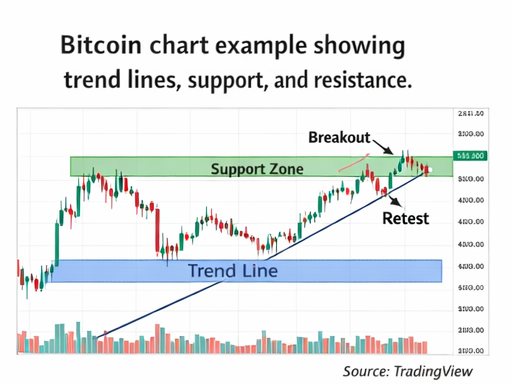
This Bitcoin technical analysis guide starts with trend lines for that reason. A trend line is a line that connects swing highs or swing lows. It helps you see the market’s main direction.
Then mark support and resistance levels.
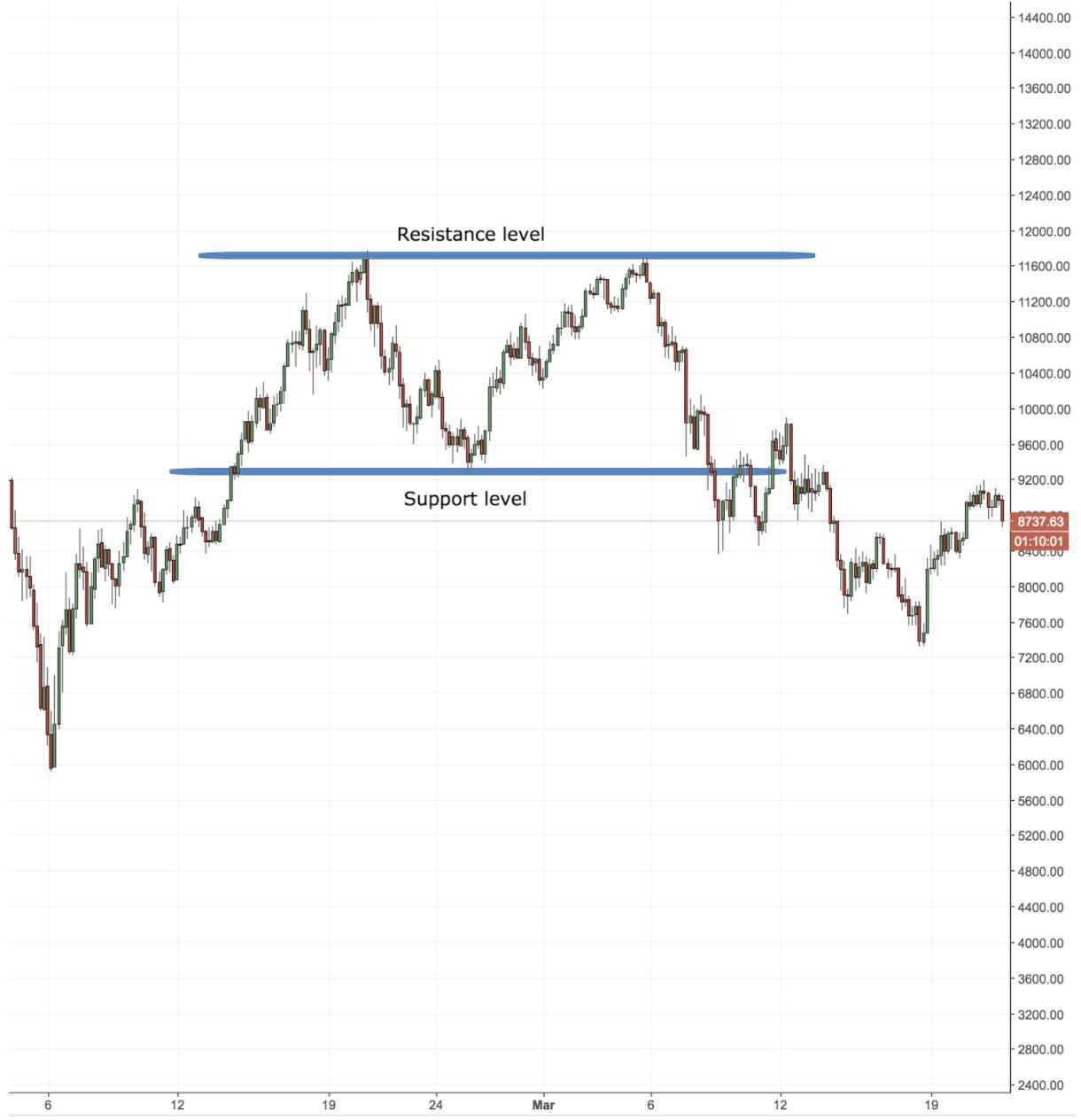
Support is an area where buyers often step in.
Resistance is an area where sellers often show up.
These zones matter because Bitcoin often reacts near old turning points.
For example, if BTC falls to a level it defended three times, that zone may act as support again. If price keeps failing near one ceiling, that area becomes resistance.
Use these steps:
- Mark the recent swing high
- Mark the recent swing low
- Draw the range between them
- Watch how price behaves near both zones
- Wait for a clear break or rejection
That basic process makes your chart cleaner. It also keeps your analysis grounded in price, not emotion.
How Do RSI And MACD Help You Read Momentum?
Price tells you where Bitcoin moved. Momentum tools help show how strong that move is. That is where RSI and MACD become useful in a Bitcoin technical analysis guide.
RSI means Relative Strength Index. It measures speed and strength on a scale from 0 to 100. Many traders watch 70 as overbought and 30 as oversold.
Do not use those numbers blindly.
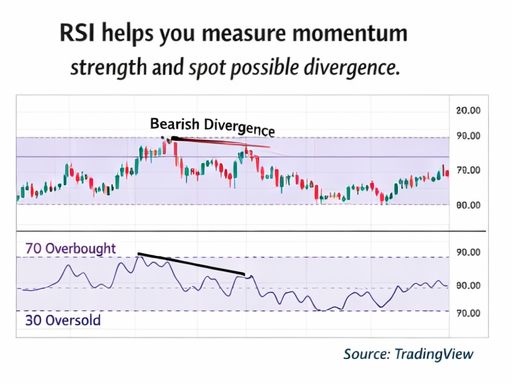
A strong trend can stay overbought for days. A weak trend can stay oversold longer than you expect. That is why RSI works best with price levels.
Also watch for divergence. RSI divergence happens when price makes a new high, while RSI does not. That can warn that momentum is fading.
MACD stands for Moving Average Convergence Divergence. It compares two moving averages, which are price averages over time. Traders often watch for line crossovers and histogram shifts.
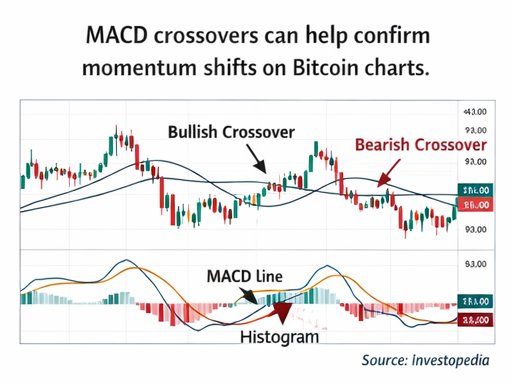
A bullish MACD crossover can hint at rising momentum. A bearish crossover can hint at fading strength. Still, MACD often lags because it follows past price.
So what is the smart way to use both?
- Use RSI to spot weak momentum
- Use MACD to confirm trend shifts
- Check both near support or resistance
- Ignore signals that fight the bigger trend
That simple method helps Bitcoin TA for beginners avoid many false signals.
What About Bollinger Bands, Fibonacci, And Volume?
This Bitcoin technical analysis guide also covers three tools many traders misuse. They can help, though only when you keep them simple.
Bollinger Bands track volatility, which means how sharply price swings. The bands widen when volatility rises. They tighten when price calms down.
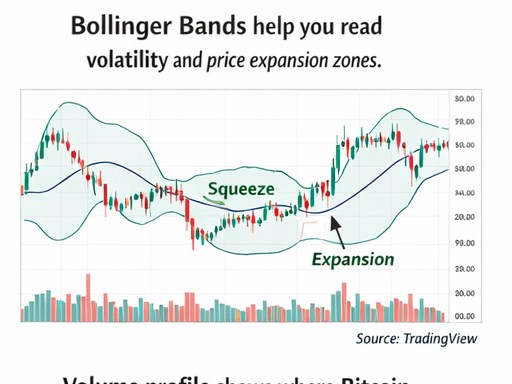
A band squeeze can warn that a larger move may come. Still, the squeeze alone does not show direction. You need price action and volume for that.
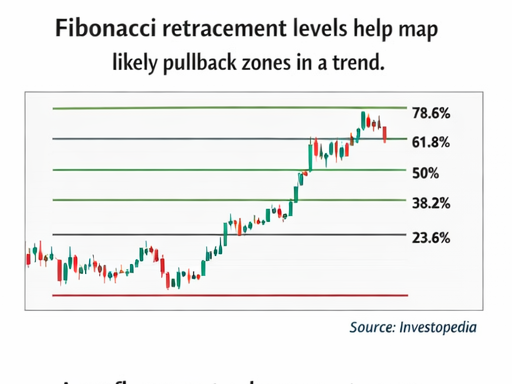
Fibonacci retracements help measure pullbacks inside a trend. Traders often watch the 0.382, 0.5, and 0.618 levels. These are areas where price may pause or reverse.
For example, if Bitcoin rallies hard, then pulls back to 0.5, buyers may step in there. That setup becomes stronger if the same level also matches support.
Volume profile adds another layer. It shows where the most trading happened at different price levels. High-volume zones often act like magnets for price.
Low-volume zones can move fast. Crypto prices often travels quickly through them because less trading took place there before. This idea helps you find likely reaction areas.
In short, Bitcoin technical analysis guide 2026 readers should use these tools for context, not certainty.
How Do You Combine Indicators Into A Real Setup?
A good setup is never about one signal. It is about signals lining up in the same place. That is the heart of this Bitcoin technical analysis guide.
Here is a simple bullish example using BTC:
- Bitcoin pulls back in an uptrend
- Price reaches a known support zone
- Fibonacci 0.5 sits near that same area
- RSI shows bullish divergence
- MACD starts turning upward
- Volume rises on the bounce
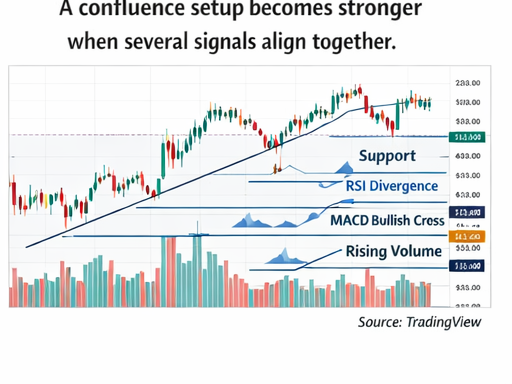
That is called confluence. Confluence means several clues point the same way. It does not guarantee success, though it improves the odds.
Now look at a bearish example. Bitcoin price hits a strong resistance zone after a sharp rally. RSI weakens, MACD loses strength, and price closes back below resistance.
That can signal a failed breakout.
This is also where risk matters most. Every Bitcoin technical analysis guide should remind you that chart setups fail all the time. Bitcoin is still a volatile asset.
Use a stop-loss, which is a preset exit point. Risk only a small part of your capital on one trade. Many new traders lose money because they size too big.
What Are The Main Risks For Beginners?
Charts can help you. They can also fool you if you force a setup. That is why Bitcoin TA risks deserve their own section.
Common mistakes include:
- Trading every small signal
- Ignoring the higher time frame
- Using too many indicators
- Moving stop-loss levels out of fear
- Entering before candle confirmation
- Confusing hope with analysis
Keep your chart clean. Focus on price, trend, key levels, and one or two momentum tools. That is enough for most beginners.
If you are still wondering how to do bitcoin technical analysis, start with one chart each day. Mark support, resistance, trend, RSI, and MACD. Then review what worked after price moves.
That routine builds skill over time.
Final Takeaways From This Bitcoin Technical Analysis Guide
The best charts are often the simplest ones. This Bitcoin technical analysis guide works because it keeps your focus on structure first, then indicators second.
Start with trend lines. Add support and resistance. Then use RSI, MACD, Bollinger Bands, Fibonacci retracements, and volume profile to confirm your view.
Do not chase every move.
A strong Bitcoin technical analysis guide 2026 approach always includes risk control, patience, and clear entries. If you follow that process, you will read BTC charts with more confidence and less guesswork.
Disclaimer: This Bitcoin technical analysis guide is for education purposes only. It is not financial advice. Crypto prices can rise or fall fast, and you should always do your own research before trading or investing.
Also read: