Brazil Prediction Market Ban: What It Means in Crypto Markets 2026


Brazil Prediction Market Ban: Why Polymarket and Kalshi Got Blocked
On April 25, 2026, Brazil Prediction Market took a major step by blocking 28 prediction market platforms, including popular names like Polymarket and Kalshi.
The ban was announced by Finance Minister Dario Durigan during a press conference in Brasilia. The move is part of Brazil’s effort to regulate financial markets and curb gambling-related risks within the country.
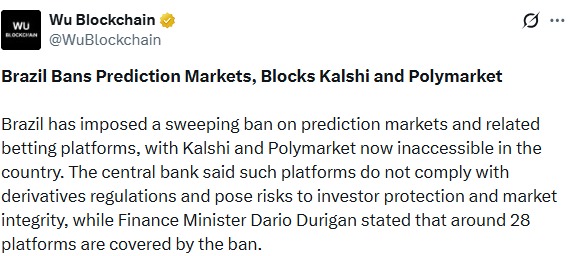
Source: X Account
Why did Brazil Prediction Market do this?
The primary motivation behind the ban is to address concerns over gambling debts and financial instability. President Lula da Silva expressed concern over how betting, especially related to national events, was leading to unsustainable debts.
According to the National Monetary Council (CNC), this ban seeks to protect savings and reduce household debt while aligning the country’s prediction markets with local betting regulations.
Which platforms are affected in Brazil Prediction Market?
Some of the biggest players in the prediction market world have been affected by Brazil Prediction Market new stance, including Polymarket and Kalshi.
Both platforms were blocked from operating within the Brazil Prediction Market due to their non-compliance with the country’s regulatory framework. The decision has caused a ripple effect in the crypto market, especially in Web3 platforms, which have increasingly relied on these markets for liquidity and market sentiment.
What is allowed under the new rules?
However, Brazil Prediction Market is not absolute. The Brazilian Securities and Exchange Commission (CVM) carved out an exception for economic-financial benchmarks, such as B3 contracts (which are linked to the Brazilian stock exchange).
These markets, which will include predictions on Ibovespa, Brazilian real, and Bitcoin, can continue under new rules scheduled to be implemented by April 27, 2026. This move suggests that B3 will experiment with new contracts within these markets, which will be seen as less risky.
What does this mean for global prediction markets?
Brazil Prediction Market actions are part of a global trend. Countries like France, Hungary, and Portugal have previously taken similar steps to block platforms like Polymarket.
This international crackdown highlights how governments are now paying closer attention to prediction markets and their potential to harm investors or encourage gambling.
What’s the crypto angle in Brazil Prediction Market ?
In the US, the CFTC (Commodity Futures Trading Commission) has been pushing back against state bans on prediction markets, creating tension between state-level regulations and national oversight.
In Brazil, this regulation marks a sharp contrast. Local crypto exchanges and the crypto community will need to adjust as Brazil continues exploring financial innovation while maintaining strict controls. The potential for crypto markets to intertwine with traditional financial systems is still alive but tightly regulated.
Expert analysis: What does this ban mean for the future of crypto markets?
The ban on prediction markets might indicate a turning point for crypto regulations globally. As Brazil introduces stricter oversight, it may set a precedent for other Latin American nations. The global context reveals that this regulation could increase investor caution, especially in markets like Polymarket or Kalshi.
Experts suggest that crypto exchanges may soon follow suit with regional bans or stricter regulations, particularly for platforms handling volatile assets. This may lead to reduced investor freedom unless the market can demonstrate that its tools are being used responsibly.
Disclaimer: This content is for informational purposes only and does not constitute financial advice. Always do your own research before participating in any crypto activity.