Solana vs. Ethereum 2026: Best Chain for Investors Now

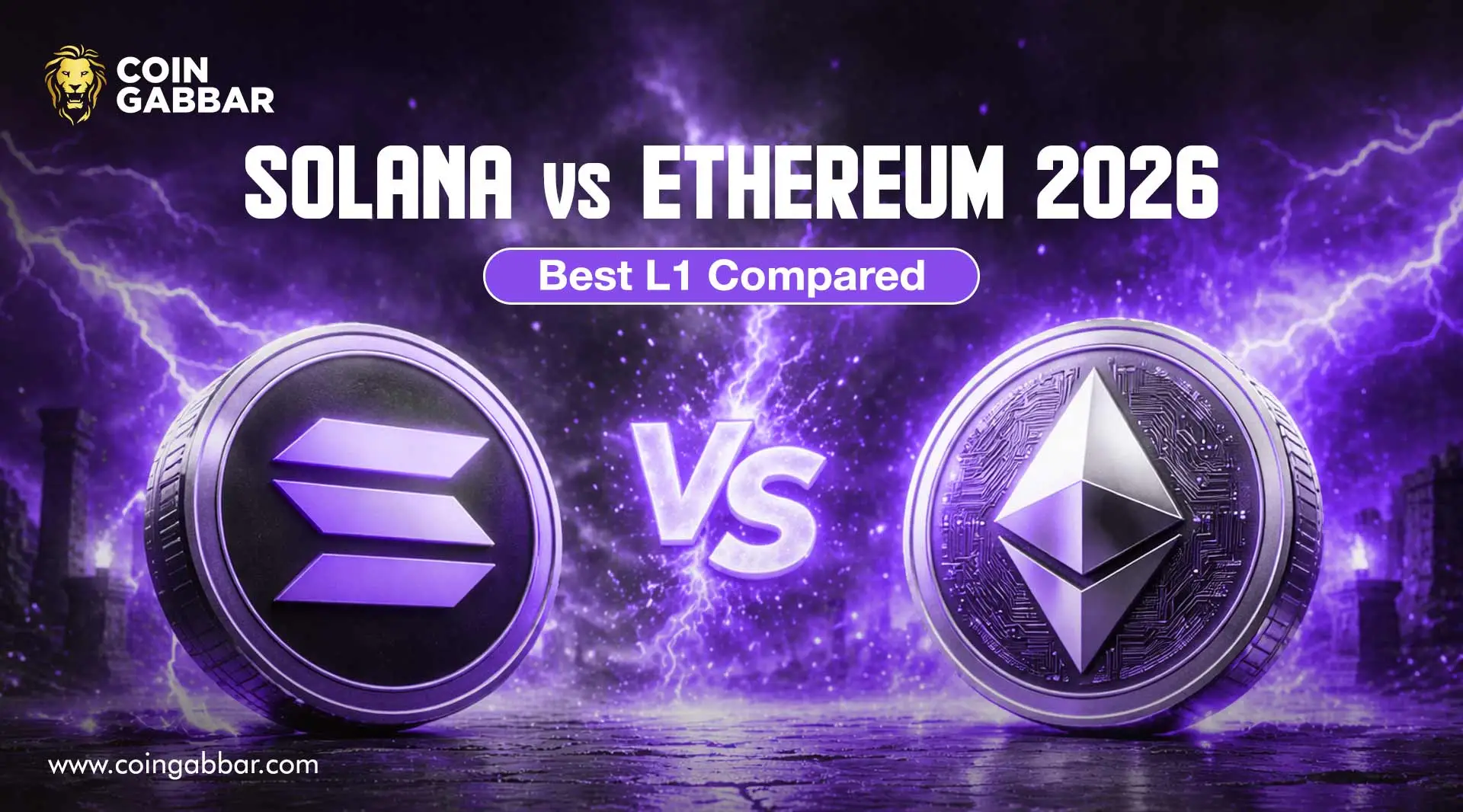
Solana vs. Ethereum 2026: Fees, TVL, ETF, and Developer Edge
If you’re comparing Solana vs. Ethereum 2026, start with one simple truth.
These chains win in different ways.
Solana (SOL) is faster and cheaper on its base layer. Ethereum is deeper, larger, and far more mature in capital, tooling, and ETF access.
So the better pick depends on what you value most. Do you want speed and low fees? Or do you want the biggest developer and investment network in crypto?
Currently, Ethereum (ETH) still leads in DeFi size. DefiLlama shows about $54.0 billion in DeFi TVL on Ethereum, versus about $5.7 billion on Solana. That gap is huge. It tells you where more capital still sits today.
Still, Solana vs. Ethereum 2026 is not a one-sided debate.
Solana has become a serious rival.
Solana DeFi trading activity is strong, its fees stay very low, and its app culture moves faster. For builders shipping consumer apps, Solana can feel far easier to use at scale. For institutions and long-term investors, Ethereum still looks more proven.
Speed and fees change the user experience
This area is where Solana vs. Ethereum 2026 gets obvious.
Solana wins on raw base-layer performance.
Solana’s research page says the network targets 55,000 theoretical TPS and an average transaction fee of $0.0025. Solana’s explorer also shows slot times near 390 milliseconds, which helps explain why apps on Solana often feel quick.
Ethereum works differently. Ethereum mainnet is slower and costlier, though its rollup roadmap aims to scale far beyond the base chain. Ethereum.
The org says Danksharding is meant to push Ethereum-based systems to more than 100,000 TPS, while Ethereum’s main site now highlights very low average transaction costs when Layer 2 activity is included.
That distinction matters.
Layer 1 use: Solana is the easier chain for cheap, rapid consumer activity. If you mean the broader Ethereum stack, including,
Layer 2, Ethereum, also offers scale. It just spreads that scale across a bigger network family. In Solana vs. Ethereum 2026, Solana wins the base-chain speed test, while Ethereum wins on the modularity scale.
Developers still follow depth, tools, and money
Developers care about more than TPS.
They care about where apps can grow.
Electric Capital’s public developer report says crypto has become more cross-chain over time, though established developers remain the core of the industry.
Third-party reports that cite Electric Capital’s 2025 data say Ethereum remained the largest developer network with 31,869 developers, while Solana ranked second and posted faster growth in full-time developers.
That makes Solana vs. Ethereum 2026 intriguing for builders.
Ethereum still has the deepest talent pool, the broadest standards, and the biggest base of infrastructure. Solana, though, has built strong momentum with new tooling, better docs, and faster app feedback loops.
Solana’s February 2026 ecosystem report highlighted LLM-ready docs, DAO tooling upgrades, and new support for AI-agent workflows.
So which chain is better for developers?
If you want the biggest hiring pool, strongest standards, and widest capital base, Ethereum still leads.
If you want faster consumer apps, lower costs, and a tighter app-first culture, Solana is often the more practical place to ship. In Solana vs. Ethereum 2026, Ethereum leads in depth, while Solana leads in speed-to-product.
DeFi, NFTs, and ETF access show the bigger picture
For investors, this part matters most.
Ethereum still dominates DeFi by a wide margin.
DefiLlama shows Ethereum with about $54.0 billion in TVL, while Solana sits near $5.7 billion. Ethereum also leads in bridged value and stablecoin scale, with about $165.29 billion in stablecoin market cap on-chain, versus Solana’s $15.04 billion.
Yet Solana is not weak.
Its trading layer is very active.
DefiLlama shows Solana DEX volume at about $1.277 billion in 24 hours, close to Ethereum’s $1.47 billion.
Solana also shows higher chain fees over the same 24-hour snapshot, at about $502,759 versus Ethereum’s $306,076, which suggests strong user demand on the base chain.
NFTs tell a similar story. Ethereum still leads in dollar value, while Solana remains a lower-cost NFT venue with steady activity.
DefiLlama’s chain pages show Ethereum NFT volume around $648,199 in 24 hours, versus Solana's near $133,408. CryptoSlam’s blockchain rankings also place Ethereum ahead of Solana in current NFT sales volume.
ETF access is another split. In Solana vs. Ethereum 2026, Ethereum clearly has the more mature U.S. ETF story. SEC filings show spot Ether ETFs began trading on July 23, 2024.
Solana investment products are newer in the U.S.; SEC filings show Grayscale launched GSOL in October 2025, then said in December 2025 that it planned to rename it the Grayscale Solana Staking ETF effective around January 5, 2026.
Key features that set each chain apart
Here are the main strengths of Solana vs. Ethereum 2026:
-
Solana key features
-
Very low average fees, near $0.0025, according to Solana’s research page.
-
High theoretical throughput of 55,000 TPS.
-
Fast base-layer user experience with sub-second slot times.
-
Ethereum boasts a robust consumer app and trading culture.
-
Ethereum key features
-
Largest DeFi capital base, near $54.0 billion TVL.
-
According to the cited Electric Capital 2025 data, it has the largest developer network.
-
Mature ETF access in the U.S. since July 2024.
-
Enormous Layer 2 roadmap for low fees and very high throughput.
Pros and cons table: Solana vs. Ethereum 2026
| Chain | Pros | Cons |
| Solana | Faster base-layer speed, very low fees, strong retail and app momentum, active DEX trading | Smaller DeFi TVL, smaller developer base than Ethereum, newer ETF story, still less institutional depth |
| ETH | Largest DeFi TVL, biggest developer network, strongest standards, mature ETF access, huge Layer 2 reach | Mainnet is slower and costlier; user experience often depends on choosing the right L2, a more complex stack for beginners |
If you’re considering Ethereum after comparing the two networks, our guide to buying Ethereum walks through the basic process and key things beginners should know.
If the comparison has helped you understand Solana and you’re considering getting SOL, our beginner’s guide to buying Solana explains the basic steps and what to consider before purchasing.
So which L1 looks better in 2026?
The clean answer is this.
In Solana vs. Ethereum 2026, Solana looks better for builders who want speed, cheap transactions, and app-first design.
Ethereum looks better for developers and investors who value capital depth, standards, institutional access, and the widest long-term network effects.
If you are a developer building payments, trading tools, or mass-user apps, Solana may feel better today.
If you are building core finance, tokenization, infrastructure, or products that need the biggest crypto capital pool, Ethereum still looks stronger.
For investors, Ethereum's vision still looks like the safer benchmark.
For upside and user growth, Solana remains the sharper challenger.
If you want to extend the comparison beyond Solana and Ethereum, our XRP vs Ethereum comparison looks at how the two assets differ in technology, use cases, and market positioning.
Conclusion
So, who wins: Solana vs. Ethereum 2026?
Neither chain wins every category.
Solana wins on raw L1 speed, low fees, and consumer app flow. Ethereum wins on DeFi depth, developer scale, standards, and ETF maturity.
If you want the fastest base layer, Solana stands out. If you want the broadest crypto platform for long-term developers and investors, Ethereum still leads today. That’s the real takeaway.
Pick Solana for performance. Pick Ethereum for depth.
If you’re looking at Solana and Ethereum from an investment perspective, it’s also useful to follow how market conditions may affect SOL and ETH. Our price predictions cover key trends, price levels, and factors shaping its outlook. Check -
This article is for educational purposes only. It is not financial advice. Solana vs. Ethereum 2026 Crypto prices, TVL, fees, and ETF products can change fast. Always check live market data, project docs, and regulatory filings before you invest or build on any chain.
Also read:








.webp)




