Top 10 Blockchain Development Companies for 2025

Top Blockchain Development Companies & Hiring Guide 2025
If you’re comparing top blockchain development companies in 2025, you’re likely balancing speed, security, compliance, and ROI. Choosing the right partner matters as Web3, DeFi, RWA tokenization, and enterprise blockchains keep maturing. Global market estimates point to rapid expansion—market size projections for 2025 range around $58B, buoyed by institutional adoption and AI-augmented dev stacks.
Highlights
-
Enterprise interest and crypto momentum are accelerating production-grade deployments.
-
Shortlisted firms exhibit proven delivery of dApps, DeFi/DEXs, wallets, RWA, and private chains.
-
Shortlisting balanced across tech stacks (EVM, Starknet, Aptos, Hyperledger, multi-chain).
-
Ratings/awards confirmed on Clutch/industry directories where available.
How to Choose the Right Blockchain Development Company
If you want to hire a top blockchain development company for your case, consider the following:
-
Industry experience. Look for shipped projects in your domain (fintech, supply chain, gaming, healthcare, public sector). Regulated sectors need partners who have worked with KYC/AML, audits, and privacy by design.
-
Tech stack & supported platforms. Confirm experience working with Ethereum/EVM (including L2s), Polygon, Solana, NEAR, Aptos/Sui, Hyperledger/Quorum, and interoperability between multiple chains.
-
Security & compliance history. Ask for safe SDLC practices, formal audits (internal or via third parties), key management policy, and documents certifying SOC 2/ISO-27001 readiness where needed.
-
Proven portfolio & case studies. Call for concrete outcomes: adoption rates, TVL where applicable, performance/SLA metrics, or before-and-after efficiency gains.
-
Client ratings & reviews (Clutch/G2). Third-party reviews help ensure the quality of delivery and communication.
-
Strategic counsel (not just coding). Top vendors provide tokenomics, compliance pathways, product roadmap, and staging (PoC MVP scale), not just implementation.
All these factors matter. Be careful when evaluating your future partner, as it is the main factor affecting the quality of the final product.
Top 10 Blockchain Development Companies in 2025
Here are the top blockchain development companies worth your attention in 2025.
-
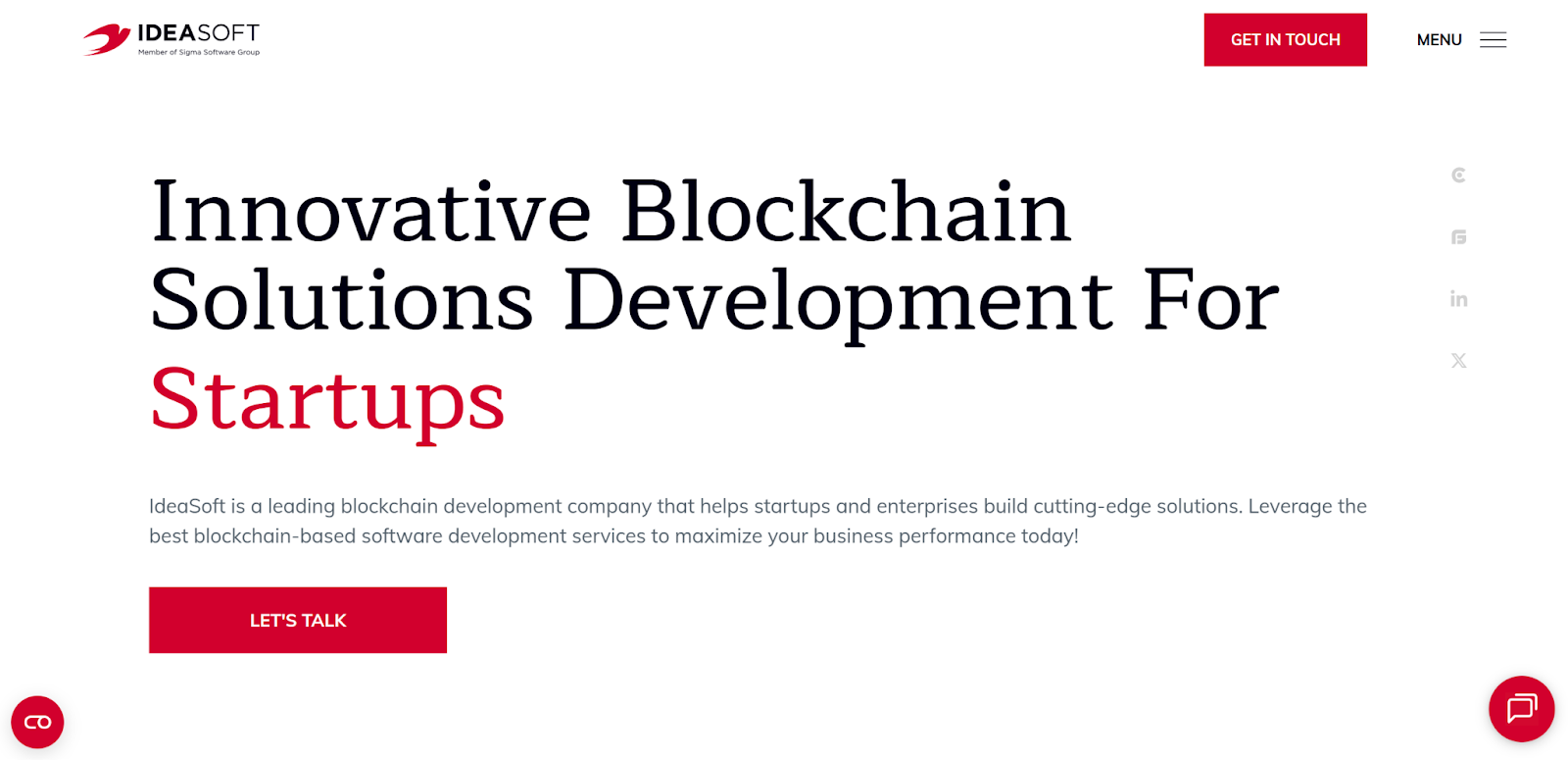
HQ & origin: Tallinn (presence through EU/LatAm/UA group); founded 2016; Sigma Software Group-owned since 2021.
-
Core services: Smart contracts, wallet and DEX development services, CEX creation, NFT/RWA, AML/RegTech, along with AI/ML and full-cycle product divisions.
-
Sectors served: Fintech, Agtech, B2G, healthcare, logistics, and gaming.
-
Standout projects/differentiators: 250+ successful projects like non-custodial wallets (Dollet), DEX derivatives (JibX), security token issuance (Securitize), staking and compliance solutions—demonstrating both startup agility and enterprise discipline.
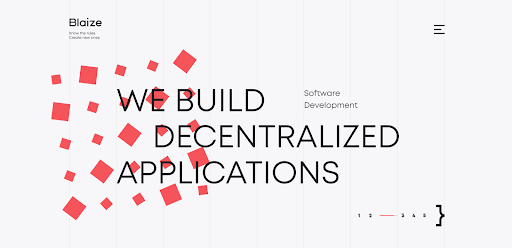
Blaiz
-
HQ & origin: Ukraine (Kyiv/Dnipro); founded 2016.
-
Core services: Web3 development, DeFi/DEX, cross-chain bridges, private blockchains, audits (through security arm), TON/NEAR/Starknet, Aptos.
-
Sectors served: DeFi, gaming, health IT (consortium/Quorum), asset management.
-
Standout projects/differentiators: Private blockchain for supply-chain, money-market protocol on NEAR, StarkDeFi on Starknet, Aptos asset-management service, R-Dee healthcare data hub—wide multi-chain deployment.
Blockstars

HQ & origin: Ashmore, Queensland (Suite 36, 207 Currumburra Rd); founded 2021.
Core services: Web3 dApps, NFTs, DeFi, blockchain + AI solutions, crypto forensics.
Sectors served: Sustainability (carbon removal), retail/supply chain, investigations.
Standout projects/differentiators: Built Trescool carbon-removal NFT standard on Ethereum, Polygon, Solana; public case storytelling and workshop-to-MLP delivery playbook.
Gexabyte
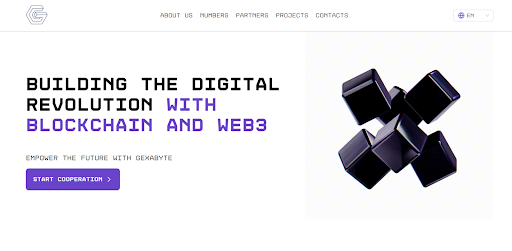
HQ & origin: Almaty, Kazakhstan; founded 2018.
Core services: Blockchain backends, smart contracts, tokenomics/white-paper consulting; delivery teams scaled for complex platforms.
Sectors served: DeFi, marketplaces, crowdfunding; presence in local Web3 ecosystem (TechCulture/Gexabyte group).
Standout projects/differentiators: Develops NFT marketplaces and trading backends; regional presence and cost-effectiveness for CIS/MEA projects.
Cyber Bee
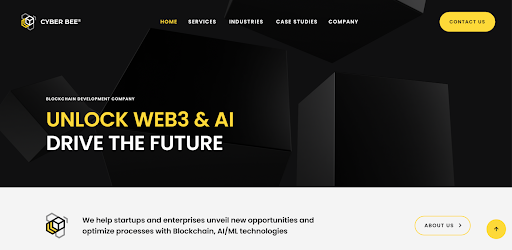
HQ & origin: London, UK; founded 2015.
Core services: Web3 & blockchain (DEXs, explorers, staking, RWA tokenization), AI/ML, custom software, dedicated teams.
Sectors served: Fintech, insurance, gaming, and real estate.
Standout projects/differentiators: BullionFX—a tokenized platform for trading gold with real-time rates and self-custody; Clutch "Top Web3/Blockchain Company UK 2025" badges.
Vareger
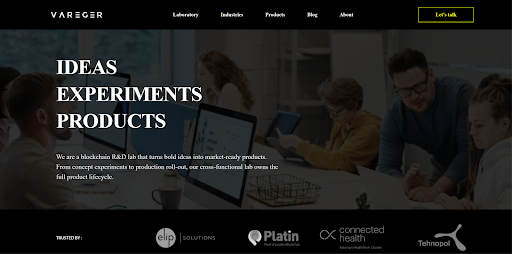
HQ: Tallinn, Estonia
Core services: blockchain R&D, product discovery launch, smart contracts, DeFi/FinTech, enterprise solutions
Sectors served: fintech, enterprise, gaming/entertainment
Standout projects/differentiators: “Blockchain product lab” approach—owning the full lifecycle from idea to production with domain pages for FinTech/Enterprise and industry verticals.
Bitorix
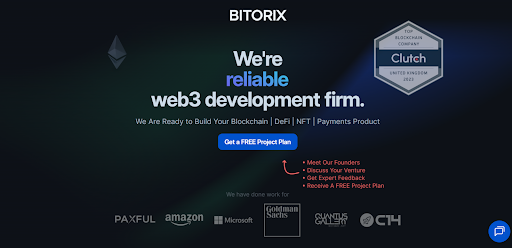
HQ: (team with UK roots); founded in 2018
Core services: custom blockchain software, payments/fiat ramps, DeFi systems, NFT marketplaces, smart contracts
Sectors served: exchanges/fintech, NFT marketplaces
Standout projects/differentiators: NFT marketplace build for Quantus Gallery; crypto-to-fiat on-ramp and conversion systems; founders with FAANG/finance backgrounds.
Chainza
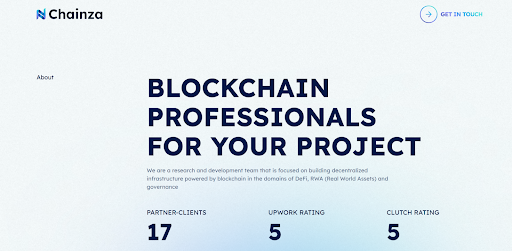
HQ: Ukraine; lists 5-star Upwork and Clutch ratings on its site
Core services: smart-contract engineering (Solidity), full-stack Web3 (TypeScript/React), QA with blockchain background
Sectors served: DeFi, RWA tokenization, DAO/governance
Standout projects/differentiators: Cross-chain NFT bridge (Ethereum EOSIO) and DeFi trading platform work (e.g., bitoftrade)
Novvr (formerly Lapits Technologies)
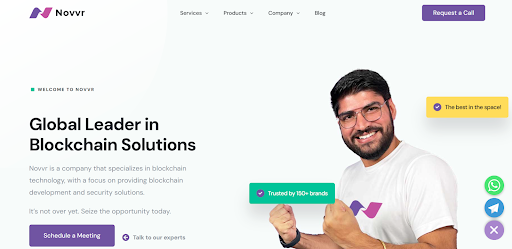
HQ: Greater Noida (UP), India; founded in 2018 as Lapits Technologies Pvt. Ltd.
Core services: blockchain & smart-contract development, NFT marketplace builds, audits, DeFi, dApps
Sectors served: fintech, marketplaces, startups/SMB
Standout projects/differentiators: “Top Rated / 100% Job Success” positioning and 150+ brands served, plus clear India base and contact details.
SapientPro
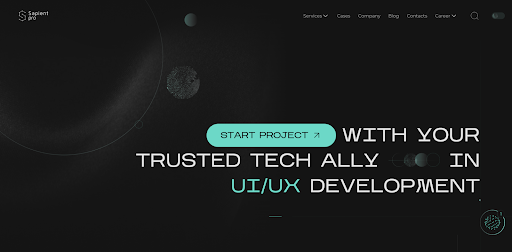
HQ: Chernivtsi (UA), Tallinn (EE), Lucerne (CH); founded in 2017
Core services: Custom software + Web3/blockchain (smart contracts, Solidity, dApps), AI, SaaS, e-commerce, UI/UX; 200+ projects shipped by a 70+ team.
Sectors served: fintech, marketplaces, business digitalization (startup enterprise).
Standout projects/differentiators: Consistently strong client feedback (~5/5 on Clutch; 30–37 reviews) and clear delivery playbooks from PoC/MVP to production.
Industry Trends Shaping Blockchain Development in 2025
We see 4 main industry trends that no blockchain development company can miss:
-
Enterprise-grade adoption. Increasingly, more pilots are passing security/compliance gates (finance, healthcare, supply-chain), going toward private/permissioned and hybrid architectures.
-
AI in the toolchain. From code generation to anomaly detection and gas optimization, AI is shortening delivery cycles and locking down hard.
-
Interoperability/multi-chain. Composability is not a nice-to-have. It's required by bridges, messaging, and L2/L3 design.
-
Compliance-ready builds. As crypto markets reach a multi-trillion-dollar value, risk/governance and auditability are table stakes.
With these trends in mind, you can ask your potential partners the right questions to assess their competence for your future blockchain project.
Conclusion
Pairing a vendor's strengths with your use case is the biggest success determinant. The above firms provide genuine casework across all DeFi, RWA, wallets/exchanges, and enterprise/private chains. Use this list as a starting point—match strengths, check references, and select the team most suitable for your roadmap and constraints.
Quick advice before working with a blockchain partner:
-
Pin down scope, budget, timeline (and your comfort with public vs. permissioned risk).
-
Ask for a PoC/MVP plan with success criteria and rollback terms.
-
Verify post-launch support (SLA, on-call, L2/L3 escalation, incident response).
-
Check security practices (key management, audits, privacy posture, dependency scanning).
If you want a partner who can guide you from concept to launch, consider starting with a free consultation to de-risk the first sprint.
Also read: