Crypto Projects Trading Under $1 Worth Buying

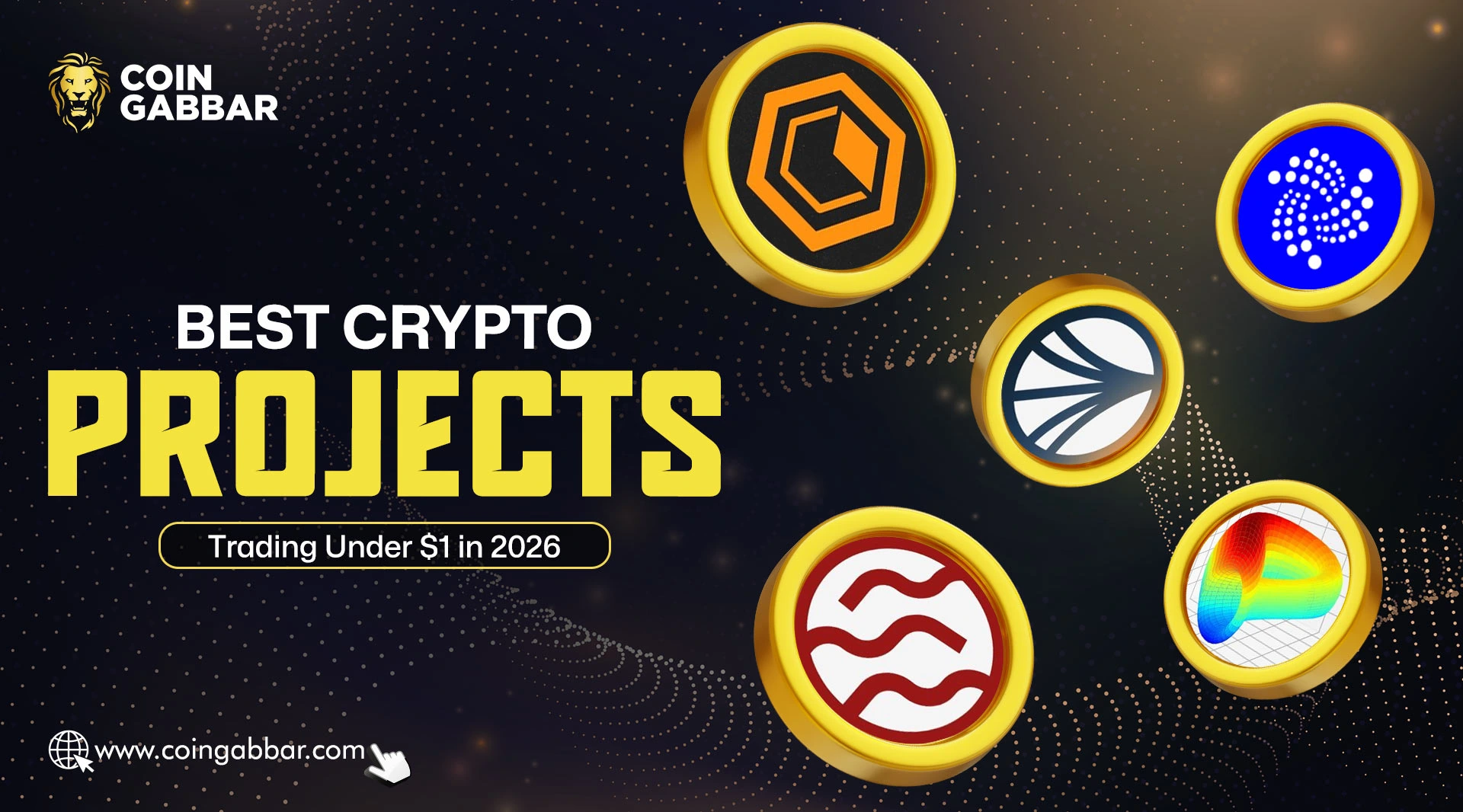
Best Crypto Projects Under $1 to Watch for Potential Growth in 2026
Best Crypto Projects Trading Under $1 to Watch for Potential Growth in 2026
The crypto market always shows two sides. One side keeps talking about Bitcoin, Ethereum, and coins that already feel expensive. The other side quietly studies crypto tokens under $1, the low-cost projects that can still surprise the market later.
History shows that many strong crypto stories begin when prices are ignored, not when a token is already famous. Early attention on a low-priced coin often turns out to be the real advantage for patient investors.
What "Under $1" Really Means in Crypto
A low token price does not automatically mean a low-quality project. Price only reflects supply and demand, not the strength of the technology behind it.
Many under-$1 tokens have large circulating supplies, which naturally keeps the per-token price low even when the overall project is well-funded and actively used.
Investors are advised to look at market capitalization, real usage, and development activity instead of price alone. A $0.10 token with strong fundamentals can outperform a $50 token with weak adoption.
Best Crypto Projects Trading Under $1 With Real Potential
As 2026 approaches, investors are once again searching for the best crypto under $1 and other low-cost crypto projects that still have room to grow. Five tokens stand out today because they already have working products, real users, and active development, not just hype.
1) Curve DAO Token (CRV): Stablecoin DEX Governance Token
Price and market data: Price $0.3792, Market Cap $589.01M, 24h Volume $76.50M, Circulating Supply 1.55B CRV, Total Supply 2.41B CRV, Max Supply 3.03B CRV.
Curve DAO is the go-to decentralized exchange for stablecoins. CRV is used for governance and to reward liquidity providers on the platform.
The platform makes trading between pegged assets cheap and low-slip, which is why large traders and DeFi users favor it. The current market trend shows steady volume alongside a mid-cap valuation.
Why it could grow in 2026: Wider DeFi adoption, improved cross-chain tools, and higher crvUSD and stablecoin usage could raise fees and demand for the governance token.
2) Sei (SEI): Top Cheap Crypto Under $1 For Decentralized Trading
Price and market data: Price $0.0492, Market Cap $366.96M, 24h Volume $42.57M, Circulating Supply 7.46B SEI, Max Supply 10B.
Sei is a Layer-1 blockchain built for fast, low-cost trading and decentralized exchanges. Unlike general-purpose blockchains, Sei focuses specifically on speed and efficiency for trading activity.
SEI is used to pay network transaction fees, secure the chain through staking, and participate in governance voting. Applications built on Sei also rely on the token for DeFi trading activity.
Why it could grow in 2026: Sei's continued focus on decentralization and application efficiency may draw more developers and traders toward the network over time.
3) Sonic (S): Fast Layer-1 and Ecosystem Token
Price and market data: Price $0.0295, Market Cap $84.97M, 24h Volume $6.39M, Circulating Supply 2.88B S, Total Supply 3.22B S.
Sonic is a Layer-1 blockchain built for very fast transactions and low fees. It supports DeFi platforms and decentralized applications, making it a cheap crypto option with real technical value.
Sonic has attracted strong interest from traders and developers because of its speed and low-cost transactions. The team continues building new partnerships to expand the network's user base.
Why it could grow in 2026: Successful DeFi partnerships, scalable new tools, or planned tokenomics changes could raise demand if the network attracts more everyday users.
4) IOTA (IOTA): IoT and Feeless Data Economy Token
Price and market data (CoinMarketCap): Price $0.0425, Market Cap $196.86M, 24h Volume $5.43M, Circulating Supply 4.63B IOTA.
IOTA uses a DAG structure called the Tangle instead of a classic blockchain. It targets Internet-of-Things data and micropayments through feeless transfers, focusing on machine-economy use cases and enterprise partnerships.
Renewed attention has followed recent protocol upgrades and new staking and liquidity products connected to the network.
Why it could grow in 2026: Greater enterprise IoT adoption, decentralization upgrades, and new staking products could all help lift demand for the token.
5) Core (CORE): Bitcoin-Secured Layer-1 With DeFi Focus
Price and market data (CoinMarketCap): Price $0.0214, Market Cap $32.08M, 24h Volume $2.79M, Circulating Supply 1.50B CORE, Max Supply 2.1B.
Core is a Layer-1 project that emphasizes Bitcoin-level security while still supporting smart contracts and DeFi activity. Its design blends Bitcoin's security model with EVM-style compatibility, allowing developers to build familiar applications with added protection.
The CORE token serves multiple functions, including governance, staking, and securing the network. Its primary market focus remains the DeFi and NFT sectors.
Why it could grow in 2026: The Bitcoin security angle may attract conservative DeFi builders, while EVM compatibility lowers the barrier for new developers and improved staking tools can raise on-chain activity.
Quick Comparison
Token | Category | Price (CMC) | Market Cap |
CRV | Stablecoin DEX governance | $0.3792 | $589.01M |
SEI | Layer-1 trading chain | $0.0492 | $366.96M |
S | Fast Layer-1 ecosystem | $0.0295 | $84.97M |
IOTA | IoT/feeless data | $0.0425 | $196.86M |
CORE | Bitcoin-secured Layer-1 | $0.0214 | $32.08M |
Risk
Token unlock schedules and concentrated holders can add sudden selling pressure across most projects.
Under-$1 tokens often carry large circulating or max supplies, which can limit long-term price appreciation.
Competition among Layer-1 and DeFi-focused chains remains intense, and newer entrants can pull liquidity away.
Enterprise and developer adoption for niche categories like IoT can move slower than expected.
Overall crypto market volatility can affect low-cap tokens more sharply than larger, established coins.
Regulatory changes in different regions could impact how these tokens are traded or accessed.
Conclusion
Buying tokens under $1 lets smaller investors hold larger share counts, but every token carries its own risk profile. The five projects discussed here, CRV, SEI, Sonic, IOTA, and CORE, each solve a different problem, from stablecoin swaps and high-speed trading to IoT data and Bitcoin-secured DeFi.
Investors are encouraged to study each project's fundamentals, supply structure, and adoption trends before making any decision, rather than relying on price alone.
Disclaimer
This is not financial advice. Readers are advised to do their own research before investing. CoinGabbar is not responsible for any financial losses. Crypto assets are highly volatile, and investors can lose their entire investment.
Price and market data sourced live from CoinMarketCap and subject to change.
















