Canary Capital Files PEPE ETF With SEC: Will Market Take It Seriously?


SEC Gets PEPE ETF Filing as Canary Capital Double Down on Crypto Funds
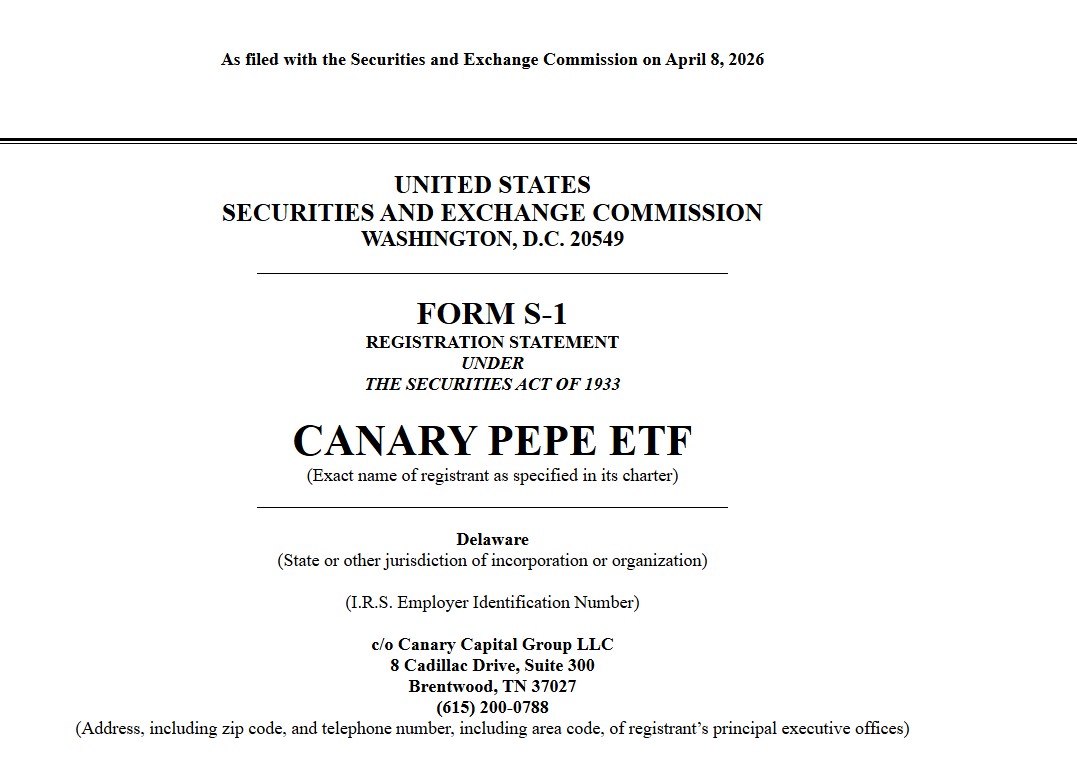
Canary Capital filed an S-1 registration statement for the Canary PEPE ETF with the U.S. Securities and Exchange Commission. The proposed fund would give investors spot exposure to a memecoin known for sharp price swings. The filing adds to the growing list of altcoin exchange-traded fund proposals, which have also sparked outside criticism over possible hype-driven filings.
PEPE Heads for Wall Street’s Front Door
Canary Capital has filed an S-1 registration statement with the SEC for the Canary PEPE ETF. If the registration becomes effective, the firm plans to begin issuing shares tied to spot PEPE exposure. In today’s market, that stands out because memecoins still sit at the far edge of the cryptocurrency risk curve.
Source: Official Website
Why PEPE ETF Filing Matters Now?
The proposal would track the price directly. In simple terms, a spot exchange-traded fund lets investors gain exposure without buying the token on a crypto exchange. That matters for readers who want easier market access through a traditional investment product.
The key document here is the S-1 filing. That is the formal registration statement companies submit to the SEC when they want to offer a new security to the public. The filing does not mean approval is guaranteed. It only starts the formal review path.
That distinction matters.
Canary lands at a time when crypto ETFs issuers are pushing beyond Bitcoin and Ethereum. Over recent months, firms have tested investor appetite for products tied to smaller digital assets. Canary has been one of the more active names in that race.
From Litecoin to Memecoins: How Far Can the PEPE ETF Push Go?
Canary Capital has already built a reputation for filing altcoin-focused products. The firm has previously pursued ETFs tied to assets such as Litecoin, Hedera, and XRP. It has also filed for memecoin-linked products tied to names like MOG and PENGU.
That wider strategy gives this filing more context. It does not look like a one-off move. Instead, it fits a broader push to expand crypto ETFs into assets with smaller market depth and higher volatility than Bitcoin.
Still, not everyone is convinced.
Some outside observers have questioned whether repeated altcoin and memecoin filings are meant to build headlines rather than launch viable products. That skepticism has followed Canary before, especially as the firm targets increasingly speculative corners of the cryptocurrency market.
Will Traders Cheer or Just Don't Care?
This news could draw attention from traders who watch new crypto ETFs narratives closely. In crypto, Exchange traded-fund headlines often shape short-term sentiment even before any approval arrives. That is especially true for tokens with strong online communities and fast-moving price action.
PEPE ETF its that mold.
For now, the market reaction may depend less on the filings itself and more on whether the SEC signals openness to such products. A memecoin would mark a much riskier category than earlier crypto funds. That is why traders, issuers, and regulators will likely watch the next steps closely.
Conclusion
Canary Capital PEPE ETF filing shows how far the crypto ETFs race has moved beyond major tokens. It also highlights rising demand for niche exposure, even in high-risk assets. Whether regulators accept that shift now remains the bigger question.
Disclaimer: This article is for information only and does not offer financial advice. Crypto assets, especially memecoins, can be highly volatile. ETF filings also do not guarantee approval, launch, or investor demand, so readers should treat early-stage developments with caution.
Also read:







