Capybobo Token Airdrop S2: Why Spending $CROCO Could Unlock Big Reward

Burn to Earn? Capybobo Token Airdrop S2 Introduces $CROCO Burn Rewards
Key Highlights
Spending $CROCO increases your Capybobo Airdrop S2 reward weight.
The token burn mechanism reduces supply, supporting long-term ecosystem value.
The second gameplay participation determines a larger airdrops allocation reward.
Capybobo Token Airdrop S2: What Does the Latest Update Mean?
Season 2 follows a simple rule where Players who actively participate receive larger rewards. Under the new system:
Holding $CROCO in-game: Grants a baseline share of the airdrop.
Spending $CROCO in Capybobo 2: Increases the weight of your reward allocation.
This means the S2 rewards are now tied more closely to gameplay engagement rather than just token accumulation. Developers say this change aims to encourage real activity inside the ecosystem rather than short-term farming.
How Spending CROCO Boosts Airdrop Allocation?
The Capybobo CROCO airdrop Season 2 system works through weighted participation. Here is the mechanism explained:
Holding Tokens: Users who simply hold inside the game qualify for the S2 with a standard allocation weight.
Spending Tokens: Players who spend on in-game activities receive a higher reward weight.
Token Burn Mechanism: All the money that CROCO spends goes to waste; that is, the circulation supply reduces.
This will be aimed at reinforcing the economy and rewarding the active players.
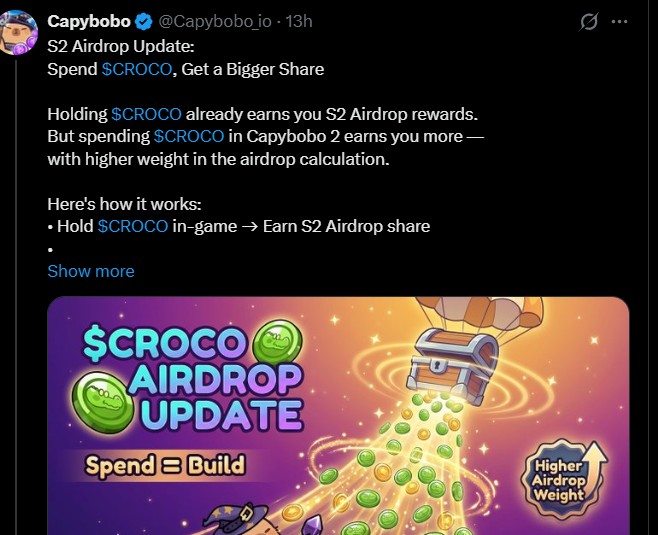
Source: Official X
What Capybobo Crypto Telegram Game Includes?
There are two major tokens in the ecosystem:
$PYBObo - Interacts with the ecosystem and platforms.
$CROCO - This is used in the second game to mine, receive gameplay rewards, and make transactions.
The players usually make money in the virtual form of pets and mining, and use it in the game economy. This dual-token model justifies Season 2, which connects the gameplay activity to the distribution of tokens.
Why the Burn Model Matters for Capybobo Token Price?
The token-burning system may have consequences for the price. Due to the destruction in every transaction, supply is slowly reduced, and engagement may lead to demand. Theoretically, this relationship might affect:
Tokens price in the future.
Long-term price prediction.
But the actual market performance will be based on the user adoption and the wider Web3 gaming industry.
Capybobo Airdrop Listing Date Expectations
The official date is not officialized. There is community speculation that the airdrop distribution can occur when Season 2 gameplay milestones are reached. Investors and players are keenly following announcements on:
Timeline of the token distribution.
Exchange listing updates
Potential after listing fluctuations in price.
Community Reactions and Sustainability Questions
Although the update has caused enthusiasm, there have been some concerns about it among some members of the community. Some of the discussions indicate that airdrops based ecosystems occasionally can encourage short-term agricultural practices.
Unless the crypto economy grows beyond reward incentives, sustainability may become a problem. Nevertheless, advocates believe that combining gameplay spending and token burning can produce a more robust long-term ecosystem than reward-based models.
Final Thoughts
The update is a change of passive holding to active gameplay. The project will establish a more active community and a healthier token economy by connecting rewards with the amount of money spent and a burn mechanism.
With the Capybobo airdrop date and possible listing announcements being near, players and investors will be paying close attention to how the price and ecosystem will change over the next few months.
Disclaimer: This is not financial advice. Please DYOR before investing. CoinGabbar is not responsible for any financial losses. Crypto assets are highly volatile, and you can lose your entire investment.







