How the New Crypto Developer Protection Bill Shields Digital Coders


Why the 2026 Crypto Developer Protection Bill is a Win for Innovation
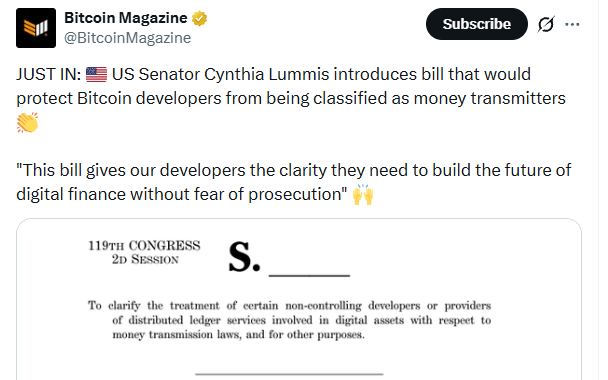
If you've been following the headlines, you know that 2025 was a scary year for the people who actually build our favorite crypto apps and wallets. Between the high-profile court cases and new licensing threats, the developer community has been on edge. But on January 12, 2026, Senators Cynthia Lummis and Ron Wyden introduced a bill that finally puts crypto developer protection bill into federal law.
 Source: X(formerly Twitter)
The Blockchain Regulatory Certainty Act (BRCA) is a bipartisan "handshake" between Republicans and Democrats. It says one thing very clearly: if you are just writing code and you don't touch the users' money, you are not a bank and you shouldn't be treated like one.
Why the BRCA is a Turning Point for Crypto Developer Protection in 2026
For too long, the law has been "technologically illiterate," as Senator Wyden calls it. The government has struggled to distinguish between a bank and a person writing software in their bedroom. This new bill changes the game by creating a legal "safe harbor" for builders. Here is why this is the biggest win for crypto developer protection we've seen in years.
1. Code is Not Money Transmission
The biggest fear for a developer is being labeled a "money transmitter." Usually, that role requires millions of dollars in licenses and bank-level audits. The BRCA clarifies that publishing open-source software or maintaining a network node does not make you a financial institution. As long as you don't have "unilateral control" over user funds, you are legally protected. As Senator Lummis put it, "It’s time to stop treating software developers like banks simply because they write code."
2. A Response to Recent Legal Battles
This bill didn’t came easily. It’s a direct response to a rough year of "regulation by prosecution" that really shook the developer community in 2025. For a long time, there was a scary gray area in the law, and last year, we saw exactly what happens when that uncertainty is used against builders.
The Tornado Cash Verdict: Back in August 2025, Roman Storm, one of the co-founders of Tornado Cash, was convicted of conspiracy to run an unlicensed money-transmitting business. The industry was stunned because Storm’s whole defense was that he only wrote the code he didn't actually control where the money went. The jury, however, didn't buy the "neutral tool" argument, and that sent a clear message: writing code could now land you in a jail cell.
The Samourai Wallet Sentencing: Just two months ago, in November 2025, Founders of samurai wallet were sentenced to years in prison on similar charges. These cases created what experts call a "chilling effect." Many talented US developers actually stopped working or moved their projects overseas because they didn't want to risk their freedom just for publishing software.
BRCA designed to bring that innovation back to the US by giving developers the breathing room to build cool stuff without having to hire a lawyer just to push a software update.
3. Why Timing is Everything
This announcement is perfectly timed. The Senate Banking Committee is scheduled to "mark up" a massive crypto market structure bill Clarity Act on January 15, 2026. By introducing the BRCA as a standalone bill now, Lummis and Wyden are ensuring that crypto developer protection stays at the center of the conversation. They want to make sure these protections aren't "watered down" or traded away during final negotiations.
Conclusion: Freedom to Build
While critics worry that these exemptions could make it harder to track illicit funds, supporters argue that the bill doesn't protect criminals, it protects the tools. If this bill passes, a developer can build a privacy-focused wallet or a new DeFi protocol without needing a banking license.
By 2026, the US is at a crossroads: it can either embrace the open-source movement or regulate it out of existence. The BRCA is a loud and clear vote for the builders.
Also read:






