Ethereum RWA Rockets 315% as Wall Street Moves On-Chain

Ethereum RWA Explosion: $17B Milestone Reshapes Finance
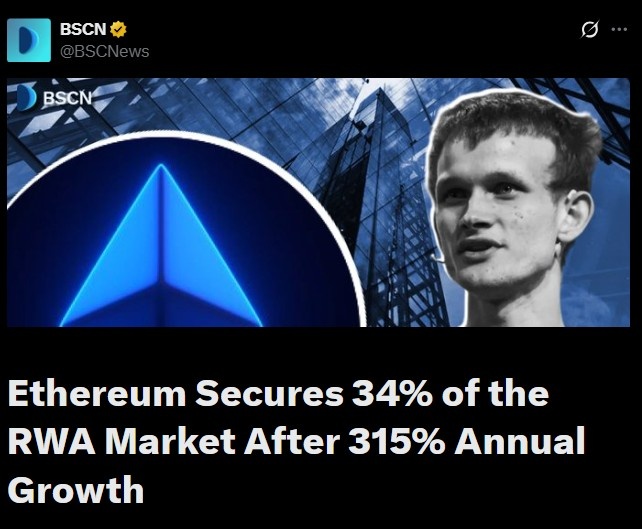
The Ethereum RWA ecosystem is witnessing historic expansion as the value of tokenized real-world assets on the network has surged past $17 billion, marking a huge 315% increase over the last 12 months. This sharp growth reflects rising institutional participation, deeper liquidity, and stronger trust in blockchain-based finance. From asset managers to trading firms, major players are now actively using Ethereum infrastructure to issue and trade regulated financial products on-chain.
Source: X official
Facts show old-style funds, government bonds, and gold are now turning into digital items. This changes how money markets work.
What Is the Tokenized RWA Market?
Tokenized real-world assets mean regular money items like U.S. Treasuries, bond funds, gold, and loans become computer tokens on a chain. These tokens show who owns what. They move fast without banks.
Key advantages include:
24/7 settlement and faster clearing
Greater transparency with on-chain verification
Instead of using banks alone, people can hold approved money tools through digital wallets. This mix of old and new finance changes how folks get capital.
Institutional Giants Driving Growth
Big money firms are not just trying things out. They are putting in cash.
BlackRock’s tokenized fund, BUIDL, holds about $2.2 billion. It ranks among the top blockchain money products. JPMorgan also put $100 million into Digitalized efforts. This shows trust from top bankers.
Trading firms are joining too. Wintermute started trading Digitalized gold on-chain. This proves goods like gold are entering this space. These moves bring more cash and attract new investors.
The size of involvement shows a clear picture: regulated players are using blockchain systems instead of fighting them.
Why Ethereum Is Leading the Tokenized Asset Race
Ethereum leads because its system is ready, its money pools run deep, and its builders stay active. Most big launches pick this chain for its safety and strong setup.
Ethereum RWA holds the biggest slice of on-chain real-world value. Top money managers like its rule-following tools, storage options, and links to DeFi.
Stablecoin tools help payments run smoothly. Layer-2 networks lower fees. These things create a steady home for Digitalized funds.
Another plus is openness. Anyone can check balances and flows on public ledgers. That was rare in old markets.
What’s Next for Tokenized Markets?
Experts say $17 billion is just the start. Treasury products led first. Next may come loans, company shares, land, and other items.
Future developments may include:
Integration with spot crypto ETFs and digital custody providers
Cross-chain interoperability enabling broader distribution
As rules become clear, more groups may join. Big investors see blockchain as cheaper than old systems.
Risks exist like rule changes and code flaws. But cash keeps flowing. This looks like a lasting shift, not a short trend.
Conclusion:
The fast rise of Ethereum RWA marks a turning point. With $17 billion turned into tokens and big firms pouring in billions, blockchain-backed assets are gaining trust. If growth continues, Ethereum RWA could reshape how securities are made, traded, and cleared worldwide.
This article is for informational purposes only and does not constitute financial advice. Digital assets and tokenized securities involve market and regulatory risks. Conduct independent research before investing.








