Japan ETF Sell Off Marks Major Shift in BOJ Monetary Strategy


Japan ETF Sell Off Could Impact Markets: BOJ Moves Toward Policy Shift
The Bank of Japan (BOJ) is preparing to begin a Japan ETF sell off, involving more than $500 billion in equity exchange-traded funds accumulated during years of monetary easing. Recent reports confirm that ETF sales are expected to start next month, with a careful and gradual approach to avoid market disruption.

Source: CryptoRover News
The BOJ plans to sell ETFs at an estimated pace of ¥330 billion ($2.1 billion) per year, ensuring that the exit does not create sudden pressure on Japanese financial markets. But at that pace, the full unwind would take over 100 years, highlighting how gradual and long-term the exit strategy is intended to be.
Why the Central Bank Is Selling ETFs
The BOJ started purchasing equity ETFs in 2010 to fight deflation and support economic growth. Over time, these purchases expanded significantly, making the central bank one of the largest shareholders in the country.
Currently, BOJ ETF holdings are estimated at around ¥60 trillion ($385–390 billion), equal to roughly 7% of the nation’s stock market. With inflation picking up and interest rates moving higher, the central bank is now shifting toward policy normalization, making the Japan ETFs sell off a necessary step.
Impact of the Unwind on Markets
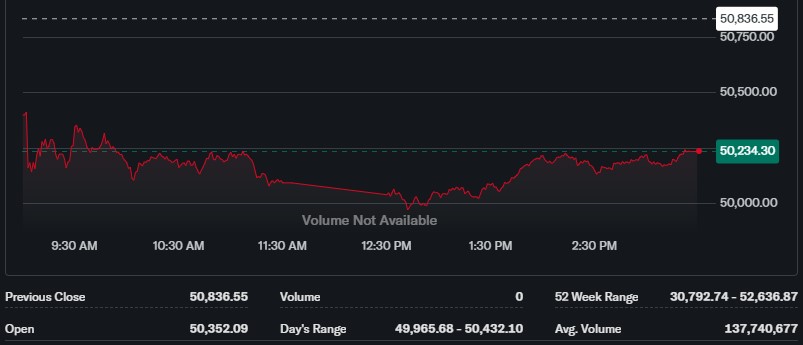
Although the BOJ plans to sell ETFs slowly, the move could still create downward pressure on both traditional and crypto markets. Regional markets recently declined as investors pulled back from AI related stocks and waited for weak economic data from China.
Japan’s Nikkei 225 fell 1.3%, while Topix slipped 0.27%, broader Asia-Pacific markets also weakened, reinforcing why BOJ officials are prioritizing stability during the Japan ETF sell off.
Source: Yahoo Finance
Along with that, the sell off could also influence global liquidity conditions. Reduced liquidity has historically weighed on risk assets, including cryptocurrencies. Past BOJ policy shifts have coincided with periods of Bitcoin price volatility, and analysts believe a prolonged exchange traded funds unwind could have a similar indirect effect.
Looking at the current market pattern, it’s currently showing a stable nature with the whole market slightly up 0.04% after a downturn earlier in day. The golden asset, Bitcoin, is hovering around $89.9-$90K (down 0.32%), where Ethereum is up with 1.52% at $3,159.
At the same time, in contrast to that, tighter policy conditions could lead to a stronger Japanese yen, as reduced asset purchases often support currency appreciation. A trend already taking shape as the yen moved toward 155 per dollar, hitting a one-week high ahead of the Central Bank’s policy meeting.
Risk note: The pace and impact of the BOJ’s ETF sell-off depend on evolving market conditions and policy decisions, and outcomes may differ from current expectations.
Final Take
The Japan ETF sell-off comes at a sensitive time, as markets are already preparing for the Bank of Japan to raise interest rates by 25 basis points to 0.75% at its upcoming policy meeting.
Together, the slow traded funds unwind and higher rates signal a clear shift toward policy normalization. While the central monetary institute is moving carefully to avoid disruption.
So, let's see how these combined steps may affect Japanese equities, the yen, and global liquidity in the months ahead.










