Meta Stablecoin Comeback Plans: A New 2026 Strategy for Payments


Behind the Meta Stablecoin Comeback Plans and Stripe Partnership
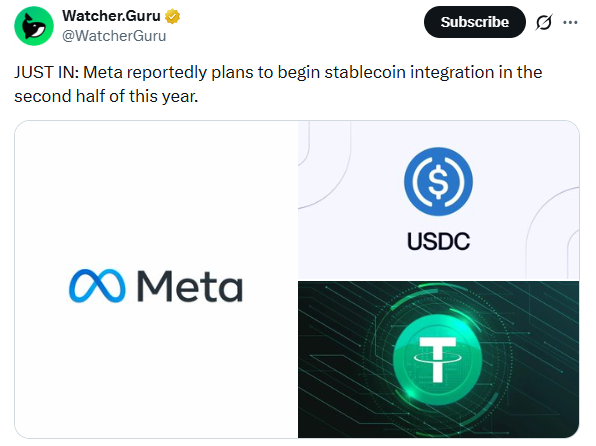
Six years after the original Libra project sparked massive debate in Washington, Mark Zuckerberg is ready for a second act. Internal reports confirm a Meta stablecoin comeback plans are ready for the second half of 2026. This plan aims to bring digital dollar payments to Facebook, Instagram, and WhatsApp. Unlike the 2019 attempt to build a new global currency, this version focuses on a "partnership-first" model. This keeps the social media giant at a safe distance from directly managing the money itself.
 Source: X(fomerly Twitter)
By using existing stablecoins like USDC instead of making its own, Meta avoids many of the legal hurdles that stopped its earlier Diem project. The company has already sent out requests to top fintech firms to help run the backend systems and a new digital wallet. This smart move lets the social media giant use its 3 billion users while letting partners like Stripe handle the heavy compliance and banking rules.
Strategic Shift in the Meta Stablecoin Payments Return Model
The biggest sign of the Meta's stablecoin comeback plan is the strong tie between Meta and the payment giant Stripe. After Stripe bought the stablecoin firm Bridge for $1.1 billion, and Stripe CEO Patrick Collison joined Meta’s board in April 2025, experts see Stripe as the most likely partner for this launch.
The Role of "Agentic Commerce"
Experts believe this comeback is about more than just sending money to friends. It is about the future of AI. The social media giant is spending over $130 billion in 2026, mostly on smart AI agents. These digital helpers will need a fast way to buy things for users without waiting days for a bank to process a payment. Stablecoins are perfect for this "agentic commerce" because they work instantly and 24/7.
Feature | Libra/Diem (2019) | Meta's 2026 Return |
Coin Type | It’s own coin | Existing stablecoins (USDC) |
Control | Direct Meta runs it | "Arm's length" Partner runs it |
Regulation | High risk (No laws) | Lower risk (GENIUS Act 2025) |
Partner | 28 companies | Likely Stripe and Bridge |
Future Outlook: A New Way to Pay Online
The primary driver for the Meta's stablecoin payments return is a new U.S. law called the GENIUS Act. Passed in 2025, this act created clear rules for stablecoins, making it safer for big tech firms to use them. By following these rules, The social media giant can offer faster and cheaper international transfers than traditional banks.
If the 2026 launch goes well, sending money on WhatsApp could become as easy as sending a photo. This could change how millions of people shop and do business online. While the first tests might start with paying creators on Instagram, the long-term goal is to build a modern payment system that works for everyone, everywhere.
Your Money Your Life Disclaimer: Cryptocurrency and stablecoin investments involve risk. Digital asset regulations are subject to change. This article is for informational purposes and does not constitute financial advice.









