Petrodollar Collapse? Iran’s Hormuz Crypto Toll Sparks Debate

Petrodollar Collapse Narrative Grows With Iran’s Hormuz Toll Plan
What happens when a key oil route starts asking for crypto? Petrodollar Collapse? That question now sits at the center of this story. Market sources say Iran may charge about $1 per barrel for tankers passing through the Strait of Hormuz. Some reports also say total fees could reach $2 million per ship.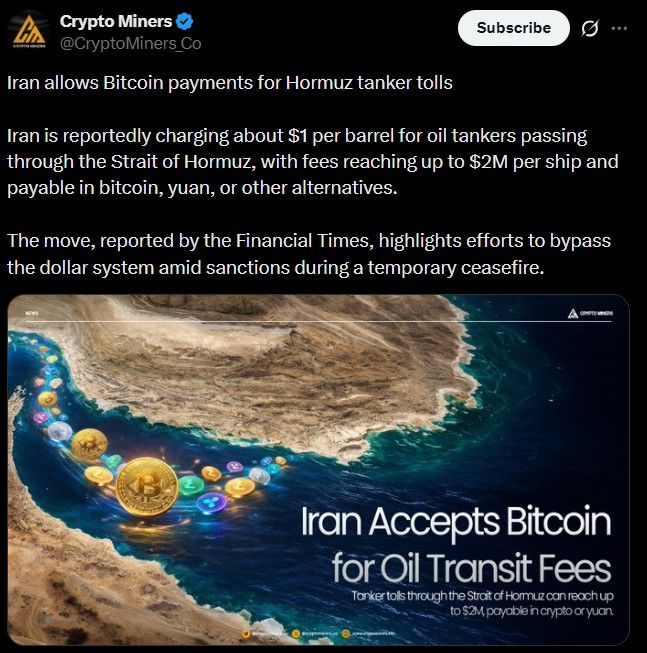
Source: X Official
The payment angle makes this story different.
Reports suggest ships may pay in bitcoin, yuan, or other options, including stablecoins. If true, this would push a major oil route into the middle of the Petrodollar Collapse debate. Still, readers should note this news is based on market reports and assumptions. No exact public payment system has been confirmed.
Why This Matters Beyond Oil
The Strait of Hormuz is not a small shipping lane. Around 20% of global oil and LNG trade moves through it. So even one toll change can affect energy markets, shipping costs, and payment systems.
That is why crypto readers should pay attention.
This is not just another headline about bitcoin. It is a test of whether oil-linked payments can start moving outside the U.S. dollar. That is the deeper Petrodollar Collapse question here.
-
Oil trade has long relied on the dollar
-
A crypto or yuan toll would challenge that pattern
Why Stablecoins May Benefit More Than Bitcoin
Bitcoin Payments gets the attention first. It is the best-known crypto. It also sends a strong signal when a country wants a non-dollar payment route.
Still, stablecoins may work better in real trade.
A stablecoin is a crypto token that tries to hold a steady value, often near $1. That makes it easier for shipping firms to price fees and manage risk. Bitcoin can rise or fall fast in a single day. A tanker company may not want that kind of price swing on a large payment.
That is why stablecoins may gain more from this model.
They offer the speed of crypto with less price shock. In a real payment setting, that matters more than hype. If this toll model grows, stablecoins could become the more useful tool in the Petrodollar Collapse story.
Petro-Crypto and Petro-Yuan Come Into View
This is where the story gets bigger.
A petro-yuan path means oil-linked payments move into China’s currency. A petro-crypto path means digital assets help move trade without using the dollar first. Iran’s reported toll model points to both ideas at once.
In simple terms, this is about settlement power. Settlement means the final way money gets paid between two sides. If tolls move into yuan or crypto, even in a limited way, it adds new weight to the Petrodollar Collapse theme.
What Readers Should Keep In Mind
This story is still developing.
The payment model is not fully clear. The final rules are not public. The legal side also looks uncertain. So readers should treat this as a reported market shift, not a fixed system with guaranteed steps.
-
The fee structure is still report-based
-
Stablecoin use looks possible, not confirmed
-
The legal response could still change the story
Conclusion:
Iran’s reported Hormuz toll plan could become an early real-world test of oil trade outside the dollar. Bitcoin Paymentsgives the story its headline. Stablecoins may give it practical use. Yuan gives it political weight. For now, the Petrodollar Collapse angle remains a strong signal, not a finished outcome.








