Polkadot ETF Launch: 21Shares TDOT Boosts Polkadot Price Today


21Shares Polkadot ETF Launch on Nasdaq Expands DOT ETF Access
The Polkadot ETF market is gaining attention after crypto asset manager 21Shares confirmed that its new ETF called TDOT will start trading on Nasdaq. This marks the first U.S. exchange-traded fund designed to track the price of network’s native token, DOT.
It is expected to make it easier for traditional investors to gain exposure to the Polkadot ecosystem without directly buying the token. Because of this announcement, market sentiment around DOT improved slightly, even while the broader crypto market remained cautious.
21Shares Launches First U.S. Polkadot ETF
The 21Shares Polkadot ETF, trading under the ticker TDOT, will track the actual trading price of DOT. The Exchange Traded Fund is a passive investment product that follows the CME CF Polkadot-Dollar Reference Rate (New York Variant). The fund will subtract fees and liabilities while tracking the price of the asset.
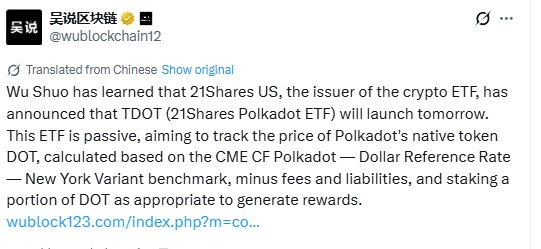
Source: X (formerly Twitter)
Unlike synthetic products, this will directly hold DOT tokens. According to the fund structure, the trust may also stake a portion of its DOT holdings to generate network rewards.
This approach is similar to how other crypto ETFs are structured in the United States. The 21Shares ETF uses a grantor trust model, which is also used by spot Bitcoin and Ethereum ETFs.
For investors who want exposure to the native token, the ETF removes the need to manage private wallets or crypto exchanges.
Polkadot Price Today Moves Higher
The altcoin news had an immediate effect on the market. It is around $1.52, showing a small increase over the last 24 hours. During the same period, Bitcoin dropped about 1.31%, which means DOT moved independently from the broader market.
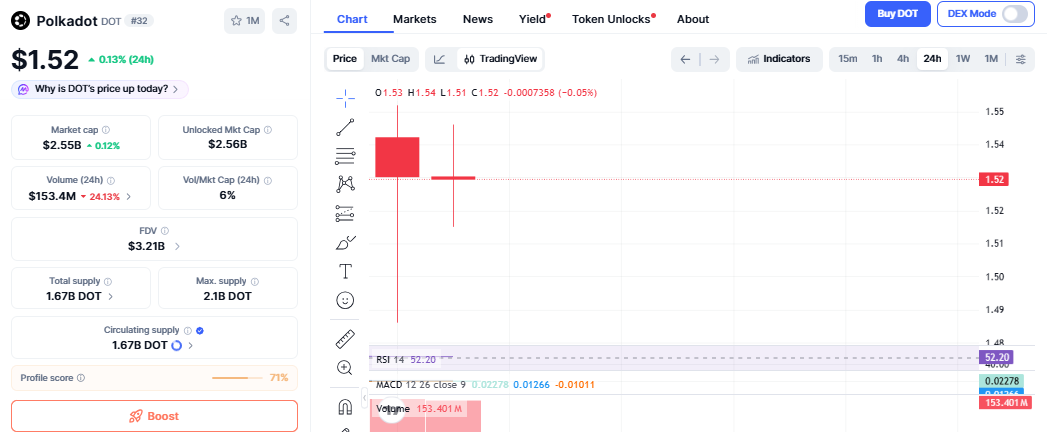
Source: CoinMarketCap Chart
Current Market Data
Dot Price Today: $1.52
Market Cap: About $2.55 billion
24H Trading Volume: Around $153 million
Circulating Supply: Approximately 1.67 billion DOT
The modest polkadot price surge appears to be driven mainly by the launch which has improved institutional sentiment toward the asset.
Altcoin ETFs Continue to Expand
The launch also reflects a larger trend in the crypto industry. After the approval of Bitcoin and Ethereum ETFs, asset managers are now exploring products tied to other digital assets.
Several altcoin ETFs are currently being explored, including funds connected to Solana, XRP, Chainlink, and Dogecoin. These products aim to provide regulated access to different blockchain ecosystems.
For asset managers like 21Shares, the TDOT ETF is another step toward expanding crypto investment options for institutions.
Polkadot Price Prediction
From a technical perspective, it is currently trading above its 30-day simple moving average near $1.40, which suggests mild bullish momentum. The MACD indicator also shows positive momentum, although trading volume has slightly decreased.
Important Price Levels to Watch
Resistance Level: $1.56
Support Level: $1.44
Lower Support: $1.37
If it attracts early institutional inflows, the price could test the $1.56 resistance level in the short term. A breakout above that level may push the price closer to $1.65.
However, if overall crypto industry sentiment weakens or Bitcoin declines further, it could revisit the $1.44 support zone.
Why Does it Matters?
The launch shows that institutional interest in altcoins is gradually increasing. By offering regulated exposure to DOT through traditional markets, the Exchange Traded Funds could open a new demand channel for the ecosystem.
Investors will now closely watch early inflow data into the TDOT ETF. Strong demand may support further price growth, while weak inflows could limit the impact of the ETF launch.
YMYL Disclaimer: This article is for informational purposes onlu, kindly do your own research before investing.








