Putin Aide Says Bitcoin Mining Is Now a Core Russian Export

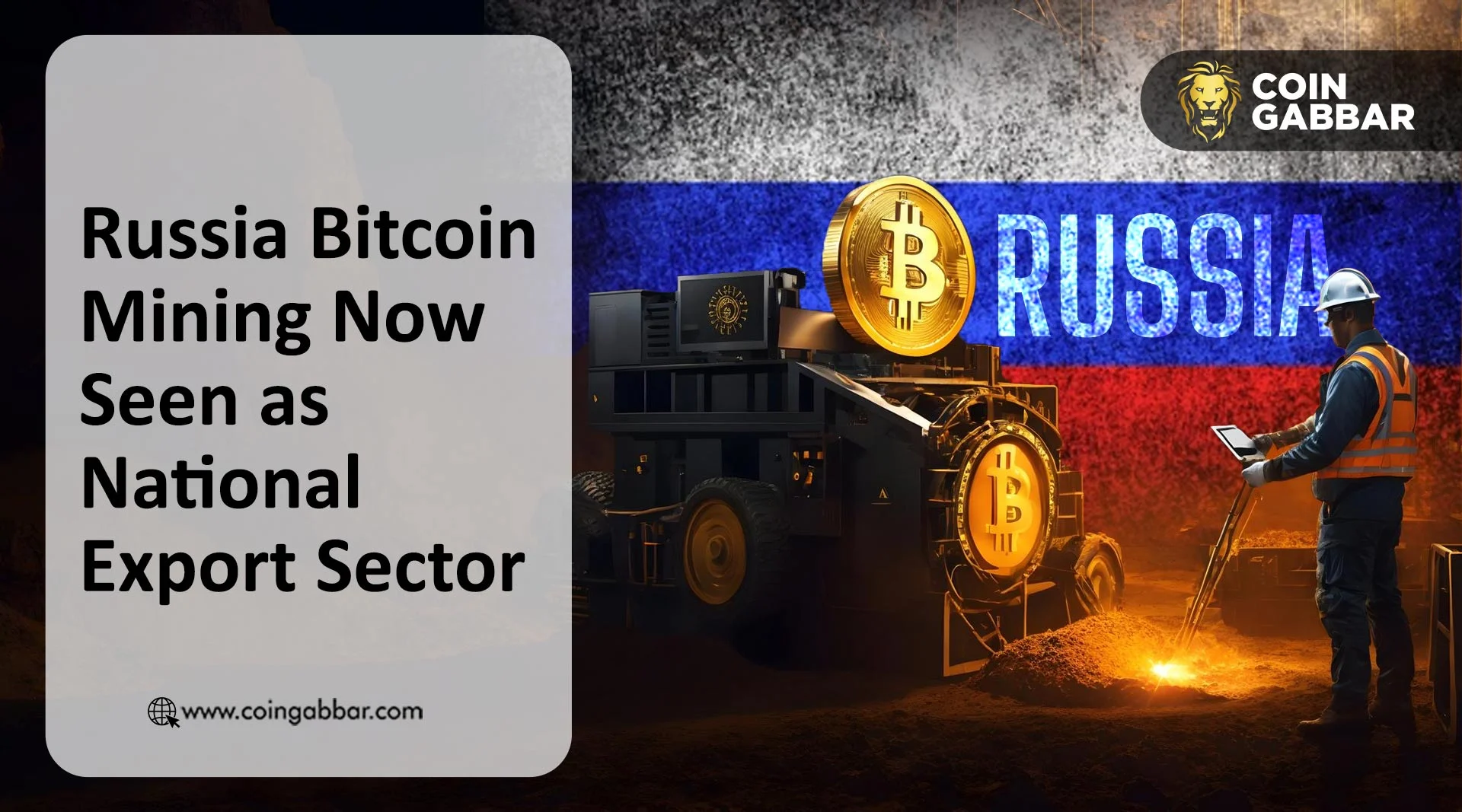
Russia Bitcoin Mining Boom Reshape Economy Amid Rising Crypto Adoption
A top aide to President Vladimir Putin says crypto mining has become one of Russia’s most undervalued export sectors, arguing that Bitcoin mining and crypto payments must be included in Russia’s balance-of-payments statistics. The comments mark one of the strongest signals yet that Moscow is moving toward a full-scale crypto-economic strategy despite international sanctions.

Source: YahooFinance
Maxim Oreshkin, Deputy Chief of Staff of the Presidential Executive Office, said that Bitcoin mining is now a major contributor to the country's currency flows, but remains invisible in official calculations because the transactions occur outside traditional banking channels.
“Cryptocurrency is a form of money supply,” Oreshkin said, adding that Russian companies already use digital coins to pay for imports, while miners sell their Bitcoin abroad, both of which affect the Russian ruble and the foreign exchange market.
Russia Is Emerging as a Global Hashing Power
Russia's digital asset extration industry has grown rapidly. Data from Luxor Technology shows the nation now accounts for roughly 16% of global Bitcoin hashrate, second only to the United States (30%).
55,000 BTC mined in 2023
35,000 BTC mined in 2024 (decline due to Bitcoin halving)
Mining revenue estimated at ~$12.9 million per day
Over $1.3 billion invested in data centers, electricity infrastructure, and extraction hardware
Leaders say Russia’s hashing industry is now so large that it must be treated as a national export sector, with direct influence on the FX market, industrial power demand, and cross-border cryptocurrency trade.
Once Skeptic, Now Approaching: Russia Eyes Full Crypto-Integration by 2026
The Bank of Russia, once strictly anti-crypto, now indicates it is ready to:
Allow banks to work with cryptocurrencies
Enable funds to invest in digital asset derivatives
Expand investor access through a new crypto-legislation package in 2026
On the other hand, Russian companies have increasingly turned to Bitcoin and stablecoins for cross-border payments, using cryptocurrency's rails to import goods and bypass Western financial restrictions.
According to officials, billions of dollars in cross-border crypto trade have already taken place. Russia’s central bank and Finance Ministry recent agreement to legalize crypto for foreign economic activity, played an important role in growing momentum.
This shift reflects a broader pivot in Russian economic policy, as traditional payment avenues continue to be closed off due to sanctions.
Officials say that as Bitcoin mining, digital coin payments, and blockchain exports grow, the country can no longer ignore the sector’s impact on the ruble exchange rate, energy markets, and national economic balance.
Mining Legalized — But Practical Challenges Still Remain
Russia legalized cryptomining last year, making it the country’s first fully regulated digital-asset business activity and the sector formal recognition with regulatory clarity.
However, fewer than one-third of miners have formally registered with tax authorities and much of the mined Bitcoin is believed to be sold on foreign exchanges. Policymakers are pushing for an amnesty program to bring unregistered miners into the legal system.
There are also energy-related pressures in certain regions. To protect local power grids, the government has temporarily banned mining activity in 10 energy-sensitive areas such as Dagestan and Chechnya.
Operational challenges like infrastructure upgrades, rising competition, and the need for modern equipment remain part of the landscape, but they reflect a maturing mining environment rather than a hostile one. Overall, legalization has opened the door for long-term industry growth, even as Russia works to balance regulation, energy stability, and evolving market conditions.










