Russia’s Crypto Exchange Crackdown Sparks Global Market Fear

Russia’s Crypto Exchange Move May Reshape Global Trading
Russia’s Crypto Exchange may soon make a big change to virtual assets trading rules. Officials are looking at ways to limit access to foreign websites. Reports linked to RBC say this could happen within months as part of a wider legal update for digital assets. The new rules may start by July 1, 2026. Experts say this plan may be hard to enforce because virtual assets trading is global and many platforms are not easy to block.
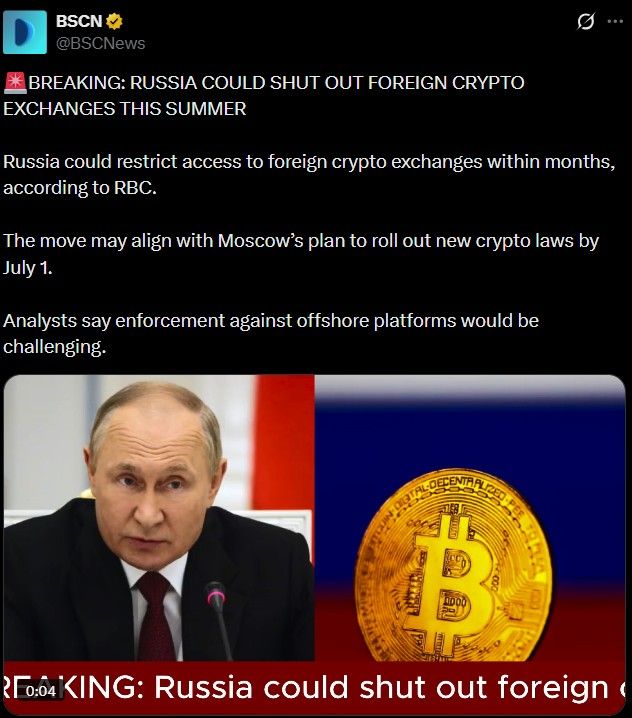
Source: X official
This plan shows a major shift in Russia’s Crypto Exchange view of blockchain finance. It is not a full ban on digital assets. Instead, it targets foreign websites used by local traders.
Why are they Taking This Step?
Officials say the main goal is to keep more money inside the country and improve oversight. Reports say users send about $15 billion in trading fees to offshore platforms each year. Russia’s Crypto Exchange want that activity to move to local, licensed services.
They believe this could:
improve tracking of digital payments
help tax collection and regulation
By moving more trading into local systems, lawmakers think they can lower risk and improve control.
Experts say Russia’s Crypto Exchange may use DNS blocking and network tools to limit access to certain websites. DNS blocking means users may not be able to open some domains through normal internet access.
If this happens, many traders may switch to VPNs, peer-to-peer markets, or decentralized services. That could create new legal and security risks.
Impact on Global firms
If they blocks foreign virtual assets websites, Russia’s Crypto Exchange could lose many users from the country.
That may lead to:
lower trading activity from the region
weaker fee income for some companies
Some market depth may also fall if fewer users can access those services in a direct way.
Another possible effect is a move toward other channels. Traders may use decentralized options, P2P tools, or indirect access routes. That would make oversight harder for both regulators and service providers.
Even if the block is only partial, it could still change how users in the Russia’s Crypto Exchange.
Will Exchanges Change Their Strategy?
So far, no major firms has clearly announced a big response. Most firms usually wait until rules are final before making public decisions.
Still, a few possible moves are easy to see:
some firms may try to get local licenses
others may work with brokers or financial groups
Another path is deeper use of decentralized tools. These systems do not depend as much on one website, so they may be harder to restrict through normal web blocks.
Still, that path is not simple. Countrys regulators appear to want legal trading to happen only through approved local channels.
What This Means for the Crypto Market
This possible policy change matters beyond country. It shows how governments may try to bring virtual assets trading under local control instead of letting global platforms dominate the market.
If the plan moves forward, it could:
reshape exchange strategy in the region
push more users to local or decentralized options
It may also affect liquidity, user access, and platform growth. For traders, the main issue is simple: the rules may change how and where they can trade.
Conclusion:
Russia’s restriction shows a wider push to control digital asset activity at home. The policy may be hard to enforce, but it could still affect traders, global platforms, and regional market flows. If the rules take effect, Russia’s Crypto Exchange market may look very different by the second half of 2026.








