South Korea Investigates Bithumb After Massive $43B Bitcoin Error


FSS Escalates Audit as South Korea Investigates Bithumb Systems
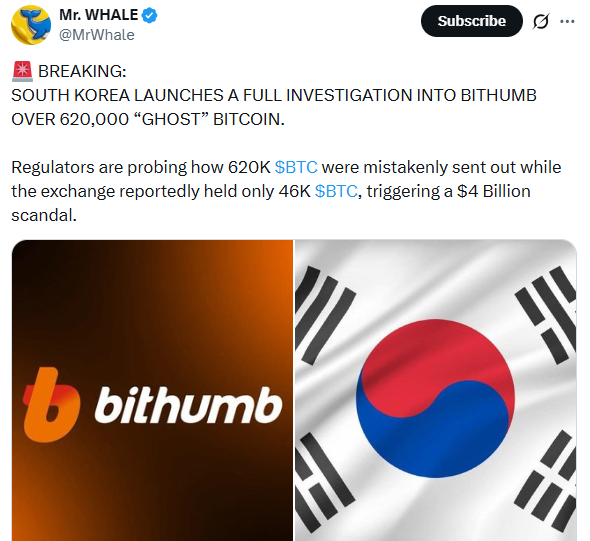
On February 10, 2026, the Financial Supervisory Service (FSS) stepped up its oversight. This move comes as South Korea investigates Bithumb following a huge mistake. During a small event on February 6, an employee accidentally gave away 620,000 Bitcoin (BTC) to users. The error happened because the worker typed "BTC" instead of "Korean won" for the prize unit. This meant the platform gave out $43 billion in coins it did not actually own. Regulators are now checking how a single person could cause such a massive risk to the market.
FSS Probes Ghost Coins as South Korea Investigates Bithumb Systems
The core of the issue is what experts call "ghost coins." As South Korea investigates Bithumb, officials found that these coins only existed on the exchange's internal list. They were not real assets on the blockchain. Because Bithumb only held 46,000 BTC at the time, the mistake was 14 times larger than their actual reserves. This led to a 15% price crash on the platform as users tried to sell the free coins.
 Source: X(formerly Twitter)
To fix the damage, the exchange acted fast. They froze 695 accounts and stopped all withdrawals within 35 minutes. So far, they have recovered 99.7% of the missing funds. However, about 125 BTC remains missing. The company has promised to pay back affected users with an extra 10% on top of their losses. They are also setting up a 100 billion won ($68 million) fund to protect users in the future.
New Rules for Crypto Exchanges in 2026
This event has caught the attention of top lawmakers. Many believe that the "ghost coin" problem could lead to a total market collapse. In response, the government wants to pass new laws. One plan is to limit how much of an exchange a single person can own. By keeping this to 15% or 20%, they hope to ensure better checks and balances.
Event Detail | Data Point |
Total BTC Sent | 620,000 BTC |
Actual Reserves | 46,000 BTC |
Recovery Rate | 99.7% |
Protection Fund | $68 Million |
The FSS is also looking into Bithumb's history. Past security issues in 2024 and 2025 have already put the platform under a spotlight. Now, regulators may force all exchanges to use a "dual-approval" system for any large transfers. This would ensure that a second person must check and approve any big payouts before they happen.
Expert Analysis: The Future of Digital Safety
The decision that South Korea investigates Bithumb shows that the "wild west" days of crypto are ending. In 2026, regulators are no longer just watching; they are taking direct action. We expect to see a new "Safe Guard" system mandated for all platforms. This system will likely use AI to spot and block any trades that seem too large or unusual. While this may slow down some features, it is a necessary step to build real trust in the digital economy.
Your Money Your Life (YMYL) Disclaimer: Crypto trading is risky. Regulatory probes can change how exchanges work. This news is for info only and is not financial advice.
Also read:









