Dogecoin at Key Support As Mutuum Finance (MUTM) Rolls Out V1 Protocol


DOGE Support Test & Mutuum Finance V1 Launch
The broader crypto market is exhibiting a distinct risk-off mood, and capital is swiftly rotating toward perceived safety. Bitcoin dominance has climbed to 58.08%, leaving high-beta altcoins particularly vulnerable. Dogecoin (DOGE) is feeling this pressure acutely, sliding toward a critical support level as trading volume evaporates. While the memecoin struggles with bearish technicals and external legal pressures, DeFi crypto Mutuum Finance (MUTM) has taken a major step in its development. The project has launched its V1 protocol, transitioning from promises to a product investors can interact with.
DOGE Faces a Critical Test
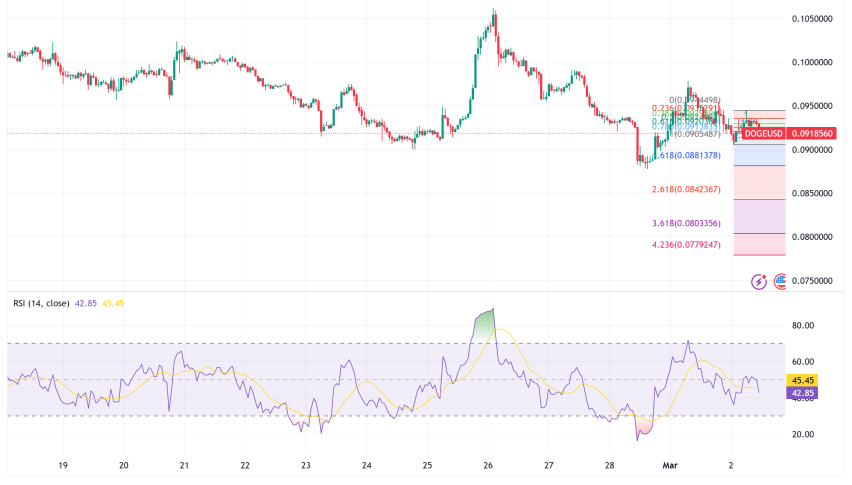
Dogecoin is currently trading near the $0.09 mark, attempting to hold a vital support zone at the 78.6% Fibonacci retracement level of $0.0892. A break below this threshold on a daily closing basis could open the doors to a retest of the yearly low near $0.0816. The lack of any immediate bullish catalyst is glaring.
Trading volume has collapsed by more than 38%, and the ongoing multi-billion-dollar lawsuit against a prominent promoter continues to cast a long shadow over its speculative appeal. Unlike protocols with revenue-generating mechanisms, DOGE remains entirely dependent on social sentiment for price movement, a precarious position during a market-wide de-risking event.
What is Mutuum Finance?
Mutuum Finance (MUTM) is an Ethereum-based DeFi crypto that features a dual-lending model that includes Peer-to-Contract (P2C) and Peer-to-Peer (P2P) mechanisms. In the P2C model, users supply assets into a shared liquidity pool. Borrowers then access liquidity directly from this pool by depositing collateral that exceeds the borrowed value. Lenders receive mtTokens, which represent their deposited assets plus accrued interest over time. For example, if a user deposits 10,000 USDT into the USDT pool, they receive an equivalent amount of mtUSDT. As borrowers pay interest, the value of mtUSDT increases, allowing the lender to redeem more than their original deposit.
The P2P model, on the other hand, matches lenders and borrowers directly. Instead of depositing into a general pool, a lender funds a specific borrower’s request under predefined terms such as duration, collateral ratio, and interest rate. This allows for more customized agreements. For example, a borrower seeking a 6,000 USDC loan might offer ETH as collateral and agree to a fixed 12% annual interest rate for 90 days. A lender can choose to fund this request directly, earning the agreed yield.
V1 Protocol
Mutuum Finance's V1 Protocol, the first version of its decentralized lending and borrowing system, has been deployed on Sepolia testnet. The testnet allows users to access pooled lending and borrowing, interacting with ETH, LINK, WBTC, and USDT, which have been offered as testnet assets. This risk-free environment means investors can familiarize themselves with the project with no real assets on the line. Lenders receive mtTokens as digital receipts of their deposits, while borrowers receive debt tokens that represent their loan obligation. The testnet also includes an automated liquidator bot, a key feature in maintaining the protocol's solvency.
Mutuum Finance has built traction following the launch of its V1 protocol on testnet. The platform’s testnet activity has surpassed $190 million in total value locked (TVL). The current price of MUTM stands at $0.04. The project has attained more than $20.72 million in funding, with a holder base exceeding 19,070 investors.
Dividend-Backed Incentives
Mutuum Finance offers a buyback-and-distribute model. A portion of the protocol's revenue will be deployed to purchase MUTM tokens directly from the open market. These tokens are then redistributed to participants who stake their mtTokens in the safety module.
As platform usage grows and fee generation increases, so does the volume of buybacks, directly rewarding stakers with MUTM dividends. This structure ties investor rewards directly to the protocol's success, moving far beyond the speculative "buy and hold" strategy associated with assets like DOGE.
As Dogecoin falters under the weight of a risk-off rotation, capital is entering assets backed by functional infrastructure. Mutuum Finance showcases growth with its live testnet, dual-lending ecosystem, and a revenue-sharing model that benefits stakeholders through yield-bearing deposits and dividends.
Also read:

7 months ago
I was repeatedly persuaded with assurances and promises, which were ultimately used as justification to request additional payments. I initially discovered the platform through an advertisement that presented it as a reputable investment broker. Convinced by their claims, I proceeded to invest. However, after the trade concluded, I was continually asked to make further payments. Despite complying with these requests multiple times, there was no resolution or return on my investment. Subsequently, I was instructed to open an account with a bank they recommended. Although this raised concerns, I felt compelled to follow their instructions. My funds were transferred into that account, yet I continued to face repeated demands for additional payments. Feeling overwhelmed and frustrated by the ongoing situation, I sought assistance from StaunchView ORG. They referred me to Madam Roberts, who provided professional support throughout the recovery process. With her guidance and assistance, my funds were successfully transferred back to my personal bank account. I am sincerely grateful to Madam Roberts (robertslee 6 1 8 @ gmail com) and her team for their professionalism and dedication in helping me recover my money.