Crypto Casino Ireland: A Small Market with Big Adoption

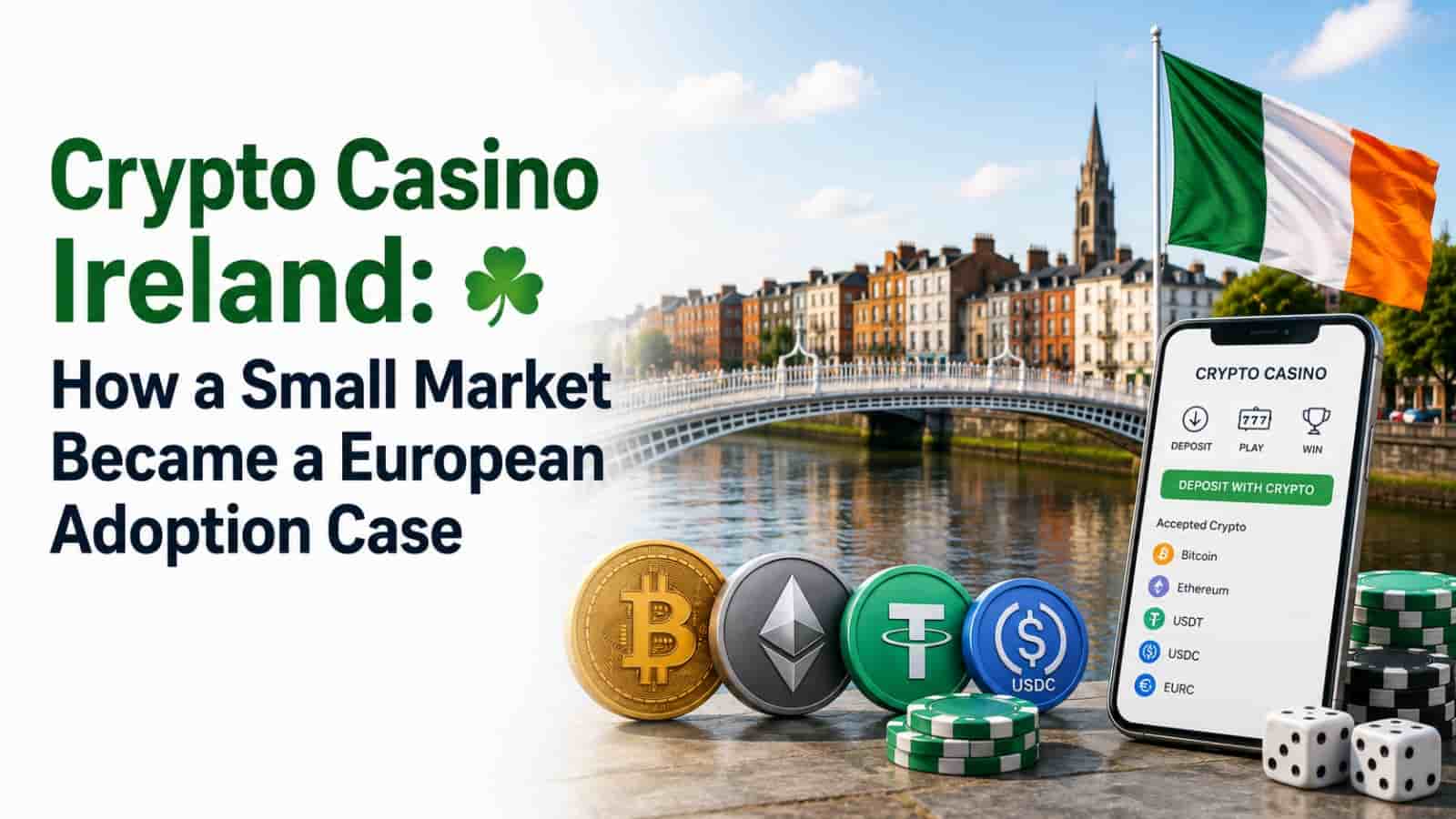
Ireland is not the first jurisdiction that comes up in conversations about crypto-payment iGaming. The country is small,its gambling regulator is mid-transition, and its share of European online-gambling revenue is modest. Yet the data on operator support and player behaviour suggests Ireland is quietly punching above its weight. For a market of just over five million people, the rate at which Irish players are fundingcasino accounts with bitcoin, ether and regulated stablecoins is closer to thatof much larger crypto-native markets than to its EU neighbours.
This piece looks at why that gap exists, what Irish players are actually doing at the cashier, and what the market hint sat for the next wave of European adoption.
Why Ireland punches above its weight incrypto-payment iGaming
Three structural conditions are doing the heavy lifting. First, Ireland is one of the EU's most digitally connected economies on a per-capita basis, with a young, urban-skewed population and high cryptocurrency awareness from years of fintech sector growth in Dublin. Second, English-language EU access matters enormously for crypto-native operators choosing where to direct marketing — Ireland sits in the same content market asthe UK without the UKGC's licensing overhead. Third, the country's existingwallet base is mature. Irish exchanges, broker apps and self-custody users have been active since the 2017 cycle, which means the cohort of players who already hold crypto and want to use it for entertainment spend is meaningfully larger than the size of the population alone would predict.
The Revenue Commissioners regulate gamblingin Ireland today, with the Gambling Regulatory Authority of Ireland (GRAI) phasingin under the Gambling Regulation Act 2024. That transitional period matters: ithas created a window in which crypto-friendly operators serving Irish playersfrom EU bases have not had to navigate the prescriptive payment-method restrictions seen in some other jurisdictions. The Revenue Commissioners' guidance on online gambling remains the operative reference for taxable treatment of winnings until the new regime is fullyactive.
What Irish players actually deposit with
The cashier-side picture in 2026 is morediverse than headlines suggest. Bitcoin remains the symbolic option but is nolonger the dominant one for live deposits. Stablecoins — primarily USDT and USDC, with EURC growing — handle the largest share of crypto deposit volume at operators serving Irish players, for the obvious reason: a player who is wagering in euros benefits from not exposing their bankroll to BTC or ETH prices wings between deposit and withdrawal.
Ether is the second most common asset atthe deposit layer, supported by lower gas fees on Layer 2 networks and by ageneration of players whose first crypto exposure was Ethereum-native DeFi rather than bitcoin. Lightning Network adoption for BTC deposits is rising butstill niche.
Betiton is one of the EU-licensed operators that supports this mix at the Irish cashier, with acrypto-payments product covering bitcoin, ether and regulated stablecoin options along side fiat rails. Its crypto casino page documents the supported assets and the cashier flow for Irish players in detail. The page sits at the more transparent end of the operator spectrum on this topic — many crypto-payment casinos still bury supported-asset lists behind cashier sign-in walls.
Withdrawal patterns are where Irish players differ most from continental European ones. The share of withdrawals in stable coins versus base assets is higher in Ireland than in DE or FR-facing markets, reflecting both wallet maturity and a player preference forself-custody after a winning session.
Regulation: Revenue Commissioners, MiCA,and the iGaming overlap
The harder regulatory question for the next12 months sits at the intersection of two regimes. MiCA — the EU's Markets inCrypto-Assets Regulation — fully applies to stablecoin issuers and crypto-assetservice providers (CASPs) across the bloc, including Ireland. National gambling regulation continues to be set by each member state. The friction point is atthe cashier: when an operator accepts a stablecoin deposit, it is interactingwith an EMT (electronic-money token) under MiCA, and the operator's payment-processor arrangements have to comply with both gambling rules andcrypto-asset rules.
For Irish players, the practical effect bymid-2026 has been a quiet narrowing of the stablecoin shortlist at responsible operators. USDC (issued by an EU-authorised entity) and EURC have benefited atthe expense of USDT, which has had a more complex MiCA-compliance path. CoinGabbar's own MiCA explainer is auseful starting point for readers wanting the full regulatory mechanics.
The Irish-specific overlay is that the GRAI's incoming framework is expected to set out clearer expectations onpayment-method disclosure at the operator level — meaning the somewhat informal disclosure standards of the transitional period will likely tighten.
Operator landscape serving Irish cryptoplayers
The operator landscape serving en-ie crypto players splits roughly three ways. There are EU-licensed multi-product operators (Malta Gaming Authority licences are common) that have added crypto-payment rails to existing fiat-first casinos. There are crypto-native operators that began life with bitcoin-only support and have since added eurofiat options to broaden their audience. And there is a thinner tier of operators that accept crypto only via third-party processors, which often introduces additional KYC steps at the cashier even when the on-site brand markets itself as crypto-friendly.
For Irish players choosing between them,the practical differentiators are: whether withdrawal in the deposit asset issupported (some operators force a fiat-conversion round trip), the breadth of game suppliers integrated, and the KYC posture at the point of cashout.Operators with a multi-product EU licence tend to score better on the first twoand similarly on the third.
What the Irish market tells us about thenext adoption wave
The Ireland case suggests three things.Crypto-payment iGaming adoption scales faster in markets where wallet maturity precedes operator availability, not the other way around. English-language EUmarkets remain disproportionately important even as DACH and Nordic markets get more attention. And the post-MiCA stablecoin shortlist is becoming a meaningfuloperator-selection criterion, not just a compliance footnote. Operators serving these markets Betiton among them — that are explicit about supported assetsand cashier flow will see better player retention than those that aren't.
Players should gamble responsibly. Supportis available from Gambling Care Ireland on 1800 753 753. Players must be 18 or older.