Magic Eden vs. Courtyard: Which Platform Is Better for Pokémon NFTs?

Magic Eden vs. Courtyard: Best Marketplace for Pokémon NFTs
The list of options you have when choosing the marketplace on which to buy and sell Pokémon NFTs isn't that long.However, that doesn't mean it is an easy decision.
Arguably, the two most popular marketplaces where you can buy, open, and trade Pokémon card NFT packs are Magic Eden vs. Courtyard.
In this comparison guide, we examinetheir main features, advantages and disadvantages, and how they compare to helpyou find the marketplace that suits your Pokémon card-collecting needs best.
Quick Overview
Magic Eden is a multi-chain NFTmarketplace that offers Pokémon NFT packs through its partnership withCollector Crypt, among a wide variety of other crypto collectibles and tokens.
Courtyard focuses solely onPolygon-based tokenized collectibles (such as Pokémon cards and sports tradingcards) with a gamified pack-ripping experience and physical card redemption.
Both platforms let collectors buy,open, trade, and redeem Pokémon NFTs backed 1:1 by real, graded cards securelystored in vaults.
What Are Pokémon Cards NFTs?
Pokémon card NFTs are digital collectibles created on theblockchain to represent physical Pokémon cards that are verified, graded, andstored in secure vaults.
The Pokémon NFTcan be traded on online marketplaces without having to move the physical card.At any point, the person owning the NFT can request to have the physicalPokémon card it represents shipped to them, at which point the NFT is “burnt.”
The blockchainverifies and secures the history of transfers and ownership. This ensures thatthere is no dispute as to who actually owns the actual physical card in thevault, even as it is traded multiple times across marketplaces.
What Is Magic Eden?|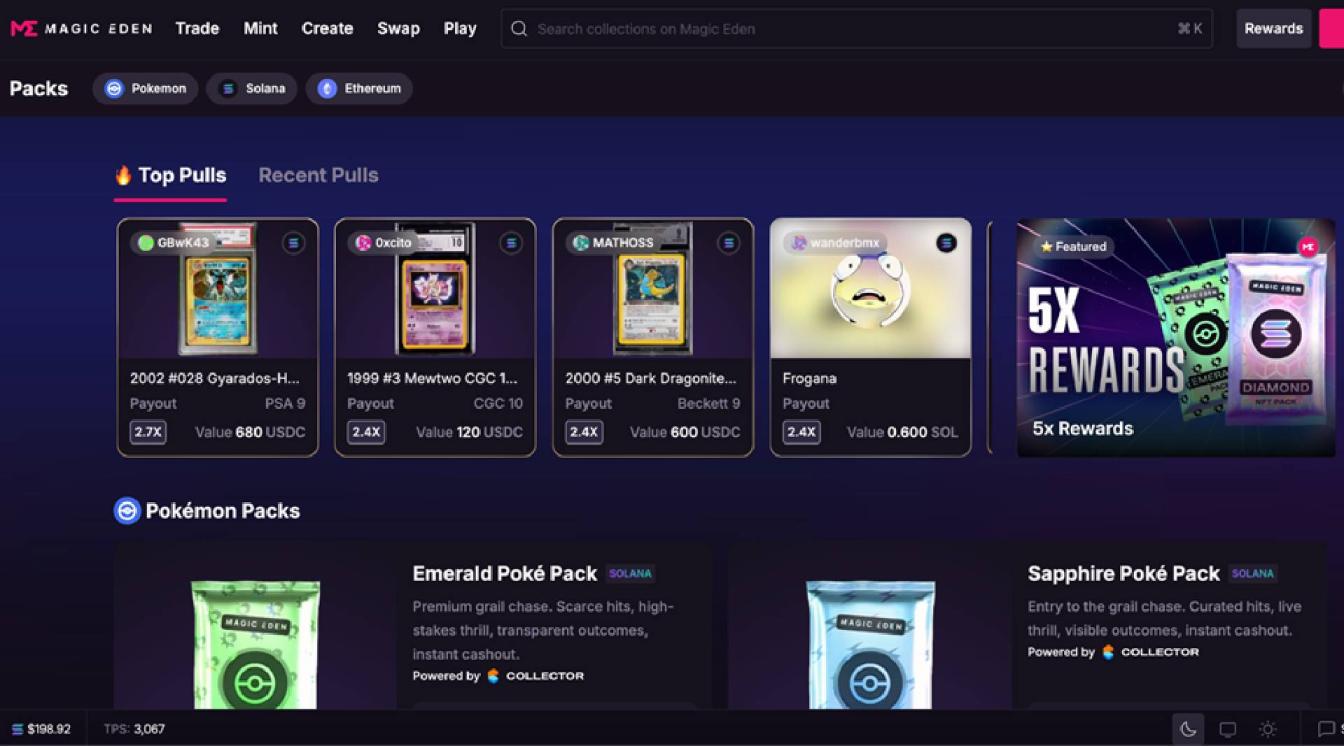
Magic Eden is the market-leading, multi-chain NFTmarketplace built with tools to help users discover, buy, and sell digitalassets. The marketplace supports fungible and non-fungible Web3 assets mintedon over 10 blockchains, including Solana and Ethereum, and has become popularfor Pokémon card NFTs.
Pokémon card NFT packs on Magic Eden quickly became one of the most sought-after NFTson the marketplace when they launched in 2025. The Emerald Poké Pack andSapphire Poké Pack allow users to enter the grail chase at two different pricepoints (250 USDC and 50 USDC), offering curated hits, live thrills, and instantpayouts.
Magic Eden haspartnered with Collector Crypt, a reputable platform that grades and providessecure storage for the physical cards.
What Does Magic Eden Offer forPokémon Card Collectors?
When it comes tocollecting Pokémon card NFTs, Magic Eden offers a range of tools that can makeyour experience exciting, and it doesn't matter whether you are a beginner oran experienced collector.
Here’s abreakdown of what you can expect on the platform:
Redeemable tokenized NFTs: When you open aPokémon pack on Magic Eden, you reveal an NFT that can be redeemed for thephysical card through Collector Crypt.
Transparency: Before purchasing a pack, youcan view the drop rates in the rarity tiers as well as the value ranges.
Payout options: After reveal, you can chooseto take a payout within 72 hours in place of redeeming or trading. The payoutis based on a payout rate multiplied by the fair market value.
Verification sandbox: Magic Eden provides asandbox tool where you can enter your transaction hash and verify details ofthe pack rip, such as commit time, RNG roll, and tokenization details.
Rewards program: Packs count toward theloyalty/rewards program, which means you can earn rewards when you rip a pack.
Pros & Cons
Let’s take a look at the key advantages anddrawbacks of using the Magic Eden platform for Pokémon NFT packs trading:
Pros
Seamless and fun buying andpack-ripping process
Pokémon cards are redeemablethanks to the Collector Crypt partnership
Low transaction fees
Deep NFT market liquidity
Cons
Due to Magic Eden’s large userbase, pack drops can be competitive
What Is Courtyard?|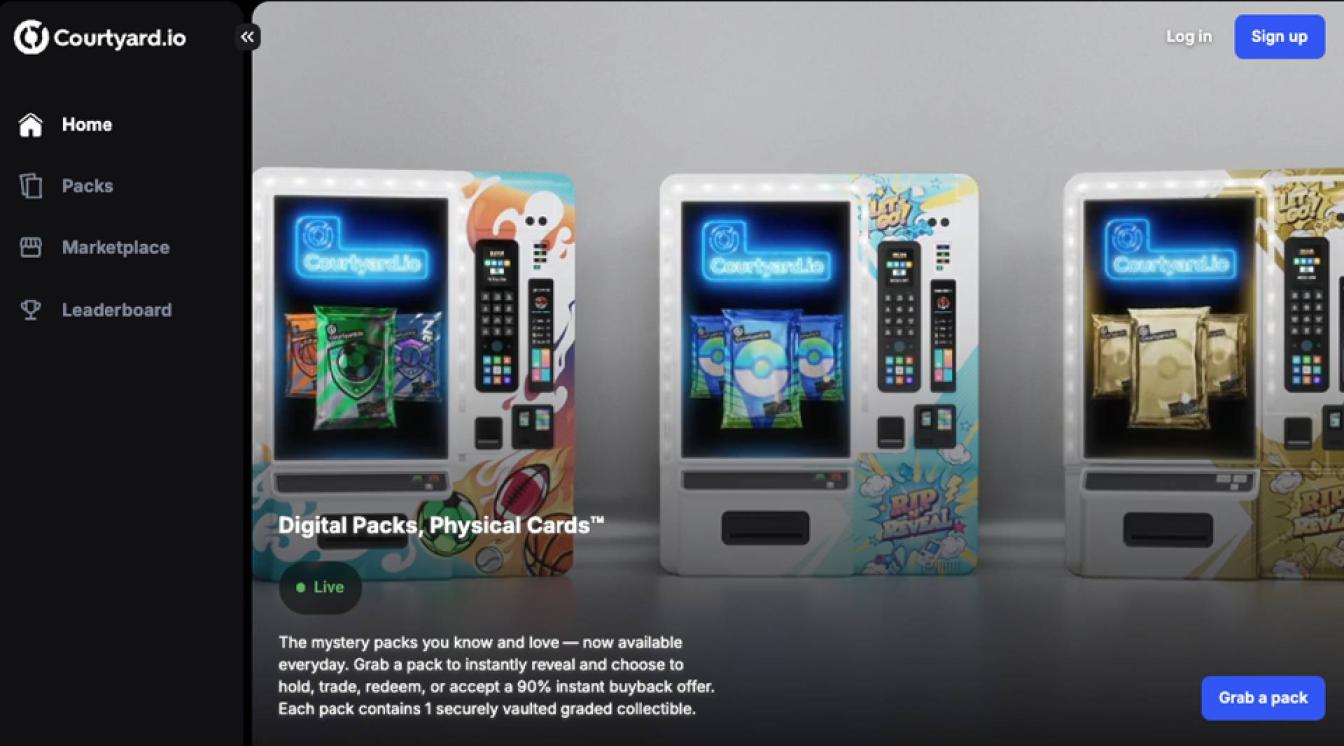
Courtyard is a marketplace that facilitates thetokenization and trading of real-world collectibles, such as Pokémon cards andsports trading cards, on the blockchain.
Unlike MagicEden, which is a multi-chain platform, Courtyard uses only the Polygonblockchain. You can buy, sell, and trade tokenized Pokémon cards, as well as arange of other trading cards, on the platform. You can also buy packs from avirtual gacha machine, which come with an instant buyback option.
What Does Courtyard Offer forPokémon Card Collectors?
Courtyard waslaunched to support the tokenization and trading of physical cards as NFTs on the Polygon blockchain.
Here’s what youcan expect on the platform:
Gamified experience: On Courtyard, just likeon Magic Eden, you can buy and “rip packs” digitally to bring the fun ofopening packs to Web3.
Physical card vaulting: Collectors can send inand tokenize their physically graded Pokémon cards, which are authenticated andstored in a vault.
Physical redemption: Like on Magic Eden,collectors on Courtyard have the option to redeem their Pokémon card NFT forthe physical card it represents.
Pros & Cons
Below are some pros and cons for anyone keenon using the Courtyard marketplace for Pokémon NFT trading:
Pros
Specialized focus on tokenizedtrading cards
Supports several fiat paymentoptions
Offers in-house card vaulting andgrading
Cons
Courtyard only runs on Polygon(and no other chains)
Magic Eden Vs. Courtyard: WhatAre the Key Differences?
Magic Eden andCourtyard are two of the most popular Pokémon card NFT marketplaces. Bothsupport the tokenization and trading of Pokémon cards. However, in severalothers, they are very different. Let’s take a look at how they compareside-by-side.
Tokenized Pokémon Cards Offering
On Magic Eden, Pokémon NFTs are just one partof its broader NFT marketplace. There are many other types of NFTs spreadacross several different blockchains. Courtyard, on the other hand, focusesprimarily on tokenizing physical trading cards into NFTs on the Polygonblockchain.
User Experience
Magic Eden is a feature-packed NFT marketplacethat caters to both novice and professional collectors. You can easily accessand view the details of a pack before buying. Meanwhile, Courtyard focuses onsimplicity, a narrow niche, and physical card processing.
Liquidity & Trading Volume
Magic Eden’s aggregation feature has turned itinto the largest NFT marketplace. Besides the large collection of NFT packs onthe platform, the feature enables you to pull listings from across multipleother marketplaces. This results in deep liquidity and a highly activesecondary market, even for niche collections like Pokémon NFTs. Courtyard, onthe other hand, has a concentrated internal liquidity of trading card NFTs.
Fees & Costs
The fees on Magic Eden vary depending on thechain used. Generally, however, the platform charges relatively low fees,especially compared to other marketplaces. Moreover, ripping a pack countstoward their rewards program. Courtyard also offers low transaction fees,especially thanks to the Polygon network.
Payment Options
Magic Eden supports a wide range ofcryptocurrencies for transactions, including ETH, SOL, and POL. Additionally,the platform allows certain collections to be purchased using credit or debitcards and fiat currency. Meanwhile, Courtyard accepts Apple Pay, credit ordebit cards, Google Pay, and USDC.
Magic Eden or Courtyard: WhichOne’s Best for Pokémon Card NFTs?
When decidingbetween Magic Eden and Courtyard for Pokémon-card NFTs, it ultimately comesdown to the collector experience you’re pursuing.
Magic Edenclearly delivers on a multi-chain trading ecosystem, broader liquidity, anddrop options, including tokenized Pokémon card packs via its Packs marketplace,powered by Collector Crypt.
By contrast,Courtyard offers a more specialized, tokenization-first approach, with physicalcards scanned, vaulted (via Brink’s), and minted on the Polygon chain.
If you’re lookingfor a highly user-centric marketplace with deep liquidity, a long list offeatures, and exciting rewards, Magic Eden stands out. But if you’recomfortable with a more niche platform focused on tokenized trading cards,Courtyard deserves consideration.









.webp)