Sanket Sharma
 29-08-2025
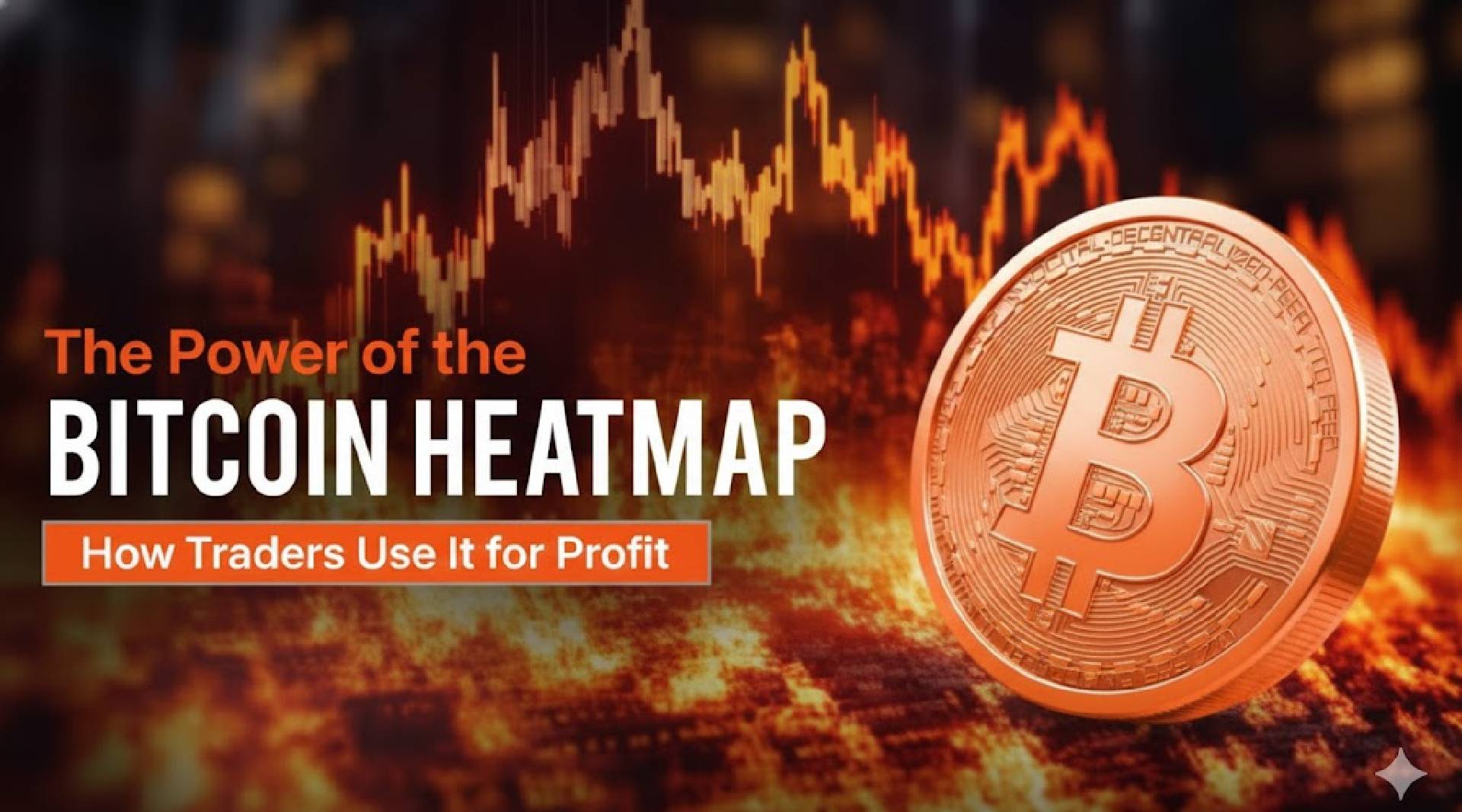
The increasing popularity of Bitcoin exchanges can be attributed to its characteristics as a digital, decentralized asset. Bitcoin offers an opportunity for investors to capitalize on inflation and for day traders to profit from Bitcoin's price fluctuations. It has also helped bring interest, evidenced by increasing participation in allocations by institutional investors, as well as the emergence of new financial instruments such as Bitcoin ETFs. Moreover, a Bitcoin heatmap is one example of such an instrument, a visualization of market data using color to easily bring to the fore trends and trading activity, allowing users to make better decisions. To penetrate the market, traders are resorting to advanced equipment to gain a clearer view.
A Bitcoin heatmap is a way of visualizing the data that enables traders to get a picture of how the market is doing at a glance instead of having to dig through much information. It applies color-coding that displays different scale indicators like price changes, trading volume and open orders. Heatmaps allow traders to make informed decisions faster by providing a clear, one-glance overview of market activity. This is a breakdown of the use of this tool by traders.
1. Identifying Liquidity and Price Zones: The main application of a Bitcoin heatmap is the determination of liquidity spots. These are the prices where there is a heavy concentration of buy or sell orders. Moreover, these areas can typically be represented on a liquidation heatmap using golden or red colors. To traders, these zones are referred to as magnet zones since the price of Bitcoin will gravitate towards them. A concentration of buy orders at a particular price (point) can become a victim of support, whereas a concentration of sell orders can become a victim of resistance. Identifying these areas allows traders to establish possible turnarounds in price direction or the points where the market could consolidate.
2. Spotting Potential Price Reversals: Heatmaps have great value in predicting possible price reversals. A thick grouping of liquidation levels on a heatmap is an indication that there are several leveraged positions at risk. When the price enters one of these zones, it may trigger a chain of forced sells, causing the price to move faster in that direction. As an illustration, a significant yellow area, indicating short liquidations at prices higher than the current level, may imply that a short squeeze could occur if the price increases. Moreover, equipped with this knowledge, traders can chart when to enter and exit, and position their trades either right before or right after the price breaks into some of these high-volatility areas.
3. Gauging Market Sentiment: A Bitcoin heatmap can give a fast indication of the market mood through the usage of colors and patterns. Heatmaps with prevailing warm colors (red, orange, yellow) may indicate a bearish market, characterized by sellers with selling pressure. In contrast, green and blue may suggest a bullish market, where buyers are concentrated with strong bullish interest. Traders also use heatmaps to monitor the action of the whales, which are massive market participants. Heavy orders associated with these players can be large, black-colored blocks of a heatmap. Knowledge about the positioning of big orders will help traders to coordinate their strategy more closely with the activity of these big players.
4. Setting Entry, Exit, and Stop-Loss Points: A heatmap is useful in giving traders a more informed choice of where to buy and sell. Traders can use the points where support and resistance are pronounced (which are called the magnet zones) to pick better entry points. An example would be going long around a strong support level or short around a strong resistance level. Likewise, heatmaps are handy in handling risk. To guard against being caught in a sharp price movement as a result of a liquidation cascade, traders can order a stop-loss just beyond a high-liquidity area. This aids in securing their capital and controlling risk more effectively.
5. Analyzing Performance Across Different Timeframes: With certain heatmaps, traders can review the performance of the market within several timeframes at once. This will allow them to avoid tunnel vision and gain a better panorama of the market trends. A trader may observe that a particular cryptocurrency is doing well on a short-term basis, as indicated by a 15 minute chart but weakening on a longer-term basis, as indicated by a daily chart. Moreover, a multi-timeframe analysis, sometimes in the form of a grid and enables traders to validate trends and identify potential inconsistencies, thereby making trading decisions more solid.
6. Timing Entries and Exits with Precision: Traders can discover better entry and exit points using heatmaps. Traders can optimize their timing by pairing the heatmap data with other signals. For instance, when a trader identifies a bullish signal on a moving average crossover, they can consult the heatmap to identify the nearest strong resistance level. They can then place their take-profit target slightly below this resistance to ensure they exit the trade before a possible reversal. However, this is a more strategic and data-driven approach to timing a trade, rather than relying on a single effective method.
7. Identifying Gaps in Liquidity: The Heatmap also shows gaps of low liquidity, which are frequently termed as areas of liquidity. These are lightly colored areas of the chart with few or no buy-or sell orders. Once the price falls or rises in either of these gaps, it may move very fast since there is minimal force to oppose its movement. This knowledge will enable traders to be prepared for sudden price surges or dips. They may modify their stop-loss orders or exploit the greater volatility by using limit orders at the boundaries of these liquidity holes.
8. Analyzing Order Flow Imbalances: One of the most important uses of a heatmap is to present order flow imbalances. An ordinary heatmap depicts a combination of buy and sell orders. When this disparity is realized, a huge concentration of one form of order at a certain price indicates future movement in price. An example of this is a wall of buy orders at a cheaper price, which implies good support, and this means that the value is unlikely to go much lower. However, numerous sell orders at a higher price indicate great resistance. Traders use this to know what to expect in terms of price accordingly, and they make adjustments.
To sum up, heatmaps in Bitcoin can help make more informed trading decisions by making complex market information easy to understand, as market data is displayed as a color-coded matrix. They enable the trader to quickly recognize the trend, pattern, and regions of high liquidity or possible liquidation. Such a fast visualization assists in swift pattern recognition, enhanced risk assessment and more competent entry and exit points. A bitcoin heatmap can serve as a concise map of the unknown in the market. Heatmaps provide a snapshot of order flow and market sentiment, thereby assisting traders in making more accurate and immediate decisions in the dynamic environment of cryptocurrency.

Sanket Sharma is an experienced crypto writer with five years of expertise in blockchain technology and digital assets. He specializes in translating complex concepts into clear, accessible insights, catering to both novice and seasoned investors.With a keen focus on Bitcoin, altcoins, NFTs, and DeFi, Sanket provides in-depth analysis of market trends, price movements, and emerging developments. His work is rooted in thorough research and a deep understanding of the evolving crypto landscape.Passionate about blockchain’s transformative potential, he is committed to delivering well-researched, informative content that empowers readers to navigate the fast-paced world of cryptocurrency with confidence. Through his writing, Sanket continues to educate and engage audiences, helping them stay ahead in the digital asset space.
Sanket Sharma is an experienced crypto writer with five years of expertise in blockchain technology and digital assets. He specializes in translating complex concepts into clear, accessible insights, catering to both novice and seasoned investors.With a keen focus on Bitcoin, altcoins, NFTs, and DeFi, Sanket provides in-depth analysis of market trends, price movements, and emerging developments. His work is rooted in thorough research and a deep understanding of the evolving crypto landscape.Passionate about blockchain’s transformative potential, he is committed to delivering well-researched, informative content that empowers readers to navigate the fast-paced world of cryptocurrency with confidence. Through his writing, Sanket continues to educate and engage audiences, helping them stay ahead in the digital asset space.





Owned by:-
DCG Tech FZCO, UAE
Delivery Partner:-
Gabbar MediaTech Pvt Ltd.
Copyright © 2025 Coin Gabbar. All Rights Reserved.