LiquidChain Price Prediction 2026: LIQUID Token Listing


LiquidChain Price Prediction 2026: Listing LIQUID Token
The LiquidChain Price Prediction 2026 for LIQUID is really interesting. This Liquid thing is a platform that works with lots of different chains like a Layer-3 platform. It is supposed to bring the money from Bitcoin, Ethereum, and Solana so they can all work together in one network.
The big problem in DeFi now is getting all these different chains to talk to each other, which is called cross-chain bridging. It is very hard to do. Lots of people want it. So LiquidChain is trying to solve this problem with a solution that can help make the generation of multi-chain protocols, which means lots of different chains working together, and that is what Liquid is all about.
Layer-3 positioning differentiates it from existing Layer-2 solutions
Targets three of the largest blockchain ecosystems simultaneously
Cross-chain bridge infrastructure has consistent institutional demand
Listed as a potential Binance listing candidate in 99Bitcoins 2026 research
Scenario | Post-Launch | End-2026 Target | Driver |
Bull Case | $0.05 | $0.18 | Binance listing, cross-chain narrative |
Base Case | $0.02 | $0.07 | DEX listings, early bridge usage |
Bear Case | $0.005 | $0.015 | Bridge exploit risk, low adoption |
LiquidChain is a kind of blockchain called LIQUID. It is the one that combines liquidity from Bitcoin, Ethereum, and Solana into one place where things can happen really fast.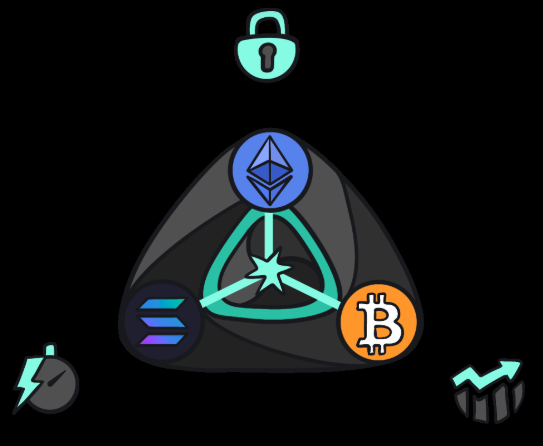 LiquidChain does not try to compete with blockchains. Instead, it works above them. This means that people who own assets and developers and protocols that deal with finance can work together across these three systems without it being too complicated.
LiquidChain has been checked by SpyWolf and CertiK to make sure it is safe. The price to buy Liquid now is around $0.01315 to $0.01395. Far they have raised over $579,000. They are planning to list Liquid on exchanges in the third quarter of 2026.
Current Presale Status: LIQUID in April 2026
LiquidChain is in an active presale phase with 3.4 million LIQUID tokens sold and $579,000 raised, targeting a $25 million hard cap. The staking APY during presale is listed at 1,720% — a high rate designed to incentivize early holding and reduce immediate post-launch sell pressure. Dual audits from SpyWolf and CertiK provide an additional layer of technical credibility unusual for early-stage presale projects.
The plan is to get the DEX listing done before the mainnet is launched. After that, the team will work on getting the project listed on exchanges in the third quarter of 2026. When the mainnet Layer-3 is launched, it will have some cool features like multi-chain swaps and settlement between Bitcoin, Ethereum, and Solana. For example, you will be able to swap Bitcoin for Solana meme coins directly using the LiquidChain execution layer. This means you can easily exchange Bitcoin for those Solana coins. The mainnet Layer-3 launch is a deal because it will make it easy to swap Bitcoin, Ethereum, and Solana.
Key Price Drivers for LIQUID Token in 2026
First-Mover Layer-3 Position: LiquidChain is the first project explicitly building a Layer-3 liquidity coordination layer across BTC, ETH, and SOL. First-mover advantage in a new architectural category historically commands a significant valuation premium.
Dual Audit Credibility: CertiK and SpyWolf audits provide technical validation that distinguishes them from the majority of pre-listing projects that ship with no independent audit. This is critical for institutional bridge adoption.
High Staking APY (1,720%): The extreme presale staking APY incentivizes holders to lock tokens rather than sell at listing, mechanically reducing effective circulating supply at TGE.
Developer Ecosystem: LiquidChain offers developer grants and incentive programs to attract builders. A strong developer ecosystem is the primary long-term value driver for infrastructure chains.
Cross-Chain DeFi Demand: Fragmented liquidity across chains is a persistent $50 billion problem in DeFi. A working solution would capture meaningful TVL from liquidity providers seeking chain-agnostic yield.
LiquidChain LIQUID Price Prediction Table 2026
Price estimates based on presale valuation, CertiK audit status, and Q3 2026 CEX listing timeline:
Scenario / Period | Low | Average | High | Key Assumption |
DEX Launch Day | $0.030 | $0.052 | $0.090 | Initial listing premium, staking lock |
Q3 2026 CEX Listing | $0.040 | $0.080 | $0.112 | Tier-1 or top-10 CEX listing |
End of 2026 | $0.051 | $0.080 | $0.113 | Mainnet cross-chain activity |
2027 (Mainnet Active) | $0.070 | $0.100 | $0.140 | Developer ecosystem traction |
2030 Long-Term | $0.051 | $0.090 | $0.135 | Cross-chain DeFi maturation |
CryptoNews 2026 target: $0.110. CoinNews all-time-high 2026: $0.07981 initial rally estimate. CoinspeakerAI bull 2026: $0.1125.
Scenario Analysis: Bull, Base, and Bear for LIQUID 2026
Bull Case (Target: $0.10 to $0.13)
Mainnet cross-chain swaps launch on schedule, developer adoption begins, and a Tier-1 CEX lists LIQUID in Q3 2026. captures meaningful TVL from DeFi protocols seeking chain-agnostic execution. CryptoNews projects $0.110 under this scenario.
Base Case (Target: $0.05 to $0.08)
DEX listing followed by steady development progress. CEX listings are mid-tier initially. Staking APY keeps supply compressed through H1 2026. Base case aligns with CoinNews initial rally estimate of $0.052 post-DEX listing.
Bear Case (Target: $0.01 to $0.03)
The technical complexity of cross-chain execution creates delays. Mainnet launch slips to 2027. Staking unlock creates supply pressure. The broader DeFi market enters a bearish cycle, reducing cross-chain demand.
Expert View on LIQUID 2026
CoinGabbar analysis suggests LiquidChain addresses one of the most structurally durable problems in DeFi — liquidity fragmentation across the three largest blockchain ecosystems. The CertiK and SpyWolf dual audit is a strong credibility signal at this stage. However, cross-chain infrastructure is notoriously difficult to execute — bridge exploits have cost the DeFi sector billions, and user trust in cross-chain solutions is still recovering. The 1,720% staking APY is a presale mechanic that compresses supply but must normalize after listing, which creates a transition risk. Infrastructure projects like Liquid typically take 18 to 36 months to show meaningful organic adoption. Patient investors with a multi-year horizon are better suited than short-term traders. Analysis considers DeFi TVL data, cross-chain bridge market sizing, audit status, and comparable Layer-3 project performance.
Risks and Uncertainties for LIQUID Bridge exploit risk: Cross-chain bridges are the highest-exploited category in DeFi. A single successful exploit of Liquid infrastructure would likely collapse the token value regardless of fundamentals. Technical complexity: Coordinating atomic cross-chain execution across Bitcoin UTXOs, Ethereum accounts, and Solana state is one of the hardest unsolved problems in blockchain engineering. Delivery risk is high.
APY normalization: The 1,720% staking APY will normalize dramatically post-launch, which mechanically reduces yield incentive to hold. This transition period historically sees significant selling.
Small presale raise: $579,000 raised against a $25M cap leaves significant funding uncertainty. If the hard cap is not reached, development resources may be constrained.
Competitive landscape: Established cross-chain protocols (THORChain, Stargate, LayerZero) have larger communities and proven track records in the cross-chain liquidity space.