Rollblock Down 60% Since Uniswap Launch as Phase 2 Kicks In

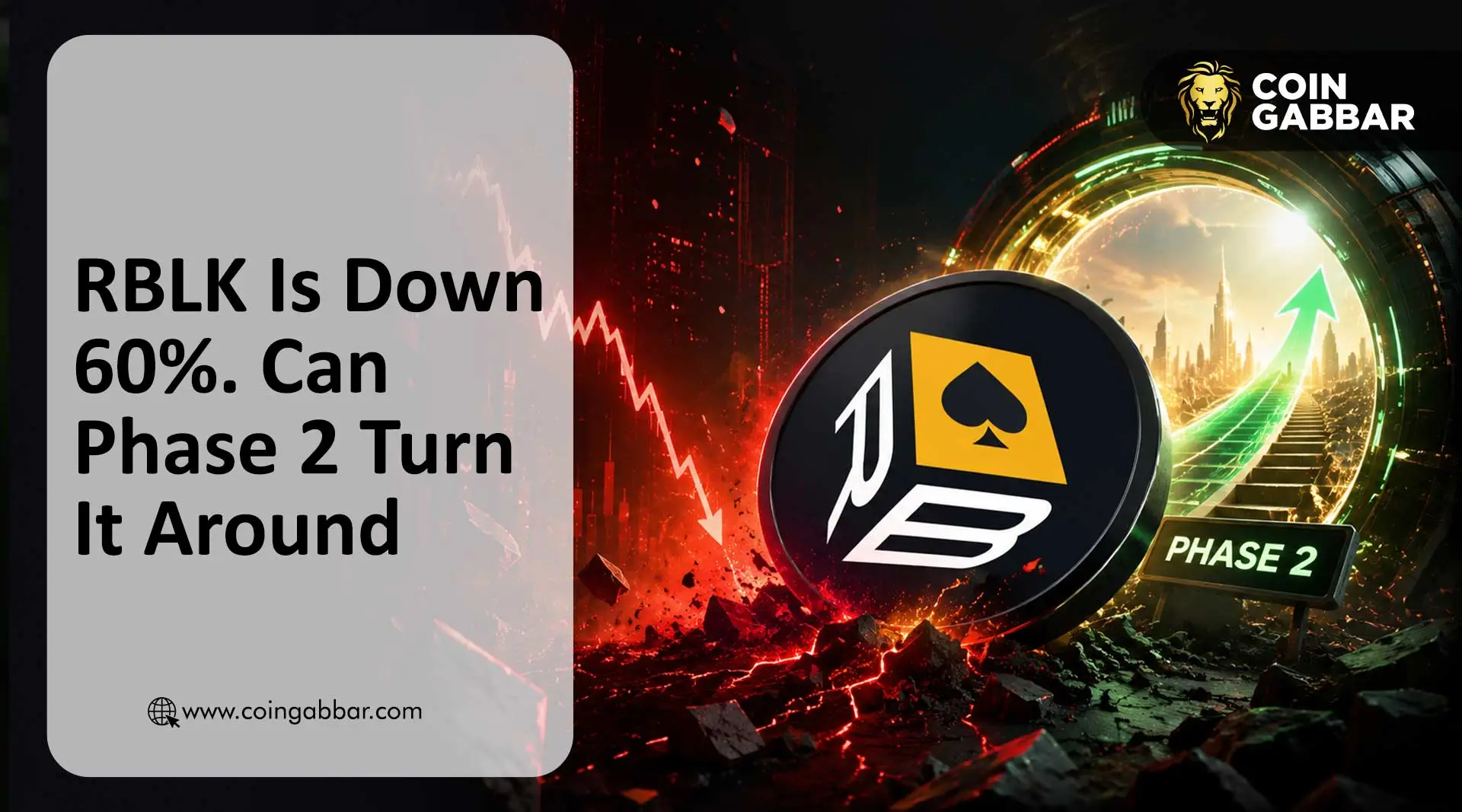
Rollblock's RBLK token is trading at $0.00394 on May 23, 2026 — down 20% on the day and more than 60% since its Uniswap listing — as the project's Phase 2 recovery plan faces its first serious test.
The Uniswap pool holds just $46,100 in total value. Daily volume sits around $24,300. For a token that raised over $12 million in presale funding, those numbers are uncomfortable.
But underneath the chart pressure, Rollblock is running a structured four-part strategy — and unlike most post-presale tokens in freefall, it has a licensed, revenue-generating business to fund it.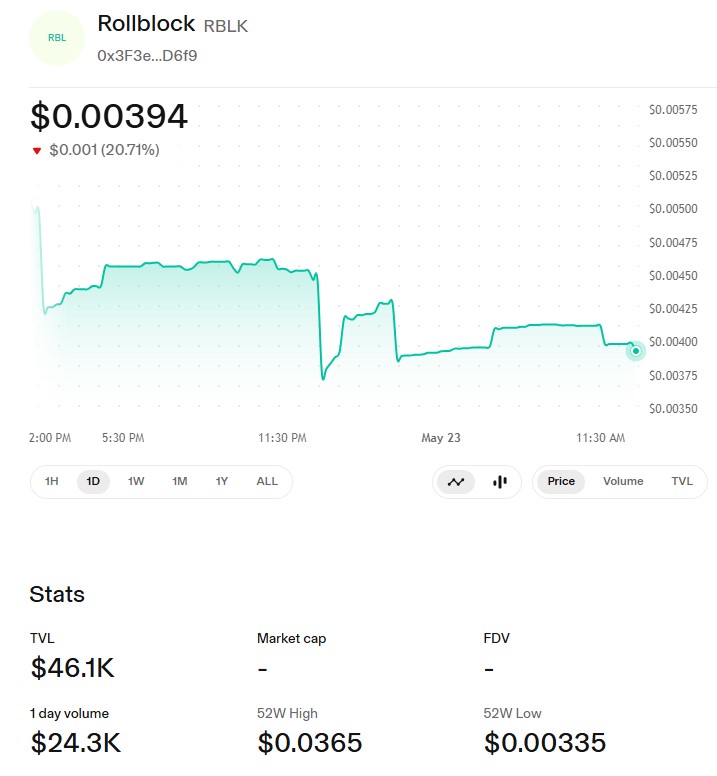
A Licensed Casino, Not a Whitepaper Promise
Rollblock is not starting from zero. The platform is owned by Mucho Gaming Limited, operates under a verified Anjouan Gaming license, and has been independently audited by SolidProof.
The casino has been live for over 18 months, processed more than $15 million in real wagers across 12,000-plus games, and generates an estimated $5 million in annual revenue based on third-party casino review data.
That revenue matters because the entire token strategy runs on top of it. Without real cash flow, the mechanics below would be empty promises. With it, they become something more concrete.
Weekly Token Burns Are Already Reducing RBLK Supply
Every week, 30% of casino profits go toward buying RBLK directly off the open market. Of those tokens, 60% are permanently burned, and 40% go to stakers as rewards.
At current casino traffic levels, roughly 340,000 tokens are leaving circulation every week. You can verify the live Uniswap pool data here.
This is not a future commitment. It is happening now, regardless of price action.
The math compounds quickly. If gaming volume doubles in Q3 2026 — which the team has named as an internal target — the weekly burn rate could approach 700,000 tokens. That is sustained, revenue-funded deflation running in the background while the price chart does whatever it does in the short term.
23% Staking Yield Is Built to Absorb Sell Pressure
Rollblock currently offers 23% annual yield to token stakers. The team built this deliberately, every RBLK staked is a token that does not hit the Uniswap pool.
Given that a significant portion of RBLK supply is still locked in presale vesting schedules, the staking rate among early investors directly determines how sharp the unlock-driven sell pressure will be over the coming months.
The rewards are not synthetic. They come from the same weekly casino buyback pool, making the yield a direct function of platform performance.
Higher casino revenue means larger rewards, which means a stronger incentive to stake rather than sell.
Mobile App Is the Core Engine Behind Phase 2
The most operationally significant item in the Phase 2 roadmap is the iOS and Android mobile app, currently under development with no official release date confirmed.
Right now, Rollblock runs entirely in a web browser. The casino already accepts crypto, Visa, Mastercard, Apple Pay, and Google Pay — a notably broad payment onramp for a crypto-native gaming platform. But mobile changes the addressable market entirely.
Millions of users who never interact with crypto websites spend hours weekly on mobile gaming apps. Capturing even a fraction of that audience accelerates casino revenue, which accelerates burns, which accelerates staking rewards.
The mobile app is not a side feature. It is the growth engine that the rest of Phase 2 depends on.
May 30 to June 1 Is the CEX Listing Window That Matters
With $46,100 in pool liquidity, RBLK cannot sustain a meaningful price recovery on Uniswap alone. The team knows this. Phase 2 explicitly targets listings on Binance, OKX, KuCoin, ByBit, Bitget, BitMart, and MEXC — though none have officially confirmed a listing yet.
The team is also working from a self-imposed constraint: a three-year liquidity lock on the Uniswap pool baked in at launch. The team cannot pull liquidity even if they wanted to, which rules out the exit-drain scenario that ended dozens of 2024 and 2025 presale projects.
The window analysts are watching for a simultaneous DEX and CEX launch announcement runs from May 30 to June 1, 2026. Projects that co-launch on a major centralized exchange and a DEX on the same day see fundamentally different first-week price action than those that list in isolation.
Whether Rollblock lands that timing is the near-term question that matters most.
Claim Failures and Communication Gaps Threaten Recovery Timeline
The team has real problems to address and limited time to address them.
Technical claim issues affecting some presale investors need to be resolved immediately. Every day those issues persist, the team loses control of its own narrative to social media speculation.
Communication has also been too sparse - the silence between the April 30 launch announcement and the May 20 Uniswap listing created a fear vacuum that fueled much of the current selling. A consistent, transparent update schedule is not optional at this stage.
If the team executes — fixes claims, lands a CEX listing, ships the mobile app, and makes the burn dashboard public — analysts tracking the project see a credible path toward the $0.01 to $0.02 range near term, with a potential $0.03 to $0.07 range by year-end.
If execution stalls, the casino keeps running and the burns keep happening, but without new buyers, the math moves slowly.
The project has the foundation. The next 30 days will show whether the team can build on it fast enough to matter.
This article is for informational purposes only and does not constitute financial or investment advice. Cryptocurrency markets carry significant risk. Always conduct independent research before making investment decisions.
Also read:







.webp)