What Is NFT? A Simple Non-Fungible Token Guide for Beginners

What Is NFT Guide: Non-Fungible Token Basics Explained in 2026
If you still ask what is NFT, start with one simple idea. An NFT is a unique digital ownership record on a blockchain. It can represent art, a game item, a membership pass, a ticket, or even a physical collectible. OpenSea defines NFTs as unique digital items stored on a blockchain that act as records of ownership.
The word non-fungible sounds hard. It is not. It simply means one item is not interchangeable with another. One $10 bill works like another $10 bill. One NFT does not. Ethereum’s ERC-721 standard was built for that kind of one-by-one ownership.
So, what is NFT really about in daily use? It is about proving that one wallet owns one specific digital item. That item may have cultural value, game value, access value, or real-world backing. The token is the proof.
How Does An NFT Actually Work?
After understaning what is NFT, how it works, comes in the discussion. Each NFT has a token ID. Think of it like a serial number. The smart contract stores the rules, while the token ID marks the specific item. That is how wallets and marketplaces know what you own.
The NFT also points to metadata. Metadata is the file that tells the token’s story.
It can include the name, image, traits, and creator details.
OpenSea explains that minting usually includes assigning this metadata to the item.
This is where many beginners get confused. If you ask what is NFT, the answer is not “just a JPEG.” The image is only one layer.
The token, ownership history, and contract rules are the part that makes it an NFT.
ERC-721 Vs ERC-1155 Made Simple
ERC-721 is classic NFT standard. It works best for one unique item per token. Profile picture collections, single art pieces, and one-off collectibles often use it. Ethereum’s official standard says ERC-721 provides basic functionality to track and transfer NFTs.
ERC-1155 is more flexible. One contract can hold many item types at once. That means a game can issue swords, coins, skins, and rare items from one system. Ethereum’s ERC-1155 standard says it can represent both fungible and non-fungible tokens together.
A quick rule helps here:
- Use ERC-721 for one-off collectibles
- Use ERC-1155 for NFT games and mixed item sets
- Use ERC-1155 when batch transfers matter
- Use ERC-721 when rarity is easier to compare
What Happens During Minting?
Minting means creating the NFT on the blockchain. OpenSea says minting writes the digital item to the blockchain and creates its authenticity and ownership record. That is why minting matters so much.
The process is usually simple:
- Choose the file or asset
- Add a name and description
- Add traits or properties
- Connect your wallet
- Approve the blockchain transaction
- Receive the NFT in your wallet
If someone asks what is NFT creation, this is the answer. You are not only uploading a picture. You are creating a blockchain record that proves origin and ownership.
Where Do People Buy And Sell NFTs?
To understand what is NFT holistically marketplaces needs to be dive into. NFT marketplaces are the main shopping malls of this space. OpenSea remains one of the biggest names. DappRadar’s 2026 marketplace guide says OpenSea led with about 1.7 million NFTs sold in a month and more than $100 million in monthly volume. Blur and Magic Eden also remain major names.
These platforms matter most for beginners:
- OpenSea for broad multichain access
- Blur for active traders
- Magic Eden for strong multichain NFT activity
- TokenTrove for some game-focused trading
- Courtyard for physical collectible NFTs
If you are learning what is NFT trading, remember one thing. The top NFT marketplace does not magically make an NFT valuable. It only makes discovery, listing, buying, and selling easier. Real value still depends on demand.
JPEG Collectibles Vs Utility NFTs
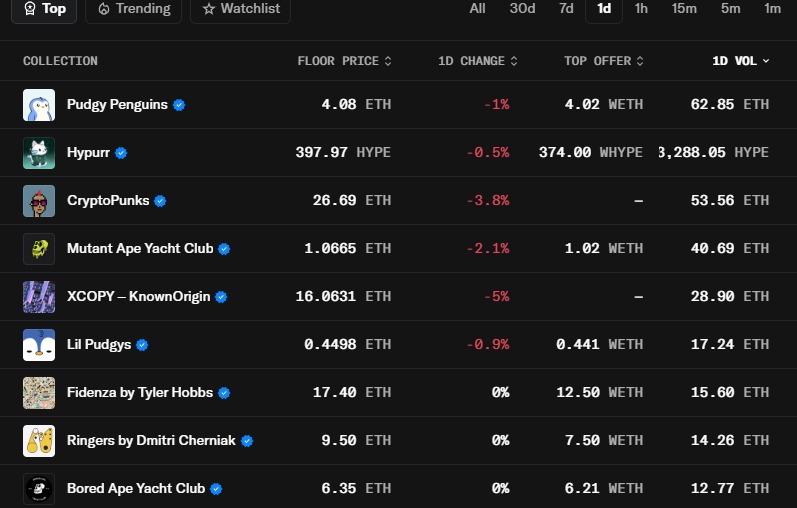
Some NFTs are mainly collectible. These are often called JPEG NFTs or PFP collections. CryptoPunks helped define this category early on, and Pudgy Penguins remains one of the best-known consumer-facing brands today. Pudgy Penguins’ official site says the brand now spans content, merchandise, toys, and digital collectibles.
Source: OpenSea Website
Other NFTs have direct use. These are utility NFTs. Sorare is a good example. Sorare says users truly own licensed digital player cards for football, baseball, and basketball, then use them in fantasy competitions.
The split looks like this:
- JPEG collectibles: culture, art, brand, status
- Utility NFTs: access, gameplay, rewards, passes
- Hybrid NFTs: collectible first, useful later
So, what is NFT value based on here? In one case, brand and culture matter more. In the other, product use matters more. The strongest projects often try to blend both.
Why Gaming NFTs And RWA NFTs Matter Now?
Gaming is still one of the clearest NFT use cases. DappRadar’s 2026 marketplace coverage highlights gaming-linked activity, while Sorare continues to show strong user participation with more than 231,000 managers on its site. That shows NFTs can move beyond static art.
Real-world asset NFTs are another important shift. DappRadar’s Q1 2025 industry report said PFPs still led volume, though RWAs, led by Courtyard, emerged as a breakout trend. Courtyard lets users buy and sell tokenized physical trading cards.
This matters for beginners because it expands the answer to what is NFT. It is no longer only digital art. It can also be a claim on a game item, a sports card, or another physical collectible stored offchain and linked onchain.
How Do People Value NFTs?
NFT pricing is never perfect. Still, buyers often look at the same signals. These signals help you compare collections without guessing wildly. OpenSea’s OpenRarity system also shows how rarity became more standardized for eligible collections.
The main checks are:
- Floor price
- Rarity
- Trading volume
- Holder count
- Utility
- Brand strength
- Liquidity
- Provenance, or ownership history
If you ask what is NFT worth, the honest answer is this: only what the next buyer will pay. A high floor helps. Strong volume helps more. Real utility can help most during weak market periods.
What Risks Should Beginners Know?
Scams are the first danger. Fake mint pages, fake support messages, and copycat collections still catch new users. Always use the official site and check the contract address before buying.
Liquidity risk is next. An NFT can look expensive but still be hard to sell. Thin markets make listed prices look stronger than real demand. That is why volume matters.
Rights also matter. Owning an NFT does not always give you full copyright. You may own the token, not the commercial rights. Read the project terms first.
Should You Buy An NFT As A Beginner?
Yes, but start small.
Buy your first NFT as a learning step, not a big bet. If you understand the collection, the use case, and the resale market, you are already ahead of many first-time buyers. That is the safest way to approach what is NFT ownership in 2026.
In the end, what is NFT really about? It is a digital proof system for unique things. Some NFTs are art. Some are game items. Some unlock access. Some represent physical assets. The idea is simple. The market around it is what gets complex.