How Nifty Gateway Shutdown Drives AI NFT Revival in 2026?

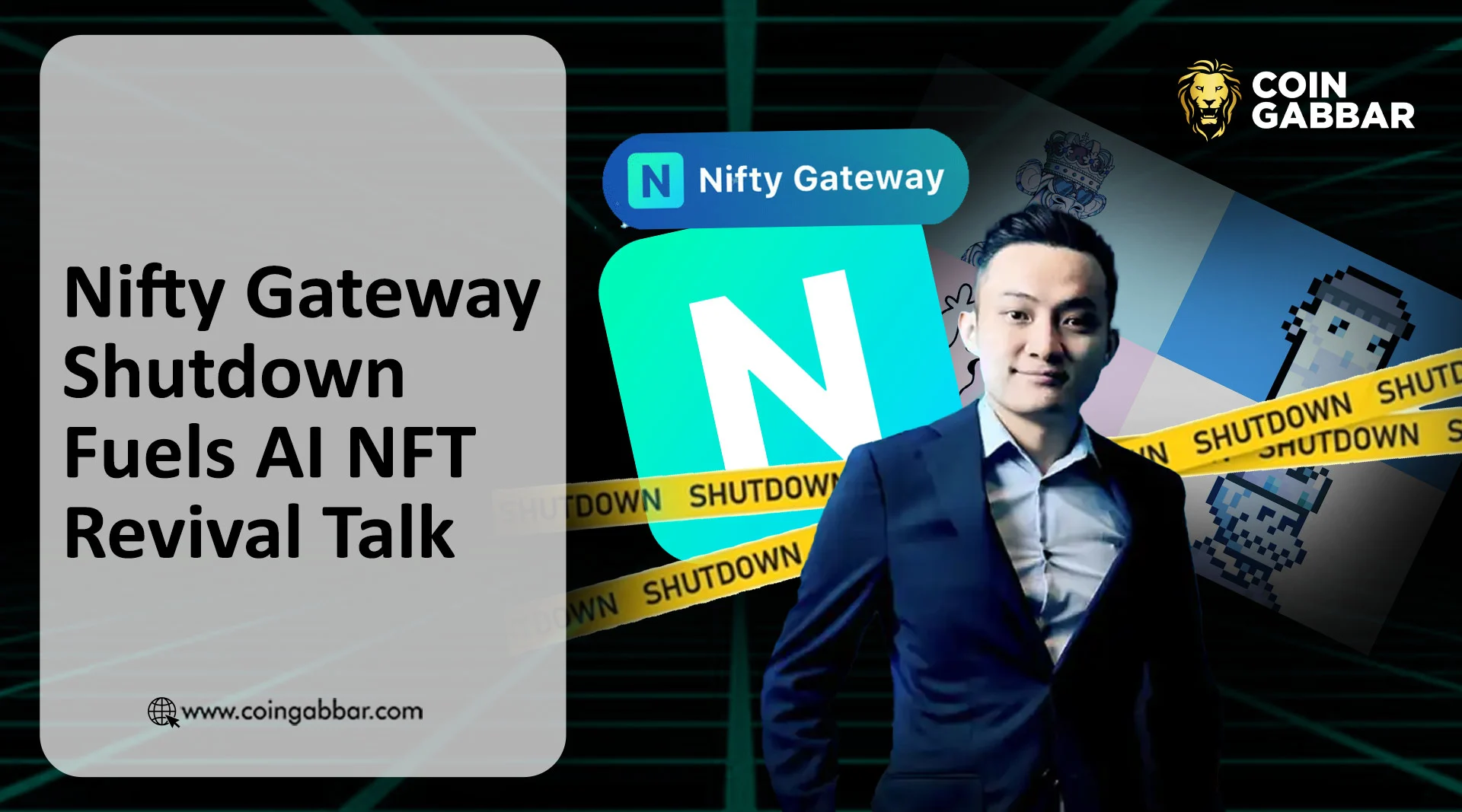
Justin Sun: Nifty Gateway Shutdown Pushes Focus on AI NFT Platforms
The Nifty Gateway shutdown is back in the spotlight, not because it just happened, but due to fresh comments from Justin Sun that are reigniting debate around the future of NFTs (digital or tokenized artwork).
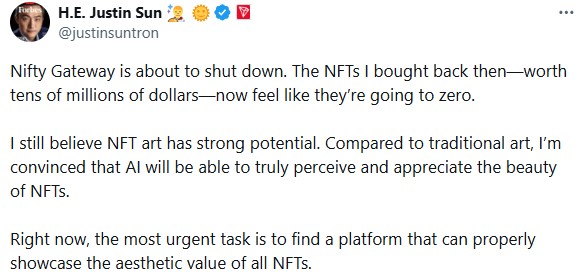
Sun, a major collector, holds digital artworks or NFTs once valued at tens of millions of dollars, many originally purchased on Nifty Gateway. Once valued at millions now risk fading without proper exposure.
He highlighted concerns about digital artwork value and the urgent need for better platforms as visibility and long-term value are still heavily dependent on platform support, while opening new discussions around the future of AI-powered digital art.
Once a leading NFT marketplace owned by Gemini–Nifty Gateway, although officially ceased trading operations on February 23, 2026, yet to enforce full closure as it is in“withdrawal-only” mode now. At its peak, the platform facilitated over $300 million in sales, making it a major hub during the tokenized art boom.
AI NFT Vision Points Toward NFT Revival in 2026
Despite the setback, Sun remains optimistic about the role of AI tokenized art innovation in shaping the future. He believes artificial intelligence can help analyze, interpret, and even “appreciate” digital art in ways that go beyond traditional systems.
AI tools are already being used to evaluate composition, emotion, and rarity—offering a more structured way to value blockchain-based art. This could support an NFT revival 2026, where assets gain deeper meaning rather than relying on speculation.
The concept also aligns with emerging Utility NFTs, where digital assets are no longer static images but interactive or evolving experiences. From Gaming NFTs to RWA NFTs (real-world asset tokens), the market is gradually shifting toward practical use cases.
Popular collections like Pudgy Penguins have already shown how branding, community, and utility can sustain long-term value.
What Comes Next for the NFT Market?
The Nifty Gateway shutdown signals a turning point rather than an end. As older platforms disappear, the focus is now on building smarter ecosystems that combine AI, utility, and better user experience.
Sun’s call for a new platform highlights a growing need: a space where on-chain collectibles are not just traded, but properly showcased and understood.
While challenges remain, including market volatility and evolving user trust, the next phase of NFT may depend less on hype and more on technology, storytelling, and real-world integration.
In this changing landscape, the intersection of AI and NFTs could redefine how virtual art is created, valued, and experienced in the years ahead.
Disclaimer: This article is for informational purposes only and does not constitute financial or investment advice.










