XRP Ripple Banks Adoption 2026: ODL in Banking Explained

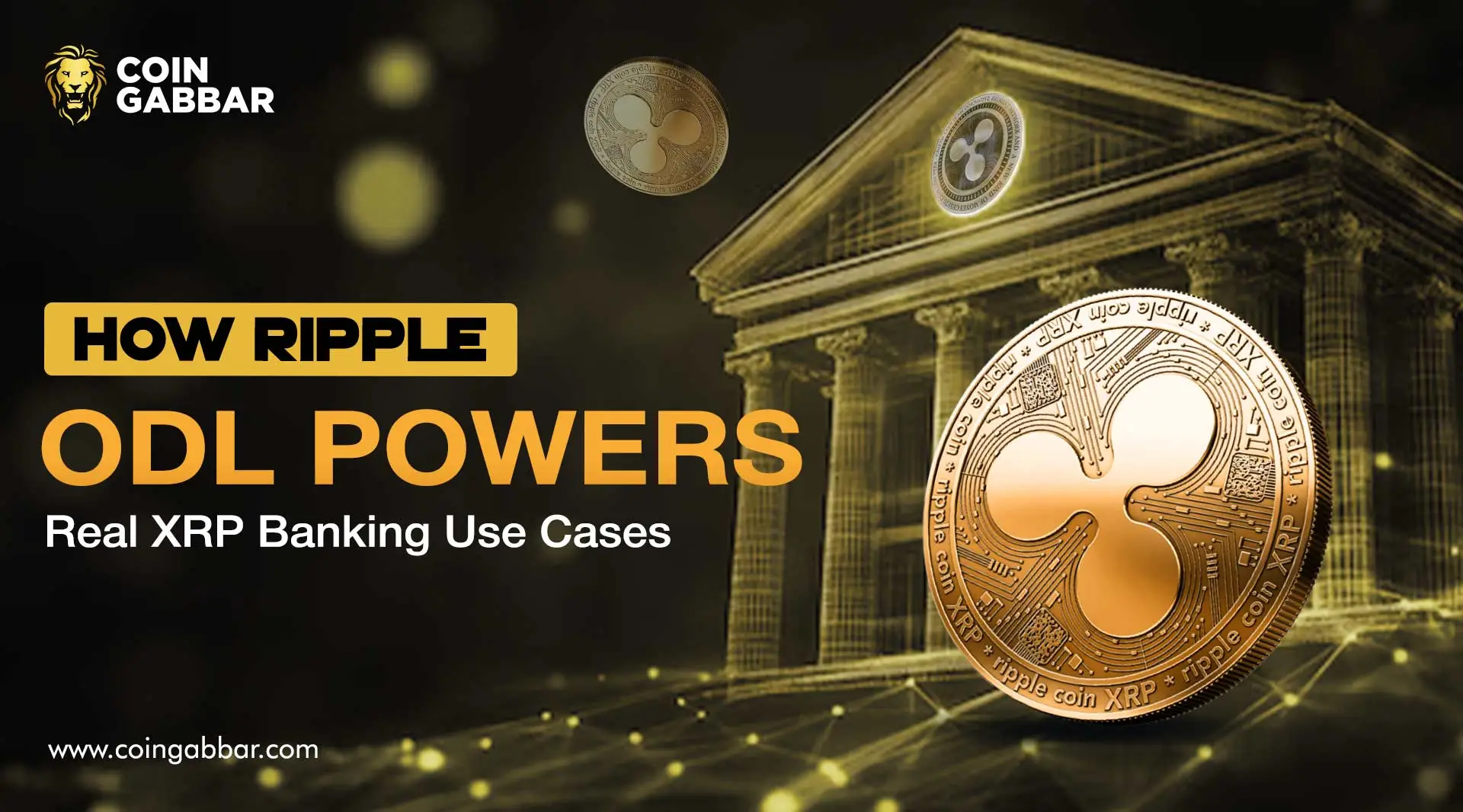
XRP Ripple Banks Adoption 2026: Is ODL a Swift Alternative?
If you hear big claims about XRP Ripple Banks, slow down firstThe story is real.
Banks using XRP have become one of the biggest talking points in crypto payments. Before believing every headline, it's worth separating verified adoption from online hype.
The company says its payments tools help banks, fintechs, and payment firms move money across borders in seconds. It now markets that product as Ripple Payments. Older readers may know it as ODL, or On-Demand Liquidity.
That service uses XRP, or sometimes stablecoins, to move value without parking cash in foreign accounts first.
That point is relevant for XRP Ripple Banks' adoption in 2026.
You are not looking at just a theory. It has real customers, real licenses, and real payment corridors. At the same time, you should know one key detail: Ripple’s older “300+ customers” line refers to customers across its network, not a public list of 300 named banks. It now sells to banks, fintechs, payment service providers, and crypto businesses.
What ODL Actually Does
ODL solves a boring banking problem. That is why it matters.
Cross-border payments often need pre-funding. That means a firm keeps money parked in foreign accounts before a customer payment even arrives. Thet says ODL removes that step by converting one currency into XRP, sending the digital asset over the XRP Ledger, and then converting it into the payout currency on the other side.
The company says settlement on XRPL takes about 3 to 5 seconds.
That is the heart of XRP Ripple Bank's adoption in 2026.
It is less about retail trading. It is more about plumbing. In plain English, The company wants payments firms to use XRP Ripple Banks as a bridge asset so they can send money fast without tying up working capital abroad. They said this directly when it launched ODL with SBI Remit in Japan in 2021.
Why do banks and payment firms care?
Because cash tied up abroad is dead money. They say ODL helps unlock that capital, lower operating expenses, and speed up settlement. Those claims appear again and again in Ripple’s official customer announcements.
The Volume Story Is Real
This is not a tiny pilot anymore.
Ripple said ODL handled about $2.4 billion in notional value in 2020. In Q3 2021, the company said ODL made up 25% of total dollar volume on RippleNet. By late 2022, the company said ODL was processing millions of transactions worth billions of dollars and enabling payouts in nearly 40 markets.
Those numbers help explain the adoption 2026.
They show real payment flow, not just token speculation. They also show a pattern. The company started with remittances, which are cross-border money transfers sent by workers to families, then expanded into treasury flows and business payouts.
That shift is important.
Banks may like new technology. They usually love proven payment volume more. When a network shows billions in processed value, the sales pitch gets easier.
Which Partners Matter Most?
A few names stand out.
Ripple’s 2021 Japan launch linked SBI Remit, SBI VC Trade, and Coins.ph for Japan-to-Philippines transfers. The company later said partners such as Tranglo, Novatti, FlashFX, Pyypl, and I-Remit were using ODL. In Europe, The company announced ODL ties with FINCI in Lithuania and Xbaht in Sweden, with Tranglo supporting the Sweden-Thailand route.
Newer names matter too.
In May 2025, XRP Bank said Zand Bank and Mamo in the UAE would use Payments for cross-border transfers. That followed DFSA license in Dubai in March 2025, which made it the first blockchain-enabled payments provider licensed by that regulator.
So, what does this development mean for adoption in 2026?
It means adoption is broadening by region and customer type. Some partners are banks. Some are fintechs. Some are remittance specialists. That mix is normal because cross-border payments touch many types of firms, not banks alone.
Is Ripple a Swift Alternative?
Yes, though not in the simple way people claim online.
The company clearly positions its payments product as an alternative to traditional correspondent banking. Its site says firms can bypass correspondent banking, move funds in seconds, and avoid layers of intermediary banks. That is a direct challenge to old payment rails.
Still, Swift is not standing still.
Swift says nearly 60% of GPI payments reach end beneficiaries within 30 minutes, and almost 100% arrive within 24 hours. In 2024, Swift also said 90% of cross-border payments on its network reached the destination bank within an hour. That means it is not competing with a slow, broken dinosaur. It is competing with a system that has improved a lot.
That makes the adoption of XRP by Bank in 2026 more nuanced.
Ripple’s edge is not just speed now. The bigger pitch is always-on settlement, fewer intermediaries, lower pre-funding needs, and blockchain-native tracking. Swift still has a far larger reach, with more than 11,500 institutions in over 200 countries. It is smaller, though often more direct in specific corridors.
Why 2026 Looks Different
Ripple’s message has changed.
The company now talks more about Ripple's Payment than the old ODL branding. It also pushes stablecoins alongside them. On its payments page, Ripple says customers can use XRP or stablecoins such as RLUSD, depending on the payment need. In March 2026, They said leading fintechs were adopting Ripple Payments and highlighted new momentum around its end-to-end stablecoin platform.
That shift is relevant for XRP Ripple Banks adoption in 2026.
It shows the company is trying to meet banks where they are. Some firms may prefer XRP Ripple Banks for speed and liquidity. Others may prefer a dollar stablecoin because it feels closer to traditional finance. It seems ready to sell both choices inside one payment stack.
This is a practical move.
Banks do not adopt tools because crypto market fans like them. Bank adopt tools that cut costs, reduce trapped capital, fit regulations, and work across real corridors. Ripple’s 2025 Dubai license and UAE customer wins show that regulation still drives the whole game.
The Conclusion
So, is XRP used in banking today?
Yes, in a real, though still limited, way. It has shown real ODL and Payments usage through named partners, billions in processed value, and corridor expansion across Asia, Europe, Africa, and the Middle East. That supports the case for XRP adoption in 2026. However, it's important to remain grounded.
It has momentum. It does not have all the banks. Swift remains huge. Stablecoins are now part of Ripple’s pitch, too. The clearest honest takeaway is simple: XRP is no longer just a speculative asset story. In banking, it is already part of a live cross-border payments toolset used by a growing set of financial firms.
Disclaimer: This article is for educational purposes only. It is not investment advice. Crypto markets move fast, and adoption headlines do not guarantee price gains.
Also read:









.webp)




