XRP Outperforms: Institutions Rotate Away From to XRP

XRP Outperforms Institutional Race as Bitcoin and Ethereum Lose Flow
XRP Outperforms many major digital assets in recent institutional flow data, and that shift is drawing fresh market attention. CoinShares reports showed money moving into products linked to this asset, while Bitcoin and Ethereum funds saw withdrawals. This contrast has become a key market theme. It suggests that some large investors now prefer payment-focused blockchain networks during weak market periods.
Institutional Flow Data and Price Context
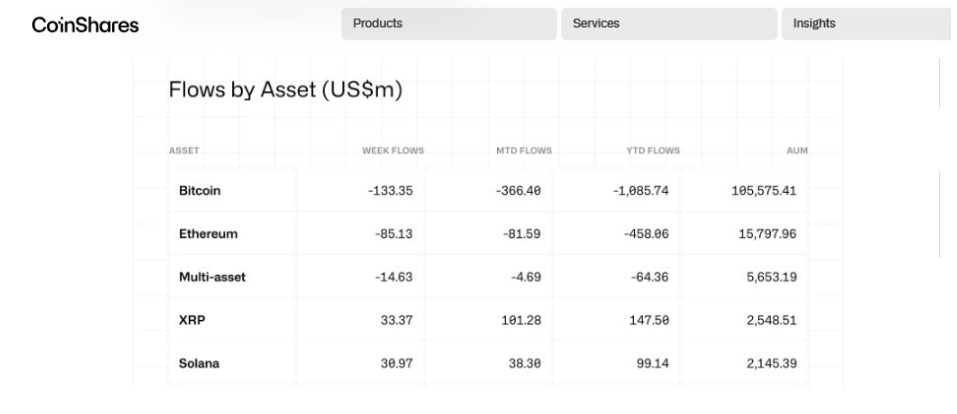
Recent CoinShares data showed steady inflows into related investment products. In one week, the asset saw about $63.1 million in inflows. In another week, it brought in about $33.4 million.
During those same periods, Bitcoin and Ethereum funds saw money leave. One report showed about $133 million leaving Bitcoin products and about $85.1 million leaving Ethereum products.
Price data added more context. During one reporting window, XRP traded near $1.42. Bitcoin was near $68,154. Ethereum was close to $1,968.
This does not mean inflows always push price higher right away. Still, the numbers support the view that XRP Outperforms many rivals in attracting fresh institutional interest.
ETF Exposure and Comparative Performance
Another reason the asset stayed in focus was easier access through regulated products. This gave institutions a way to gain exposure without buying tokens directly.
Some market reports also linked demand to ETF-related interest. Coverage suggested that a major bank held about $152 million in ETF exposure tied to this token. That helped support the case that professional investors were taking it more seriously.
During some recovery phases, it also showed better relative strength than Bitcoin and Ethereum. Those moves helped build the market view that XRP Outperforms other major names when capital starts rotating toward utility-based projects.
Why Institutions Are Moving Toward This Asset
The main reason is simple. It is tied to payments. It is built for fast and low-cost transfers across borders.
That gives it a clearer real-world use case than many coins driven mostly by speculation. For financial firms, this can make it look more like useful infrastructure than just another trade.
Another reason is diversification. When market conditions are weak, some investors look beyond the biggest coins. They search for networks linked to real services and real demand.
That is where the idea that XRP Outperforms gains more support. The asset has a long history in the payment space and a strong focus on settlement.
Ecosystem Advantages and Market Signal
The XRP Ledger supports more than one use case. It helps with payments, liquidity movement, and other financial tools.
That broader role matters. Large investors often prefer blockchain networks that can handle more than one job. A wider use case can make an asset look stronger over time.
For users, the benefits are easy to understand. Transfers can be faster. Costs can be lower. Settlement can be smoother.
For institutions, the value is different. They may see better liquidity handling, easier access through products, and a stronger utility story. These points help explain why XRP Outperforms in fund flow discussions while Bitcoin and Ethereum products saw outflows.
Conclusion:
Recent data shows a clear shift in investor behavior. Strong inflows, payment utility, and easier product access have helped improve the asset’s market position. Prices can still move with wider crypto trends, but the bigger message is clear: XRP Outperforms in several key institutional flow periods, and that is reshaping how large investors view the asset.
Also read:








