Argentina Crypto Adoption Set to Grow with New Bank Regulations


Argentina Crypto Market Strengthens as Central Bank Targets New Rules
In a massive move to boost digital asset space, Argentina’s central bank, Banco CEntral de la República Argentina, is reviewing plans to let banks offer crypto trading and custody services. If approved, this move would lift the long-standing Argentina crypto ban that has kept traditional banks out of digital assets.
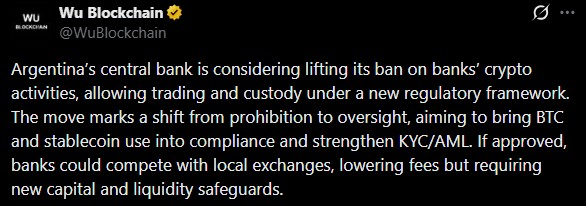
Source: Wu Blockchain
For years, traditional banking systems were prohibited from touching cryptocurrencies. Now, regulators aim to shift from prohibition to oversight, bringing Bitcoin and stablecoin use into a regulated framework. This aligns with President Javier Milei’s market-friendly reforms and the country’s growing cryptocurrency ecosystem.
With the signals already pacing the way, is the country ready to open its banking systems to cryptocurrency? And why is it looking more strong now?
Crypto Already Part of Daily Life in the Country
The shift comes from necessity. With high inflation and capital controls, Argentines have relied heavily on digital assets to protect their savings. Many receive salaries in Bitcoin or stablecoins and use them for everyday spending.
By allowing banks to handle cryptocurrencies, regulators aim to bring this widespread activity into the formal financial system, improving KYC and AML compliance and offering stronger consumer protection.
Banks vs Exchanges: A New Era of Competition
Currently, in the absence of regulatory overviews, local exchanges dominate the crypto market in Argentina. If banks join, they bring large customer bases, risk management expertise, and better capital infrastructure. This could lower trading fees, shrink spreads, and boost trust for users who previously avoided exchanges.
However, bank will need to meet strict capital and liquidity requirements for handling volatile digital assets like Bitcoin and stablecoins. Custody systems must be upgraded, and security standards strengthened. The competition promises better services for users while ensuring safer operations.
Broader LATAM Markets: Where does Argentina Stands?
Following the global trend, Latin America’s crypto market is also growing rapidly. According to Chainalysis, between July 2022 and June 2025, transaction volumes reached nearly $1.5 trillion, with Brazil leading at $318.8 billion and Argentina second at $93.9 billion. Mexico, Venezuela, Colombia, and smaller markets like Peru and Chile are also seeing strong adoption, highlighting the region’s growing reliance on digital assets.
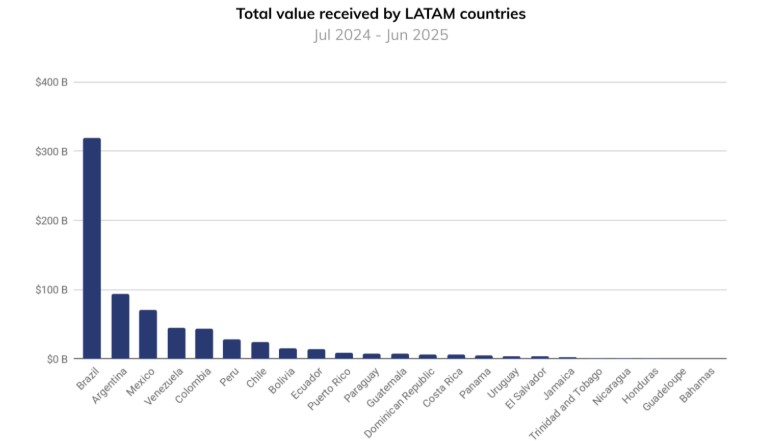
This policy change, knocking at this crucial development time period, could place the country as one of the most regulated crypto-markets in Latin America, offering safer on-ramps for users and new revenue streams for banks.
The Growing Move
Allowing traditional institutes to trade and hold digital coins would be a historic step for Argentina crypto adoption, combining regulatory oversight with practical access for millions.
It reflects the country’s recognition of cryptocurrency as a key tool for financial stability in a challenging economic environment. For the digital asset community, it means safer services; for banks, it means a new business opportunity; and for the region, it marks a significant milestone in LATAM crypto adoption.
Also read:









