Bitcoin Mining Profitability Crisis as Costs Rise and Hashrate Falls


Bitcoin Mining Hashrate Falls, Push Miners Toward AI Revenue Shift
Bitcoin Mining is facing one of its toughest phases in recent years, as the network recorded three consecutive negative difficulty adjustments, something rarely seen since 2022.
This indicates that many miners are shutting down operations due to losses. The hashrate dropped from peaks near 1,160 EH/s to around 1,000 EH/s, showing clear signs of miner capitulation.
All these leading to speculations around: Are Bitcoin mining not profitable enough now or it is losing its dominance? What are the factors behind this drop and where could they lead the future of crypto minings?
What Bitcoin Mining Is? How it is Going in Danger
Bitcoin mining is the process of validating transactions on the Bitcoin network and adding them to the blockchain. Miners use powerful computers to solve complex mathematical problems–which cause them heavy energy and infrastructure charges, and in return, they earn Bitcoins as a reward.
However, a recent report by CoinShares highlights how the industry is dealing with shrinking margins and shifting strategies to survive.
According to the data, the sector is facing a sharp drop in hashrate, which is the revenue miners earn per unit of computing power.
Hashprice fell to around $28–30 per PH/s/day in early 2026
It has slightly recovered to $32–33, but still near 5-year lows
Forward estimates suggest it may stay near $30–32 in coming months
The decrease in reward is also a result of the BTC halving process, which cuts revenue in half every 4 years to control supply and maintain scarcity, while operating costs remain high.
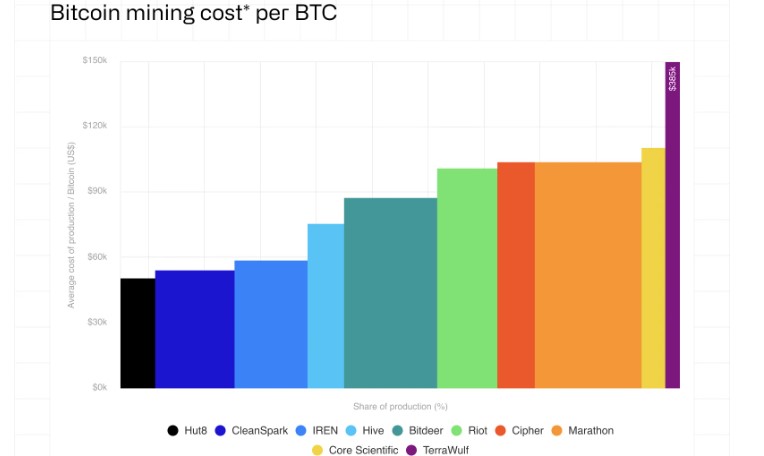
At the same time, the cost to mine one Bitcoin has surged. In Q4 2025, the average cost reached around $80,000 per BTC. With the BTC price hovering near similar levels, many miners are struggling to stay profitable.
As a result, 15–20% of global mining-rigs are now operating at a loss, especially older and less efficient machines with high electricity costs.
These situations are fueling concerns among validators, whether Bitcoin mining is not worth it to be worked on.
Other Options: Shifting to New Revenue Source
One of the biggest changes in crypto excavation is the shift toward AI and high-performance computing (HPC).
Digital asset harvesting companies have signed over $70 billion in AI/HPC contracts
Some firms may generate up to 70% of revenue from AI by 2026
AI deals offer 80–90% margins and long-term stable income
Companies are now using their existing infrastructure, power, land, and cooling systems, to support AI data centers instead of just processing BTC.
Major cloud players like Microsoft, Google, and Amazon Web Services are driving this demand.
Broader Crypto Harvesting Landscape in 2026: Survivors vs Struggling Miners
The sector is now dividing into two clear groups:
Miners with low-cost power and modern machines who can still profit
Companies shifting to AI and infrastructure businesses
Others, especially those without competitive advantages, risk shutting down completely. Some companies are even selling their BTC holdings and taking on debt to fund AI expansion, changing the traditional mining model.
However, the situation is not limited to Bitcoin. The broader crypto harvesting industry is evolving. After The Merge, traditional GPU-based processing ended for Ethereum, pushing miners toward alternative coins or AI-related work.
At the same time, rising GPU demand for AI has made mine less attractive, adding further pressure.
In the end, the coming years will decide whether “Bitcoin Mining not profitable” becomes a long-term trend or just a temporary cycle.