Bybit AI Sub-Account Goes Live With Full Risk Controls for Agents

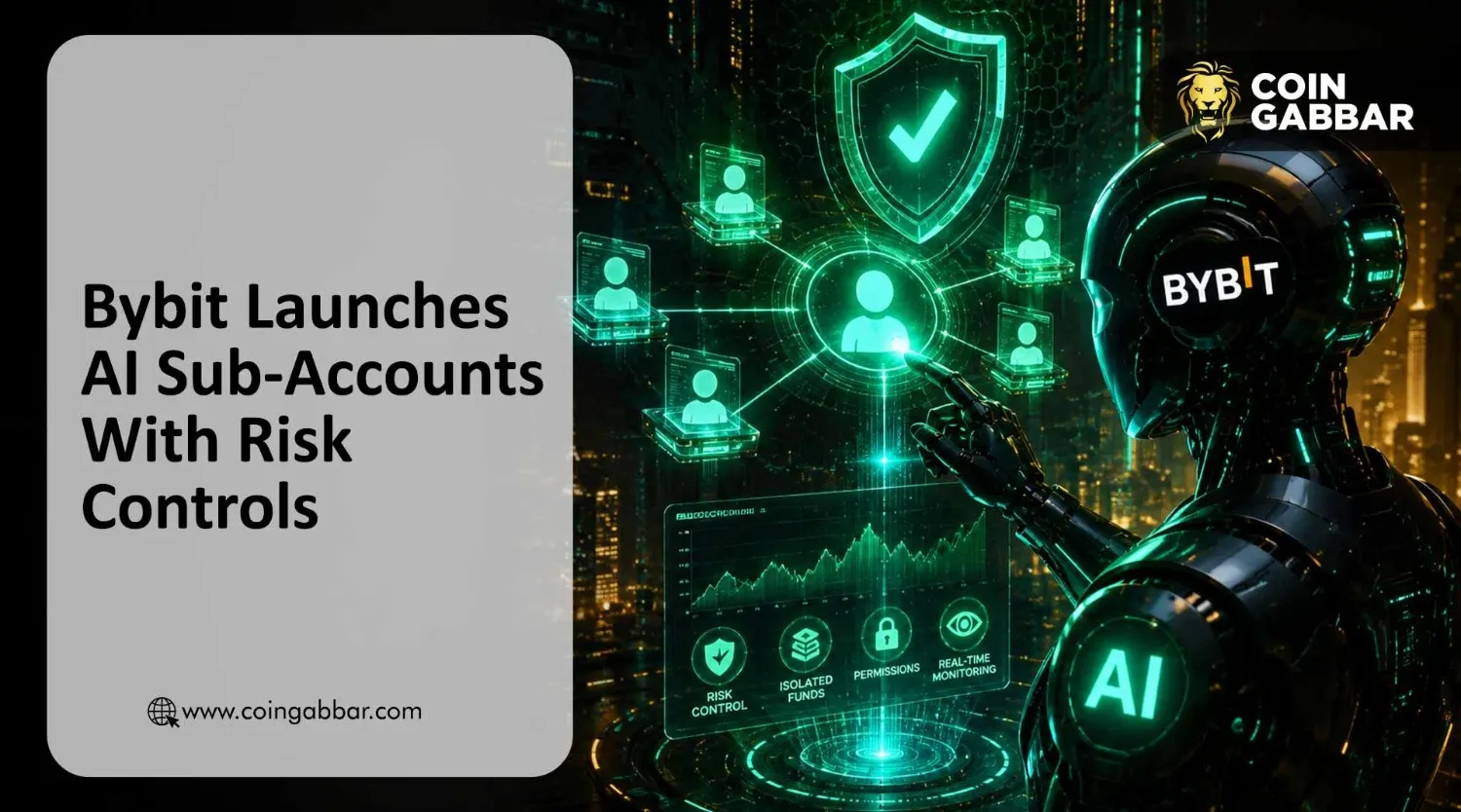
Bybit AI Sub-Account Launched: Brings The Age of Agentic Trading
Bybit just flipped a switch that every serious trader has been waiting for. On May 20, 2026, the world's second-largest crypto exchange by volume launched its Bybit AI Sub-Account, a completely separate, ringfenced account type built specifically for AI-powered agent trading. No more connecting bots to your main wallet and hoping nothing goes wrong.

Source: Official Document
This is not a beta feature or a soft rollout. It is live, it is mandatory for any external AI-powered agent connection, and it changes how autonomous crypto trading works on a centralized exchange.
How the Bybit AI Sub-Account Actually Protects Your Portfolio
The core idea is simple. Your AI-agent lives in its own box. It cannot touch your main account, your other sub-accounts, or any funds you did not deliberately send across. Here is what the isolation actually includes:
Fund Cap: Default $5,000, the hard ceiling for what any agent can hold at one time
Leverage Limits: Separate controls for margin leverage and contract leverage, set independently
API-Only Access: No app login, no manual switching, no intervention possible through the interface
API Key Expiry: Keys expire every 30 days by default, forcing regular review and reducing stale access risk
IP Whitelisting: Lock the agent to specific IPs so no unauthorized machine can call the account
Transfer Controls: Toggle permissions for moving funds in, out, and between Funding and Unified Trading Account
If an agent misfires, hits a code vulnerability, or gets compromised, the damage stays locked inside that one sub-account. Your main portfolio never sees it.
Setting it up takes under two minutes. Open the Bybit-app, go to Profile → Settings → Subaccount → Create → select AI-Subaccount, name it, verify with security confirmation, and generate a scoped API key to hand to your AI-agent.
Bybit AI Hub vs Binance AI Pro: Who Wins the 2026 AI-Dominance Race
The Bybit AI Sub-Account launch does not exist in a vacuum. Binance has been building hard through Binance AI Pro and a Skills Hub that added 13-plus new modules in April 2026 alone. Both platforms now isolate AI-agents in sub-accounts. The difference is in the details.
Bybit strengths:
250-plus API endpoints across Bybit AI Skills for event-driven trading, rebalancing, and breakout strategies
Granular runtime controls, fund caps, dual leverage limits, rate limits, all managed from parent account
Designed for external agent tools like Claude Code, OpenClaw, and Cursor
Stronger derivatives infrastructure and futures liquidity depth
One-click setup with auto-created virtual sub-account and bound API key
Natural language commands for analysis, trade execution, and monitoring
Broader product reach, spot, futures, lending, P2P, RWAs, fiat payments all in one agent workflow
More beginner-friendly onboarding with model selection built in
Neither gives an autonomous agent unrestricted main account access. That baseline is now shared. But Bybit wins on control depth for developers and active derivatives traders. Binance wins on ease and ecosystem breadth for general users.
What the AI-Powered Sub-Account Launch Means for Crypto Trading in 2026
Victor Wu, Bybit's Head of AI-Agent Architecture, said it directly: no agent should have unchecked power over a trader's full portfolio. That one line explains why this launch landed the way it did.
Autonomous agents in crypto moved from conversation to live capital deployment faster than safety infrastructure could keep pace. The risks were real:
Compromised agents executing unauthorized transfers
Malfunctioning bots taking excessive leverage positions
Unrestricted API keys exposing entire portfolios to single points of failure
The Sub-Account addresses all three in one product launch. Industry reaction has been broadly positive, developers and security-focused traders see this as the new baseline that competing CEXs will now feel pressure to match.
The 2026 AI-based trading revolution is not a future event. It is the current reality, and Bybit just built the safety layer underneath it. For anyone serious about passive AI-powered income, autonomous crypto trading, or simply testing strategies without full portfolio exposure, this infrastructure shift is where the conversation starts now.
Note: This article is for information purposes only. All the information and facts are based on market present data. The article itself does not claim anything.









