Bybit AI Trading Hub Lets Users Execute Crypto Trades With AI Command

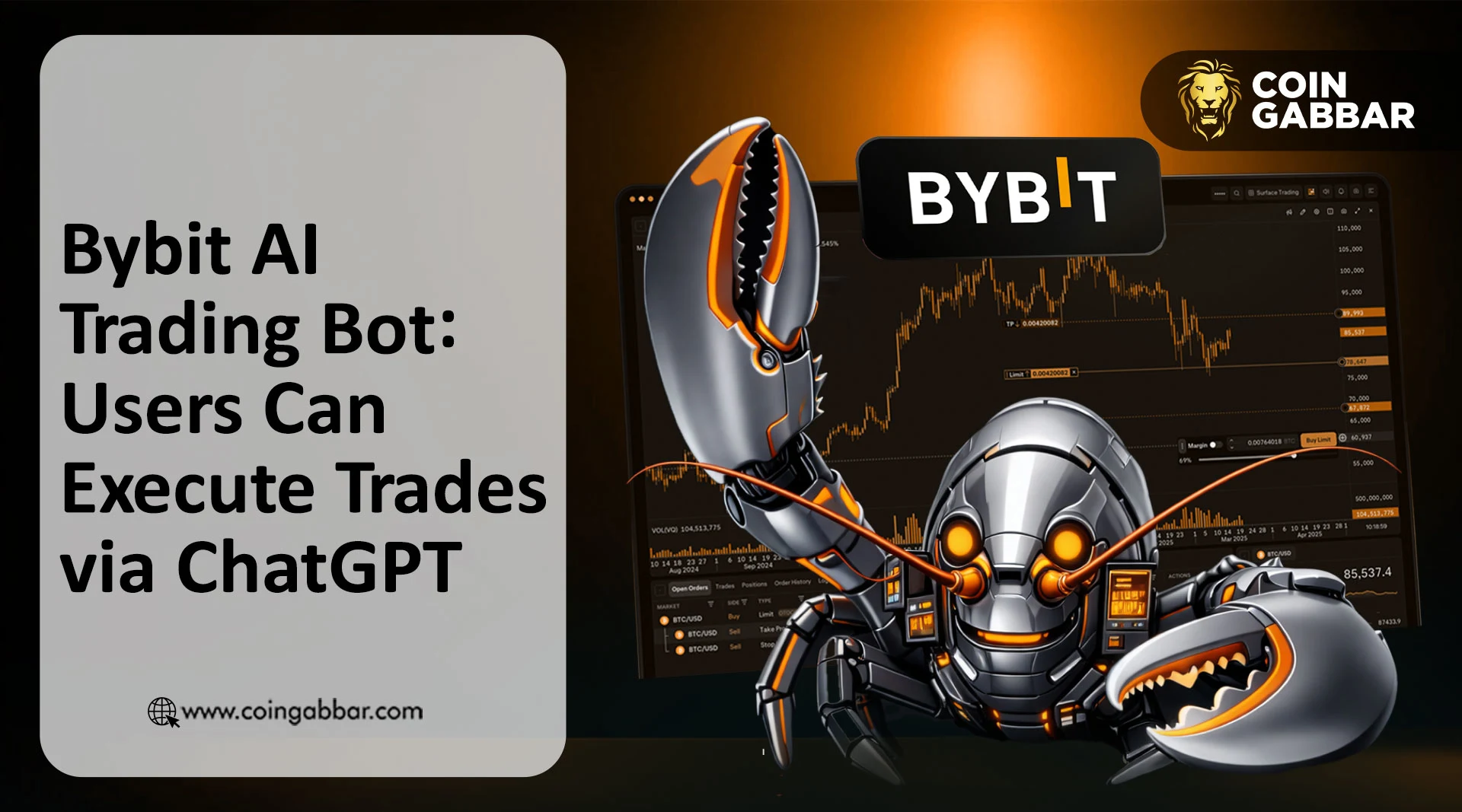
Bybit AI Trading Skill Brings Natural Language Automation With 253 API
Bybit, the world’s second-largest cryptocurrency exchange by trading volume, has introduced a new Bybit AI trading hub that allows users to trade crypto using simple natural-language commands through AI-based assistants.
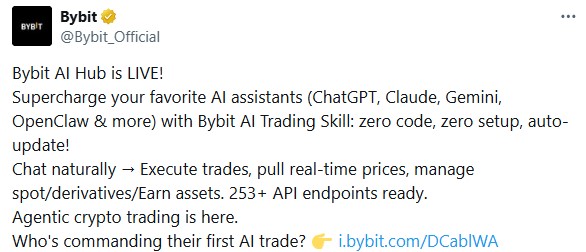
The tool, called AI Trading Skill, enables traders to execute orders, monitor markets, and manage their accounts directly through major platforms such as ChatGPT, Claude, Gemini, along with other tools including OpenClaw, Cursor and Windsurf.
In simple terms, instead of navigating complicated trading dashboards or writing code, user can now type commands like “Buy 0.1 BTC at market” or “Show my portfolio performance.” The smart system interprets the request and converts it into real trading actions.
The launch marks a major step toward agentic trading, where smart systems interpret user intent and carry out financial tasks automatically.
Understand Bybit AI Trading Hub: Powered by 253 API Endpoints
Behind the simple chat interface, the AI trading connects to the exchange’s full infrastructure through 253 API endpoints. These APIs allow AI-assistants to perform a wide range of trading and portfolio management tasks.
The feature supports six major modules:
Market Intelligence: Users can query real-time prices, candlestick data, order book depth, and funding rates.
Spot Trading: The smart system can place market orders, limit trades, and batch transactions.
Derivatives Trading: Traders can open leveraged positions, set stop-loss and take-profit orders, and execute conditional trades.
Earn Products: The system supports flexible savings and on-chain earning programs.
Account & Assets: Users can check balances, deposits, withdrawals, and convert currencies.
Advanced Tools: Features include margin borrowing, price-difference trading, and options RFQ pricing using real-time WebSocket streams.
One of the biggest advantages of the AI Trading Skill is its simple setup. Traditionally, connecting AI-based tools to a crypto exchange required coding knowledge, API configuration, and command-line tools.
With the new feature, users only need to install a simple GitHub skill file. There is no need for Package Manager, interfaces, or configuration files. Once activated, the AI-based skill automatically syncs with Bybit’s platform updates, ensuring users always have access to the latest trading features.
This approach aims to make advanced automation tools accessible not only to developers but also to everyday retail traders.
Development With Safety: Built-In Security Measures
Despite its simplicity, Bybit AI trading includes several security layers designed to protect users. New users are first directed to a testnet trading environment, allowing them to experiment with AI-powered commands using simulated funds before switching to real trading.
When users move to live markets, every transaction requires manual confirmation, ensuring traders maintain full control over each order.
The system also uses secure API authentication to connect AI-powered assistants to Bybit’s infrastructure. Each instruction generated by the AI is translated into verified API calls and executed only after passing platform security checks.
These safeguards aim to prevent issues such as unauthorized trading commands or exposure of sensitive account credentials.
A New Era of Conversational Crypto Trading
The introduction of Bybit AI trading reflects a broader industry shift toward AI-powered automation in financial markets.
Earlier artificial intelligence tools mainly focused on providing market insights or strategy suggestions. However, new technologies are now moving toward full execution, where smart systems can analyze data and carry out trades under user supervision.
This development could make advanced trading strategies more accessible. Tasks such as monitoring markets 24/7, reacting to price changes, or managing multiple positions can potentially be handled more efficiently by AI-powered assistants.
Risks Still Exist: AI-Powered Trading
Despite its advantages, experts caution that AI-based trading systems still carry risks.
Incorrect prompts or misinterpreted instructions could lead to unintended trades. Fast execution speeds may also amplify losses, particularly in leveraged derivatives markets.
Security threats such as prompt-injection attacks or phishing attempts could potentially manipulate smart machine instructions if users are not careful.
While the safeguards within Bybit AI trading reduce many of these risks, analysts recommend that traders start with small positions and carefully monitor AI-driven activity.










