Coinbase Stablecoin Yield Rejection Threatens CLARITY Act Passage


Impact of the Coinbase Stablecoin Yield Rejection on the CLARITY Act
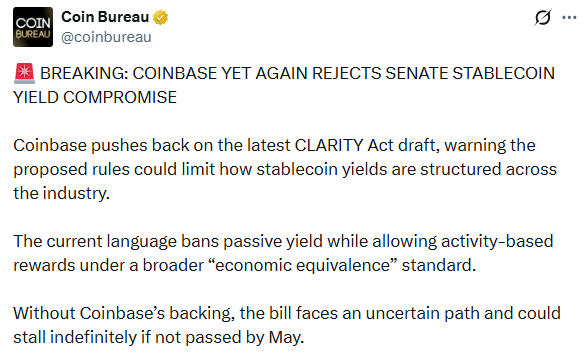
The fight over the future of digital dollars just took a sharp turn. Coinbase has officially told the U.S. Senate that it cannot support the latest Coinbase Stablecoin Yield. This Coinbase stablecoin yield rejection news comes at a tense time for the crypto world. Lawmakers are racing to pass the "CLARITY Act" before the 2026 midterm elections. Without support from the biggest U.S. crypto exchange, the bill might be stuck in the mud.
 Source: X(formerly Twitter)
Why the Fight Is About Your Wallet
At the heart of this clash is how you earn money on your crypto. Senators Thom Tillis and Angela Alsobrooks recently shared a new plan. Their goal was to find a middle ground between big banks and crypto firms. This plan would ban "passive yield". This means you would not earn interest just for holding a stablecoin in your account.
Instead, the bill only allows "active rewards". These are perks you get for doing something, like using a crypto debit card or sending a payment. Coinbase is worried that these rules are too strict. They believe the current wording is too vague. If the law says rewards cannot look like "bank interest", it could put an end to many popular programmes that users love today.
Banks vs. Crypto: The Big Divide
Why are banks so worried? Traditional banks argue that stablecoins with high yields are unfair. They believe people will move their cash out of savings accounts and into digital dollars like USDC. If banks lose those deposits, they have less money to lend for mortgages and small business loans.
On the other side, Coinbase and other crypto leaders think banks are just trying to stop the competition. Coinbase makes a lot of money from stablecoins. In 2025 alone, they saw over $1.3 billion in revenue from this sector. Much of that comes from their work with Circle on the USDC stablecoin. If the government bans these yields, it hits Coinbase’s bottom line very hard.
The Clock Is Ticking for the CLARITY Act
Time is running out for a deal. Senator Cynthia Lummis has been pushing for a "bipartisan compromise". However, passing a law without the industry’s top player is a very hard task. This cryptocurrency exchange also funds a major political group called Fairshake. This group has a lot of influence in Washington. If Coinbase stays "no", many senators might be too scared to vote "yes".
Senator Moreno has already warned that if the bill does not pass by May, it might stall for years. This would leave the U.S. without clear rules for crypto. While other countries are building fast, the U.S. could be left behind in the dark.
What Happens Next?
Right now, the ball is back in the Senate’s court. They have two choices. First, they can change the words to make this cryptocurrency exchange happy. But doing that might make the banks walk away. Second, they can try to pass it anyway. This is risky because it loses the industry's biggest advocate.
For now, the market is waiting. Coinbase stock (COIN) dropped recently as investors worried about the delay. Most experts think we will see more closed-door meetings in the coming weeks. The goal is to find a way to let people earn rewards without making the banks feel unsafe.
Expert Analysis
The current standoff shows that the U.S. is still struggling to define what a "digital dollar" really is. By rejecting the compromise, Coinbase is playing a high-stakes game. They would rather have no law at all than a law that kills their business model. However, this delay creates a "regulatory vacuum". Without federal rules, the SEC may continue to sue firms one by one. This "regulation by enforcement" is exactly what the industry wanted to avoid. The next four weeks will decide if the U.S. leads the crypto future or watches from the sidelines.
YMYL Disclaimer: This news report is for educational use only. It is not financial or legal advice. Crypto markets are volatile, and laws change fast. Always talk to a professional before investing.