Global Crypto Investment Scams: How to Tell a Real or Fake Deal?


Delhi Police Bust Crypto Investment Scam: What It Tells to the World?
Investing in the digital world can be exciting, but recent events show it can also be risky. On April 9, 2026, the Delhi Police Crime Branch made a major breakthrough. They arrested two men behind a massive ₹74 lakh crypto investment fraud. These scammers used fake promises of high returns to trick people, eventually moving the stolen money through hidden mule accounts.
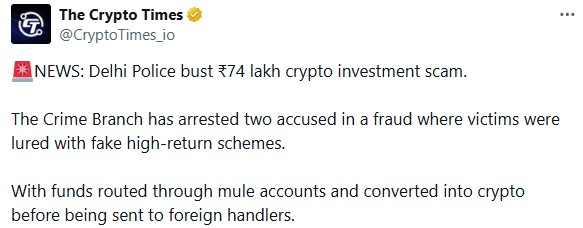
Source: X Official
The police found that the suspects converted the victims' cash into digital coins like USDT. These assets were then sent to handlers hiding in other countries.
However this burst is more than just a local headline; the hooded figures in this type of scams show a worldwide threat. This India crypto scam news proves that as money goes digital, criminals are finding new ways to cross borders without being seen.
Why the World is Rushing Toward a Crypto Investment Plan
Many people look at blockchain investments as a solid tool to beat inflation. Additionally, crypto investment plans provide much higher returns compared to traditional ways and that too in a short term. That’s exactly what today’s generation wants, they don't want to wait for years to get what they can earn in months through blockchain investments.
Even with these high risks, the interest in blockchain investments is reaching new heights. For India, it now ranks number one globally for regular people using digital coins. With over 100 million users, young Indians are leading the way.
However, this massive growth is like a magnet for bad actors. As more people join the market, scammers see a bigger crowd of targets to fool.
As Users Grow, So Do Fraud Risks: Smart Tactics
Scammers are getting much smarter by using AI and fake social media profiles. Many blockchain investment scams start with a friendly message or a romance trap. These criminals lure you to a fake crypto investment app that shows you are making a lot of money. But when you try to take your cash out, they demand extra taxes or simply block your account.
These pig butchering scams are hard to stop because cryptocurrency transfers cannot be reversed. Scammers also use deepfake videos of famous leaders to make their crypto investment fake or real deals look official. They count on your fear of missing out (FOMO) to make you act fast without thinking.
Protect Yourself: How to Tell If a Crypto Investment is Fake or Real
Protecting yourself starts with knowing the red flags. Spotting Crypto Investment Scams Warning Signs provide a safe environment.
Guaranteed Profits: Real trading involves risk. If someone says you can't lose, it is a lie.
Urgency: Scammers say you must invest now or lose the chance.
Unknown Apps: don’t register to any unknown app, and click random pop-ups in the applications or web pages.
Celebrity Clips: Be careful of deepfake videos. Scammers use AI to make it look like famous people are giving away free coins.
Your Guide to Safe and Smart Trading
You don't have to stay away from the market to stay safe. Effective cryptocurrency scam protection means doing your own homework.
Always stick to apps that are registered with the government (FIU-compliant). These platforms help you handle taxes and keep your records clear.
Never share your private keys or passwords with anyone. If you are serious about a long-term crypto investment, consider using a "hardware wallet" to keep your coins offline and away from hackers. Start small, only invest what you can afford to lose.
If you ever find yourself a victim of a scam, report it immediately to the authorities. Even though the digital world feels anonymous, the police are catching up, which helps others too.









