What Is Driving the Rapid Rise of Gen Z in Crypto Investments?


Gen Z in Crypto: Traditional Inadequacy or a fast returns appetite?
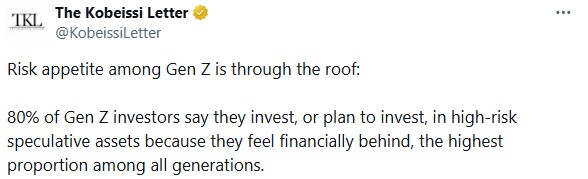
A new study by Northwestern Mutual shows Gen Z in crypto and other speculative assets is embracing high-risk investing like never before. About 80% of Gen Z investors say they invest, or plan to invest, in high-risk assets like crypto because they feel financially behind.
Source: X Official
Speculation isn’t limited to crypto. Roughly one-third of Gen Z are putting money into, or considering, sports betting as a way to reach their financial goals faster. Eight out of 10 believe speculative vehicles can help them grow wealth quicker than standard investments, showing that risk-taking is seen as a practical, not reckless, strategy.
But here, the question arises, what is pushing young adults toward alternative paths to wealth or, is the new generation the only one exploring this path?
Gen Z in Crypto: Financial Insecurity Drives Risk Appetite
The study also highlights a growing sense of economic pressure among young adults. Only 50% of Gen-Z respondents said they feel financially secure, reflecting concerns about rising living costs, education debt, and housing affordability.
In the United States, median home prices have increased by roughly 50% since 2019, while the average student loan debt stands near $38,000, making traditional wealth-building milestones harder to achieve. For many young traders, traditional paths like savings accounts or steady investing no longer feel sufficient.
While traditional assets like stocks, bonds, and real estate remain important for long-term wealth building, they are often slow, leaving many Gen-Z investors searching for faster routes. Young traders are now exploring alternative paths in hopes of accelerating their financial growth.
Not Just Gen Z: A Broader Generational Trend
While the trend is most visible among Gen Z, high-risk investing is not limited to younger investors. The data shows that risk appetite is rising across nearly all generations.
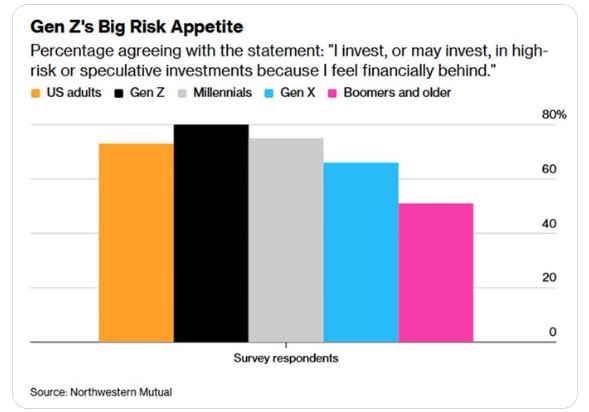
The Northwestern Mutual study found that 75% of Millennials also invest or plan to invest in speculative assets, closely trailing GenZ’s 80%. Gen X follows at 66%, while 51% of Baby Boomers and older investors say they have exposure to high-risk opportunities.
When viewed together, the numbers reveal a broader shift in investor behavior. On average, about 73% of U.S. adults report either investing in or considering speculative assets. This suggests that the surge in risk-taking is not simply a generational mindset but reflects wider economic pressures affecting households across age groups.
Experts Urge Caution
While taking risks can sometimes make sense, studies also show that it can have downsides.
A 2023 report by the National Bureau of Economic Research (NBER) found that retail investors trading in highly volatile instruments, such as options and leveraged assets, lose around 1.5% per month on average. Over time, those losses can compound, eroding a large portion of an investor’s capital.
Analysts say this pattern often results from factors like overtrading, short-term speculation, and reacting to market hype rather than long-term fundamentals.
Volatile markets can create the illusion of quick profits, but they also amplify the chances of sudden losses. Retail investors, especially those entering markets during periods of excitement or rapid price movements, may underestimate how quickly gains can reverse.
What These Underscores: A Contradictory View
Supporting the trend, some say the rise of Gen Z in crypto and speculative assets is less about thrill-seeking and more about adapting to financial realities. Young investors are navigating a challenging economic landscape with the tools available to them—sometimes high-risk, but always strategically.
On the other hand, critics argue that it is a result of GenZ investors losing patience with traditional investing and are chasing fast returns through high-risk options like crypto, meme stocks, prediction markets, and sports betting. They describe the situation as “financial nihilism.”










