Ethereum Foundation Treasury Staking Begins With 70,000 ETH Plan


The Strategic Necessity of Ethereum Foundation Treasury Staking
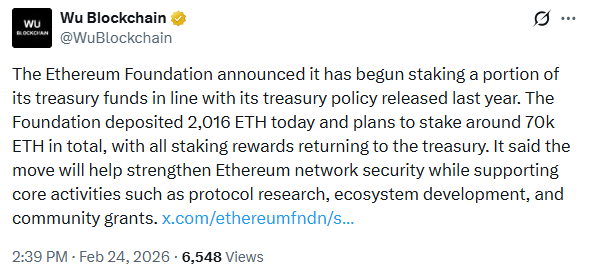
The Ethereum Foundation (EF) has officially launched a major new effort called the Ethereum Foundation Treasury Staking initiative. On February 24, 2026, the non-profit group made its first deposit of 2,016 ETH, which is worth about $3.7 million at current prices. This is just the first step in a much bigger plan to stake a total of 70,000 ETH from its savings. By doing this, the Foundation is moving its digital assets from a simple storage account into the active part of the network that keeps everything running smoothly.
Source: X(formerly Twitter)
This new plan follows a treasury policy that was first talked about last year. In the past, the organization mostly sold its ETH to pay for things like research and community grants. Now, by staking its holdings, it can earn regular rewards that go right back into its budget. These rewards will be used to fund important work like protocol research, helping developers, and supporting new projects through the Ecosystem Support Program.
Technical Resilience and the Ethereum Foundation Treasury Staking
When setting up the Ethereum Foundation Treasury Staking project, the group focused heavily on safety and keeping the network decentralized. Instead of using a simple, one-size-fits-all service, the EF is using special open-source software tools called Dirk and Vouch, which were created by the experts at Attestant. These tools help make sure that if one part of the system fails, the whole staking process doesn't stop.
A Focus on Safety and Diversity
The technical side of this project is built to be very strong. Dirk acts as a "distributed signer," which means the digital keys used to run the validators are spread across different parts of the world. This stops any single failure from causing a big problem. At the same time, Vouch allows the Foundation to use many different types of software to run the network, which is important for protecting against bugs in the code.
Staking Component | Tool/Strategy Used | Main Goal |
Distributed Signer | Dirk (Attestant) | Stops single points of failure globally. |
Multi-Client Pairing | Vouch (Attestant) | Protects against software bugs. |
Validator Setup | Mixed Infrastructure | Balances hosted and self-managed hardware. |
Jurisdictions | Multiple Regions | Ensures the network stays decentralized. |
Strengthening the Network and Funding the Future
The Ethereum Foundation Treasury Staking move is also a big signal of confidence in the future of the network. By locking up 70,000 ETH, the organization is helping to secure the network. Currently, there are over 36 million ETH staked by people all over the world, and this new addition adds even more protection.
At today's rates, validation 70,000 ETH can earn thousands of new ETH every year. This "native yield" is a steady way to fund the organization's work without having to sell assets during market dips. This approach is becoming popular even for big investment funds, like BlackRock, which is also looking at validation as a way to provide more value to investors.
Future Outlook
The Ethereum Foundation Treasury Staking plan sets a great example for other big crypto organizations. By choosing open-source tools and a diverse setup, the EF is showing the world how to stake responsibly. As more institutions join the network, this kind of professional setup will become the new gold standard. For everyday users, it means a more secure and stable Ethereum for years to come.
Your Money Your Life Disclaimer: This article is for informational purposes only. Cryptocurrency staking involves technical risks and market volatility. The Ethereum organization's actions are part of its own treasury management and do not constitute financial advice for individuals.
Also read:









