FDIC stablecoin proposal Unveils New Strict Rules for Banks


Key Requirements of the New FDIC stablecoin proposal for 2026
Can the US set rules for digital dollars without calling them bank deposits? That is the key issue in the FDIC stablecoin proposal. This week, the agency approved a draft rule. It explains how supervised banks and related issuers may handle payment tokens. The draft gives the market a clearer view of reserve rules, redemption rights, custody standards, and deposit treatment under the GENIUS Act.
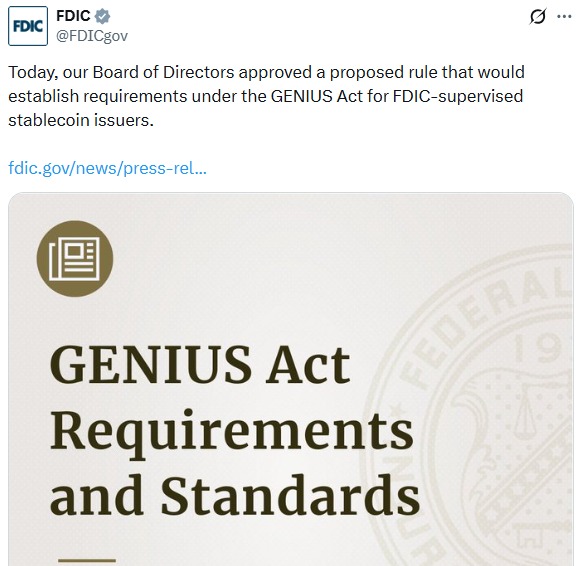 Source: X(formerly Twitter)
What the rule would do
The FDIC stablecoin proposal would create a framework for payment token issuers under federal bank oversight. In simple terms, it sets rules for reserves, redemptions, capital, and risk control. It would also apply to insured banks that offer custody or safekeeping for these products.
The agency said the public can send comments for 60 days after the draft appears in the Federal Register. So the rule is not final yet. Still, it matters. It shows how US agencies may turn the GENIUS Act into working rules for banks and issuers.
Reserve rules and redemption rights
A major part of the FDIC stablecoin proposal is reserve quality. Issuers would need to keep assets that fully back their payment tokens. Those assets must be safe, liquid, and easy to value. The goal is clear. If users want their money back, the issuer should be able to pay quickly.
The FDIC stablecoin proposal also calls for a public redemption policy. In most cases, redemption should happen within two business days. That matters because speed helps build trust. The draft also adds capital rules and a liquidity buffer tied to operating costs. These steps are meant to support both daily operations and financial stability.
Insurance and tokenized deposits
Another key issue is deposit insurance. The agency said reserve deposits would not pass insurance through to token holders. Instead, those balances would count as deposits of the issuer. That matches the GENIUS Act. The law does not treat payment tokens as federally insured products.
The draft also gives clear guidance on tokenized deposits. If a tokenized liability meets the legal definition of a deposit, it would be treated like any other deposit under current law. This matters for banks exploring blockchain-based payment tools. It shows that the legal treatment depends on the product, not the format used to record it.
Why the market is watching
This FDIC stablecoin proposal may not move crypto prices on its own. Even so, it matters for market structure. Banks, custody firms, exchange-linked companies, and issuers will study the final wording closely. Debate over yield, rewards, reserve backing, and oversight has already shaped sentiment around firms such as Circle and Coinbase.
This step also matters because it is part of a wider federal push. The FDIC stablecoin proposal fits into broader work across US banking agencies, including the OCC. The goal is to build a common framework for regulated digital payment assets. That could shape how bank-linked issuance grows in the next stage of adoption.
Future Outlook
This move suggests that future growth in this sector may depend less on speed and more on compliance, strong reserves, clear redemption rules, and user protection. The market will now watch the comment process, later changes to the text, and how other agencies align their own standards. That process could help shape how regulated digital dollars fit into the future of payments in the United States.
Your Money Your Life Disclaimer: This article is for informational purposes only. It is not financial, legal, tax, or investment advice. Readers should review official regulatory materials and speak with qualified advisers before making financial decisions.









