India Crypto News: FIU Clarifies No Ban on Privacy Coins

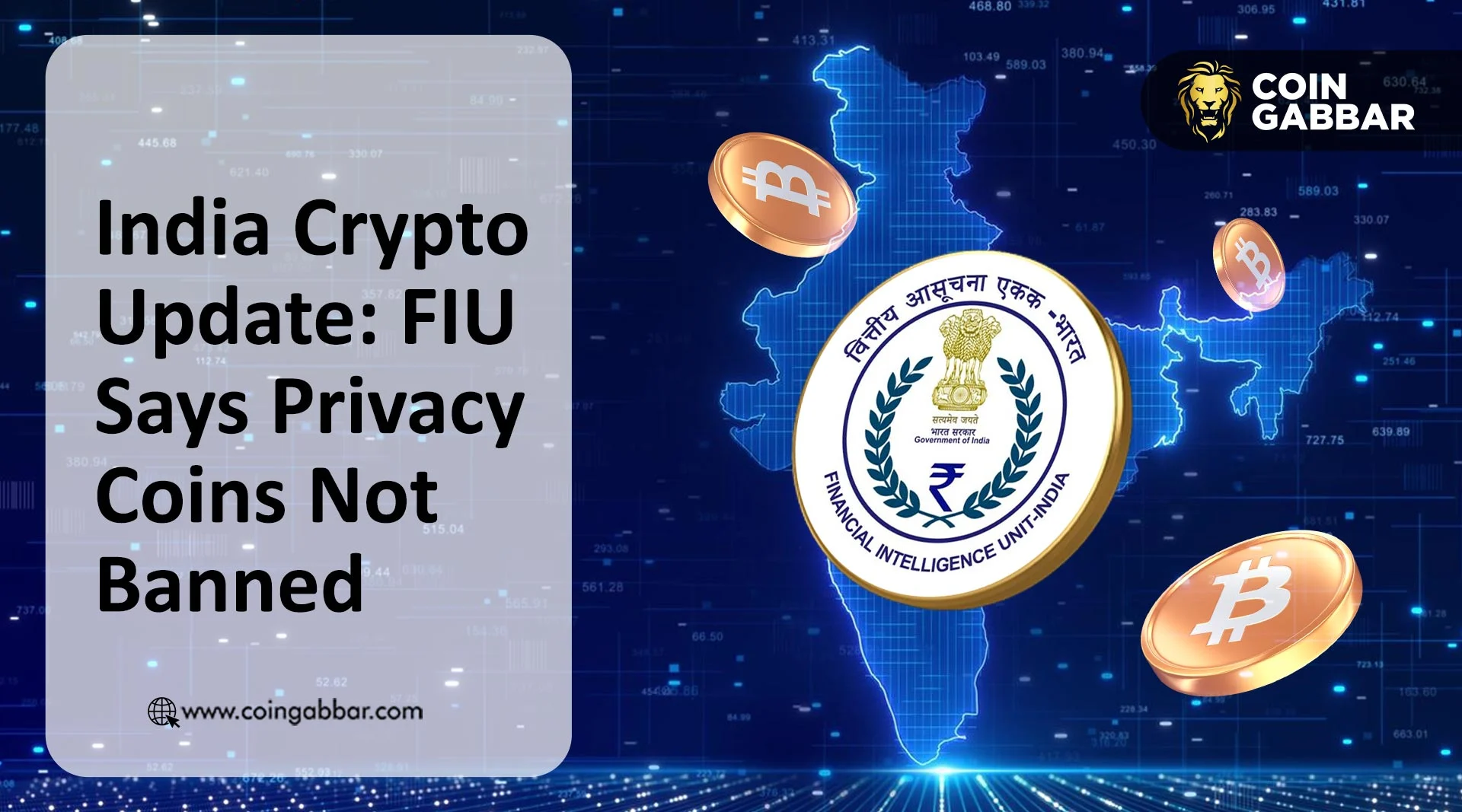
India Crypto Regulation: Exchanges Not Forced to Remove Privacy Coins
The India crypto market received a positive update after the Financial Intelligence Unit (FIU) clarified that it has not issued any official order requiring exchanges to delist privacy coins such as Monero (XMR) and Zcash (ZEC).
The clarification, released on March 10, 2026, comes after weeks of uncertainty in the India crypto sector.

Source: Bitinning Official
Earlier in January, several reports suggested that the digital asset exchanges were being directed to restrict or remove privacy-focused cryptocurrencies due to concerns related to anti-money laundering (AML) and counter-terrorism financing (CFT) rules of the country.
However, the FIU confirmed that no specific rule has been issued forcing exchanges to remove these assets, bringing relief to traders and privacy coin supporters across the India crypto community.
Why Privacy Coins Were Under Regulatory Scrutiny
Privacy coins have long attracted attention from law enforcers because they allow users to send transactions with high levels of anonymity. Some of the basic features of the confidentiality coins are:
Sender–Receiver identity protection – Makes it very difficult to identify who sent the tokens and who received it.
Confidential Transactions – Hide the amount being transferred on the blockchain.
Transaction mixing – Transactions are blended with others to make tracking difficult.
Limited traceability – Transactions are harder to track compared to normal public blockchains.
In early 2026, the India crypto regulatory framework tightened AML compliance requirements after observing an increased use of these anonymity tools in crypto-money fraud cases.

Under these guidelines, exchanges must closely monitor high-risk or untraceable transactions, especially activities that use tools like mixers to hide identities.
This led some crypto exchanges in India to suspend trading or deposits for privacy-based coins to avoid compliance risks. The new FIU clarification suggests that these actions were based on interpretations of broader AML guidelines, not a direct government mandate.
For now, trading platforms operating in the India crypto market can technically continue listing privacy tokens if they maintain strict monitoring and reporting standards.
News Followup: Monero and Zcash Price Reaction
The FIU clarification on anonymity coins doesn’t affect the price moves very much. Both the major tokens Monero and Zcash down-trading due to broader market weakness.
Monero (XMR) rose 0.48% in the early day then fell 0.1% to $353.75 at the time of writing. Zcash (ZEC) also fell 4.92% to $204.95, despite recent bullish momentum earlier this year. The decline appears linked to profit-taking after a strong rally. Analysts say a derivatives-driven short squeeze helped push prices higher.
Even though the price movements were mixed, the FIU statement has improved sentiment around anonymity assets in the India crypto ecosystem.
Tightening Safety: Global Regulations on Privacy Coins
The India FIU crypto rules discussion reflects a broader global debate around the tokens maintenance. Around the globe, different countries treat them differently, but commonly under cautious:
Japan: Exchanges cannot list privacy coins due to strict financial regulations.
South Korea: Domestic platforms are banned from offering privacy coin trading.
United States: Ownership is legal, but most major exchanges avoid listing them.
European Union: New AML regulations may increase pressure on exchanges by 2027.
UAE/Dubai: Regulators have banned confidentiality tokens in licensed markets.
Despite these restrictions, most jurisdictions still allow personal ownership of privacy-based coins, even if exchange trading is limited. Complete banning can affect the users safety concerns,especially in case of vulnerable information, that actually needs safety tools to avoid on-chain threats.
Disclaimer: This article is for informational purposes only and does not constitute financial or investment advice.









