How Rising Jobless Claims And Non-Farm Payrolls Impact Crypto Prices


Impact of Jobless Claims and Non-Farm Payrolls on Crypto Liquidity
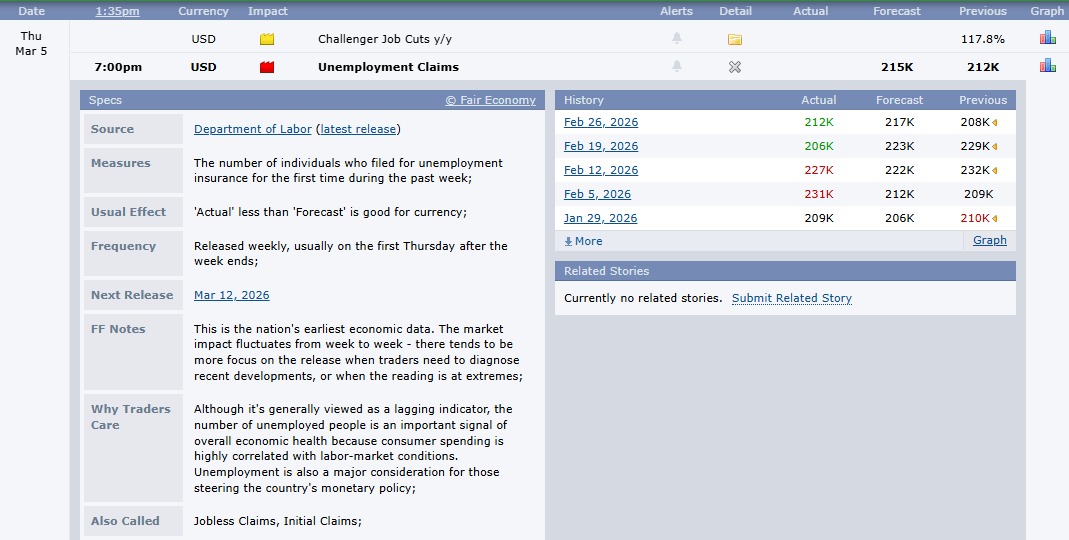
The digital asset world is currently preparing for a major spike in crypto market volatility. This shift comes as a series of important United States labor reports are about to be released. On Thursday, March 5, 2026, at 8:30 AM ET (7:00 PM IST), the Department of Labor is scheduled to release the latest weekly jobless claims data. Market experts are anticipating this figure to reach 215,000, which would be a slight increase from the 212,000 reported in the previous week.
For professional traders and large investors, these numbers are more than just statistics. They are the main signals that tell the Federal Reserve whether to raise or lower interest rates. These decisions are what ultimately drive the next big move in the crypto markets.
The Link Between Jobs and Digital Assets
Weekly jobless claims give us the first look at the health of the American economy. When more people file for unemployment than expected, it suggests the labor market is slowing down. This often forces the Federal Reserve to take a "dovish" or softer stance on interest rates.
 Source: Forexfactory Data
In the world of crypto market volatility, a weak jobs market often leads to a weaker U.S. Dollar (DXY). Because Bitcoin and other large coins are priced in dollars, a falling dollar usually helps drive crypto prices higher. However, the latest 215K figure shows the economy is still fairly strong. This strength is a "double-edged sword". While it means the economy is stable, it also gives the Fed less reason to cut rates, which can keep "cheap money" from flowing into digital assets.
Non-Farm Payrolls: The Main Event
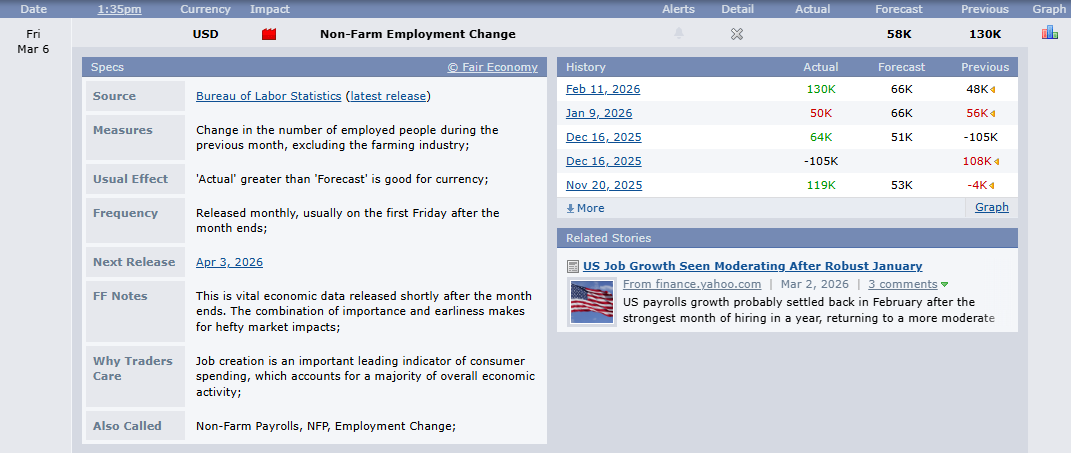
If jobless claims are the spark, the Non-Farm Payroll (NFP) report is the fuel for crypto market volatility. The forecast for March 6 is 58,000 new jobs. This is a big drop from the 130,000 jobs added the month before.
 Source: ForexFactory Non-Farm Payrolls Data
If the actual number is much lower than 58K, it will send shockwaves through the markets. It would prove that high interest rates are finally cooling the economy, leading to a possible rate cut. On the other hand, if the numbers are "hot" or higher than expected, crypto could see a sharp sell-off. Strong jobs data usually means interest rates will stay "higher for longer" to fight inflation, which makes it harder for Bitcoin and Ethereum to climb in price.
How Big Investors are Preparing
Large institutional players are already moving to protect their money. We are seeing more activity in the options market, where traders are buying insurance against a price drop. This happens most when the unemployment rate is expected to stay near 4.3%. In 2026, digital assets are tied closely to the traditional economy. They are now a major sign of how much cash is moving through the global system.
Expert Analysis: Future Outlook
The combination of steady jobless claims and a predicted drop in NFP suggests that the stable "Goldilocks" economy might be ending. If the NFP report confirms that hiring is slowing down to 58K, crypto volatility will likely push prices upward as investors look for a "Fed pivot". However, if the jobs data stays strong, the crypto market might just keep moving sideways. The biggest question for the next month is whether the Fed sees this cooling as a normal change or the start of a recession.
Your Money Your Life (YMYL) Disclaimer: The information provided in this article is strictly for educational and informational purposes only. It does not constitute financial, investment, or trading advice.









