Kevin Warsh Wins Crucial Senate Vote: Is Major Fed Rate Shift Coming?

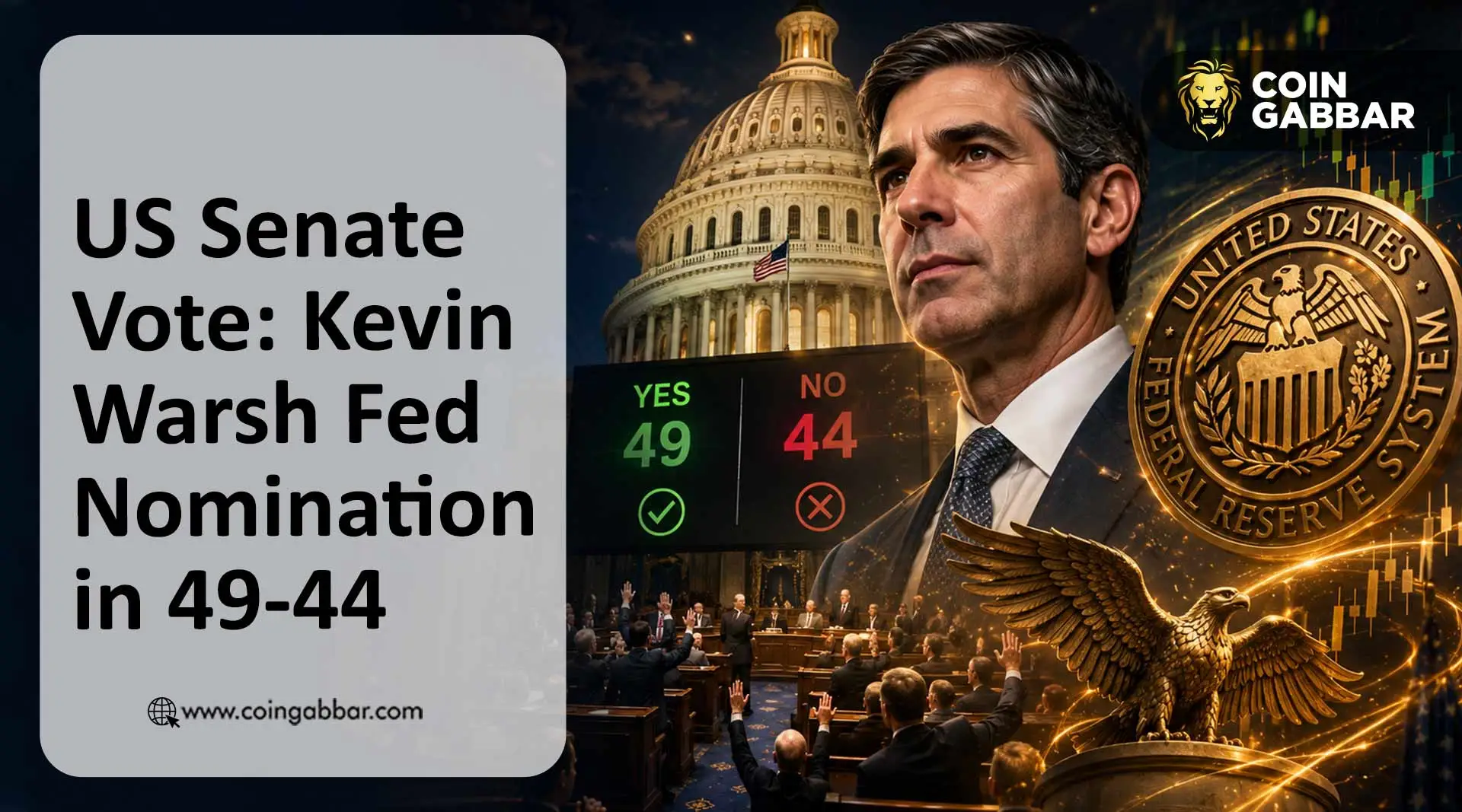
US Senate Advances Kevin Warsh Fed Nomination in 49-44 Cloture Vote
The US Senate has moved forward with Kevin Warsh’s nomination to the Federal Reserve Board of Governors after a closely watched procedural vote. Lawmakers voted 49-44 to advance the nomination, clearing a hurdle. The decision signals momentum toward final confirmation as debates continue over monetary policy direction and independence concerns globally.
Senate Moves Warsh Nomination Forward
The US Senate advanced Kevin Warsh’s nomination to the Federal Reserve Board of Governors through a cloture vote on May 11, 2026. Lawmakers voted 49-44, clearing a procedural hurdle and moving the nomination toward final confirmation.
The role carries a 14-year term beginning February 1, 2026, under nomination PN855-2. The vote included limited bipartisan support, with Senators John Fetterman and Chris Coons joining Republicans. The decision follows ongoing debate on US monetary policy direction and Federal Reserve independence.
This is the first step in a series of Senate votes expected this week, with a final confirmation vote scheduled soon. Warsh’s nomination has drawn attention due to discussions around interest rate expectations and potential policy direction at the central bank.
Some lawmakers raised concerns about political influence, while supporters said the process reflects standard executive appointments. The cloture vote does not confirm the nomination but ends procedural delay, allowing full debate and final voting in the Senate chamber in the coming days.
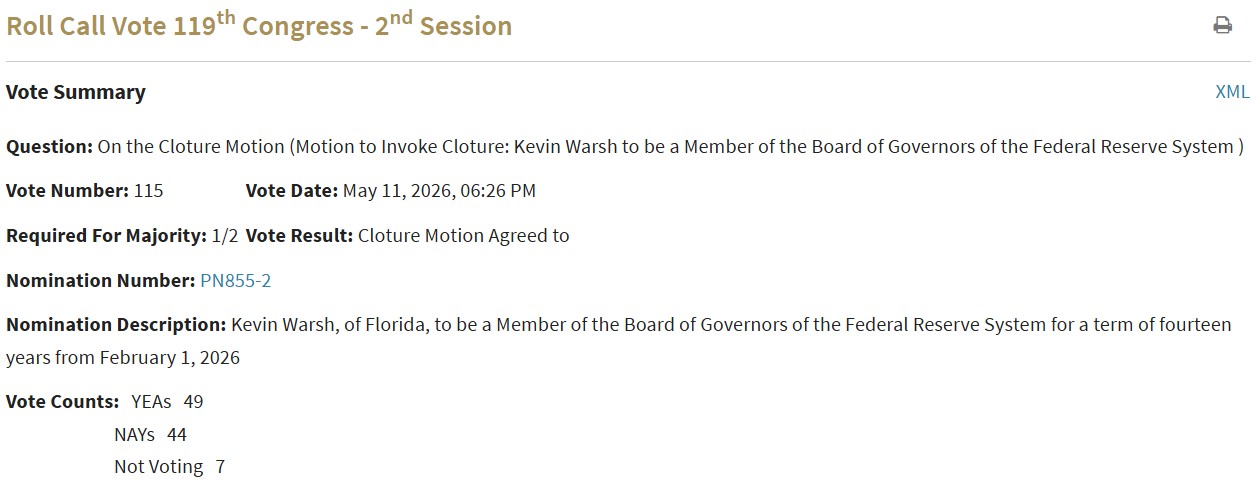
Source: United States Senate
Federal Reserve Background and Policy Context
Federal Reserve Board of Governors member Kevin Warsh has been nominated. The role is to set interest rates and manage financial stability. According to Senate records, his term is to begin Feb. 1, 2026, for 14 years. Warsh has a background in monetary policy cycles and is a former Federal Reserve governor.
The Federal Reserve Board has 7 governors, appointed by the US President Trump and confirmed by the United States Senate. Recent debates are around inflation control and direction of rates, and the independence of the central bank.
Legislators still have to consider the impact of leadership transitions on policy in an evolving economic landscape. The nomination is under the microscope, given expectations of the direction of the US economy and market stability.
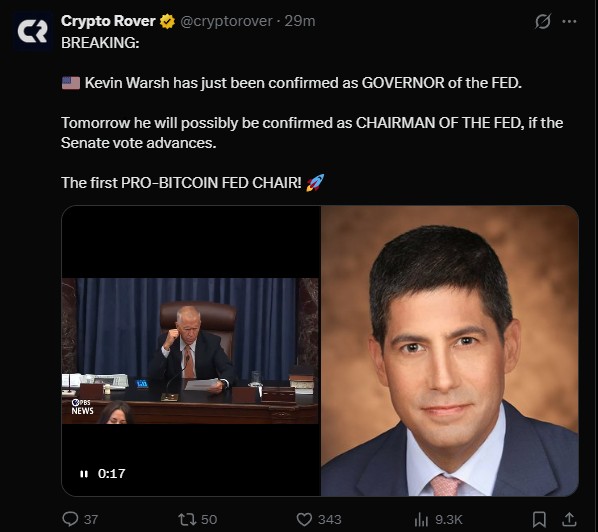
Source: Crypto Rover X
Market Reaction: "Wait and See" Attitude Toward Asset Classes
The Senate vote had little effect on financial markets, which had been awaiting any signs of changes in the way the Fed would move. Crypto assets were not very volatile, having a relatively stable trend during early trading. The changing leadership is a concern investors have around interest rates, liquidity, and risk appetite.
Yields across the U.S. Treasuries curve were slightly higher after the adjustment of expectations. Little movement was seen in the US dollar index as well, in anticipation of final confirmation votes. The market continues to watch closely for clues regarding the inflation issue and the independence of the central banks.
Institutional investors will keep a close eye on the result because of its macroeconomic implications. But analysts say sentiment could change after the final Senate vote. The crypto industry may respond more markedly as the Federal Reserve leadership provides more policy guidance.
Conclusion
Kevin Warsh's confirmation to lead the Federal Reserve is a major component of concluding the confirmation of the Fed's leadership. Markets remain on the lookout for votes and policy signals. Investors will be closely following the decisions in the coming weeks as they have the potential to have an impact on interest rate expectations, liquidity conditions, and overall financial and crypto market sentiment.
Note: This article is of an informational nature and should not be regarded as a financial recommendation. Any information provided should not be seen as a recommendation to invest in crypto or financial markets.