South Korea Stablecoin Ban Proposed for Corporate Crypto Guidelines


Will a South Korea Stablecoin Ban Stop Corporate Investing?
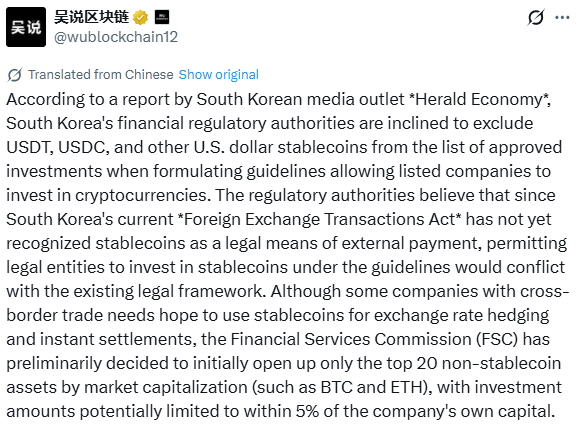
South Korea is moving toward a major change in its digital asset market, but a new South Korea stablecoin ban for businesses is making headlines. According to a report from the local media outlet Herald Economy, the Financial Services Commission (FSC) is currently drafting new guidelines for corporate trading. While these rules will finally allow listed companies to invest in crypto, regulators are planning to exclude dollar-pegged assets like Tether (USDT) and USD Coin (USDC) from the approved list.
 Source: X(formerly Twitter)
This careful approach by the FSC is meant to protect the market during its early stages. Under the proposed draft, companies would only be allowed to buy the top 20 non-stablecoin cryptocurrencies, such as Bitcoin and Ethereum. To further manage risk, the rules may also limit a company's total investment to just 5% of its own capital. For a market that has been mostly run by retail investors, this is a massive shift toward institutional participation.
Understanding the Legal Conflict Behind the South Korea Stablecoin Ban
The main reason for the South Korea stablecoin ban is a conflict with the country’s existing laws. Specifically, the Foreign Exchange Transactions Act does not currently recognize stablecoins as a legal way to make international payments. Regulators worry that if companies are allowed to hold these tokens, it could clash with rules that require all big foreign payments to go through authorized banks.
Why Regulators are Being So Cautious
Legal Clarity: Authorities believe including stablecoins would break the rules of the Foreign Exchange Transactions Act.
Reducing Risk: Keeping dollar-pegged tokens out of the market helps prevent big losses for companies new to crypto.
Financial Stability: By limiting trades to the top 20 assets, the FSC hopes to keep the national economy stable.
Better Oversight: Regulators fear that companies might use stablecoins to move money out of the country without bank supervision.
Why Businesses Want Stablecoin Access
Even with the proposed stablecoin ban, many local businesses are asking for access to USDT and USDC. Companies that trade globally find stablecoins very useful because they allow for fast and cheap international transfers. They also use them to protect against changes in currency values. While some firms already use stablecoins through overseas wallets, they are pushing the FSC to make corporate access official and legal.
Future Outlook: Expert Analysis
The current South Korea stablecoin ban for firms shows that the FSC is taking a "safety first" approach. While the first set of rules seems strict, the situation could change soon. A new law that would recognize stablecoins as a legal payment method is currently being reviewed by South Korea’s National Assembly. If this passes, the conflict with the Foreign Exchange Transactions Act would be gone, and the ban would likely be lifted.
By 2026, South Korea hopes to have a balanced market where innovation and safety live side-by-side. For now, the focus is on letting companies enter the space slowly through well-known assets like Bitcoin while keeping a close eye on dollar-pegged tokens. This is a major turning point that will shape the future of finance in one of the world's most active crypto hubs.
Your Money Your Life Disclaimer: Cryptocurrency investments carry high financial risk. Regulatory changes in South Korea can happen quickly and affect asset values. Always consult with a financial expert before making corporate investment decisions.









