Thailand SEC to Block Bybit, OKX, CoinEx and Two Others


Thailand SEC to Block 5 Crypto Exchanges for Operating Illegally
The Thailand SEC has announced that it will block five crypto trading platforms starting June 28. These include Bybit, 1000X, CoinEx, OKX, and XT.COM. The reason? These exchanges were offering their services in Thailand without a proper license.
The regulatory body said these companies broke the rules by letting local users trade crypto through their websites. Because of this, the SEC has joined forces with the Economic Crime Suppression Division to take legal action. Their aim is to safeguard everyday investors and prevent such law breakers from using these sites for money laundering.
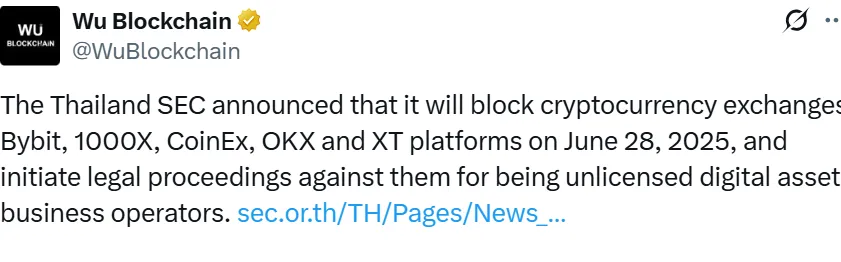
According to Wu Blockchain, the Thailand SEC stated that the move to block Bybit, 1000X, CoinEx, OKX, and XT starting June 28, 2025, is “to protect investors and prevent illegal platforms from being used for money laundering by criminals.”
Source: X
People who use these platforms are being told to move their money before the June 28 deadline. After that, these sites will no longer be available in the country.
New Cybercrime Law Gives More Power to Government
The land of warm hospitality passed a new law in April called the Royal Decree on the Prevention and Suppression of Technological Crime. This law gives the government stronger tools to fight illegal online activity.
Now, the Ministry of Digital Economy and Society can shut down any websites they think might be risky or not following the law. Because of this new power, the Thailand SEC is now going after offshore peer-to-peer cash platforms more actively.
The Thailand SEC is blocking unlicensed DeFi platforms to stop scams and keep criminals from using crypto for illegal activities. The new rule also says banks and social media must help stop online crime. If they don’t help, they could get in trouble too.
Thailand Moves Toward Safer and Smarter Digital Currency Use
While Thailand SEC is getting stricter on illegal exchanges, it’s also trying to grow a safe crypto market. In May, the government launched a new token called G-Token. This is a blockchain-based way for regular people to invest in government bonds.
The G-Token is not meant for buying or selling like regular decentralised money. It’s just for investment, and it must go through approved legal channels. The government made it clear that this kind of digital asset is very different from high-risk DeFi trading.
The country is making new rules for such companies. They must check users better, stop scams faster, and help people who got tricked.
What This Means for Crypto
Thailand is changing how it handles DeFi currency in a big way. By hampering the functions of illegal platforms, it's showing that rules are important. This sends a message to foreign digital finances sites to follow the rules.
The country is also showing that digital finance can be safe if managed well. Other countries might do the same, stopping scams and making it safer for everyone.









