Trump Sues IRS and Treasury for Failing to Protect Tax Data

Why Trump Sues IRS and Treasuries: Case Matters for Crypto and Privacy
Trump Sues IRS in a new legal case that seeks $10 billion in damages over leaked tax records. The lawsuit says federal agencies failed to protect confidential taxpayer data and allowed private files to reach the press. Filed in federal court in Miami on January 30, 2026, the case also includes Eric Trump, and the Organization as plaintiffs. The claim says the leak caused financial, personal, and reputational harm. Because of that, Trump Sues IRS has quickly become a major legal and political story.
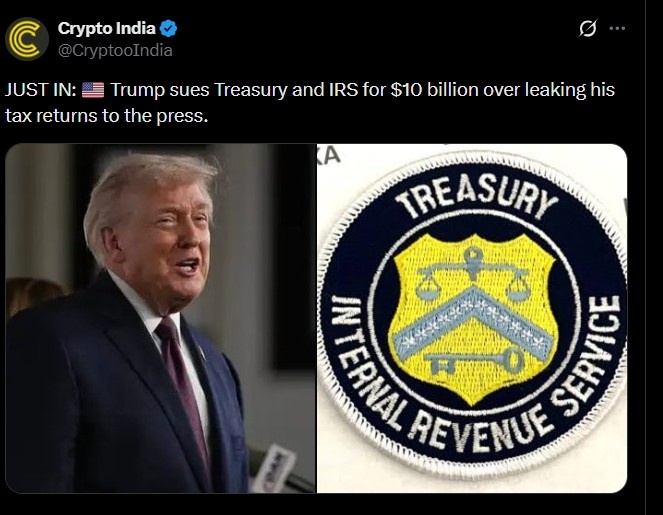
Source: X official
Who Leaked the Data and Where It Went
Investigators identified Charles Edward Littlejohn, a former IRS contractor, as the person who accessed and shared the tax record. He later pleaded guilty and was sentenced to five years in prison for unlawful disclosure of tax information. Reports say the records were sent to The New York Times and ProPublica, which later published stories based on that material.
This is one reason Trump Sues IRS has drawn so much attention. The case is not only about the leak itself. It is also about whether agencies trusted with highly sensitive records had enough protections in place to stop insider misuse.
Centralized Systems and Security Weakness
At the center of the lawsuit is a simple issue: a centralized system failed to protect private data. A contractor was able to access record, copy them, and send them out without the system stopping him in time. The lawsuit argues that proper safeguards were missing or too weak.
The main failures described in reporting include:
broad access to taxpayer records
weak monitoring and poor internal controls
That is why Trump Sues IRS is being discussed as more than a legal fight. It also raises bigger questions about how governments store and protect sensitive financial records in digital systems.
Why Decentralized Finance Enters the Conversation
The case has also revived debate inside digital asset circles. Supporters of decentralized systems often argue that trust should come from system design, not only from institutional promises. In that view, better architecture can reduce single points of failure and leave clearer access trails.
This does not mean blockchain solves every privacy problem. But it helps explain why Trump Sues IRS is being used as an example in wider discussions about data control, self-custody, and institutional trust. When large institutions mishandle confidential records, interest in alternative systems often grows.
Hedge Against Institutional Risk and Long-Term Meaning
The broader lesson goes beyond one lawsuit. When agencies fail to protect private records, public trust can weaken. That is why some digital asset supporters describe decentralized systems as a hedge against institutional risk. Their argument is simple: fewer central gatekeepers can mean fewer chances for insider abuse or silent system failure.
This dispute may also shape future debate around:
data protection rules
digital asset regulation
demand for privacy-focused finance
Conclusion:
Trump Sues IRS now stands as both a legal case and a warning about centralized data risk. The lawsuit says federal agencies failed to keep highly sensitive tax records secure and allowed a damaging leak to happen. Beyond the courtroom, the case is also adding fuel to a larger debate about privacy, trust, and whether financial systems should rely less on institutions alone and more on stronger design.









