Who Owns Most Bitcoin List 2025: #1 U.S., #2 Country Tops Europe


Who Owns Most Bitcoin List? U.S. and India Leads: How and What Next
In 2025, who owns most bitcoin by country is no longer a mystery, but the answer is still shocking. In the latest $BTC news today, the U.S. owns almost 40% of the total supply, which is approximately 7.8 million tokens worth roughly $936 billion at $120K per coin.
But the real surprise? India now ranks second globally, with 1 million BTC, overtaking Europe and reshaping the global ownership map, according to Fred Krueger latest X post.
This power shift raises a bigger question: Are we witnessing the beginning of the world's largest cryptocurrency’s concentrated ownership era?
Bitcoin Ownership By Country 2025: U.S. and India Leads
Recent information shows the United States has no competition. India has made quick advances triggered by retail adoption, exchange growth, and a strong digital asset culture.
Europe which was once a huge part of this, is now even less than 4.6%. China’s government owns about 190,000 BTC, captured by authorities as a result of legal enforcement.
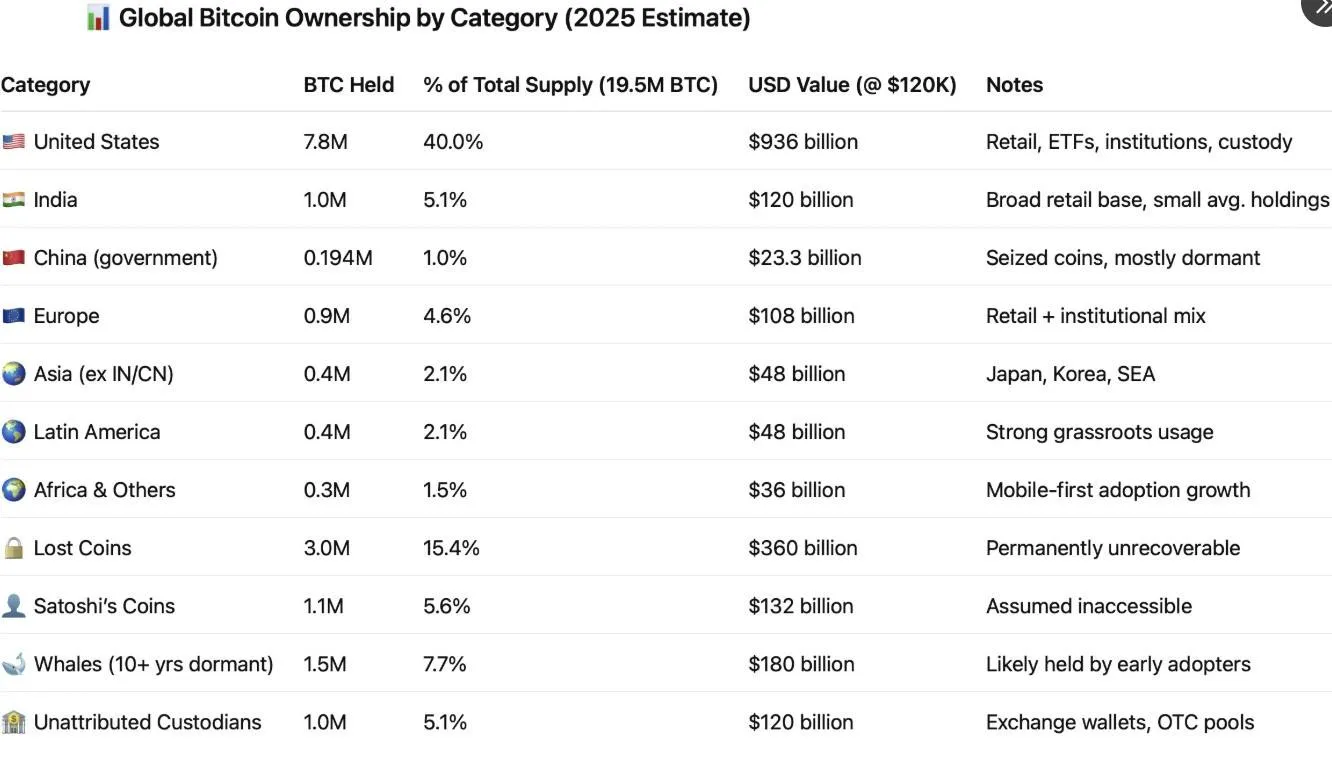
And as seen in the chart, several other nations hold a smaller share of crypto king, but their combined presence still adds an interesting layer to the global picture.
Add in lost coins—around 15% of all supply—and Satoshi Nakamoto’s untouched 1.1 million BTC, and the scarcity narrative becomes even more compelling.
Top 10 Bitcoin Holders in 2025 — From Satoshi to Wall Street
The top 2025 holders list blends mystery, corporate power, and national strategy. Leading the way is Satoshi Nakamoto, followed by giants like BlackRock (698,700 BTC), Binance (633,700 BTC), and MicroStrategy (597,000 BTC), and more.
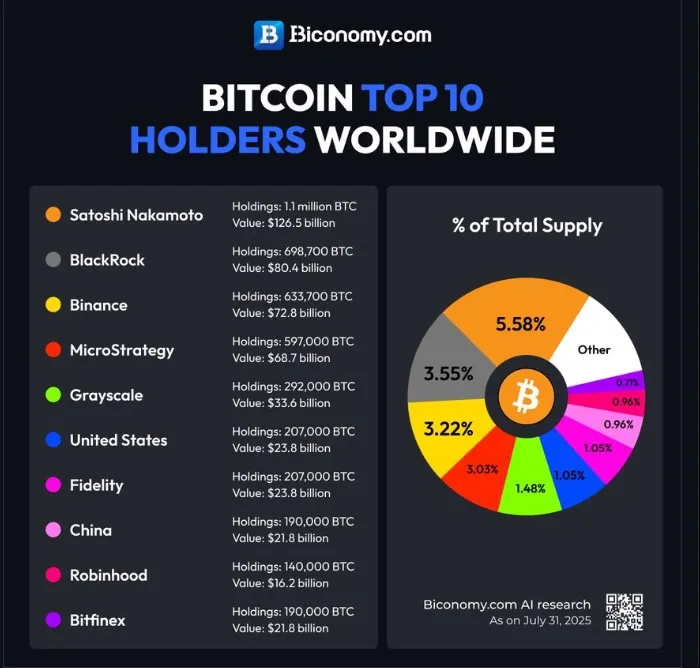
Source: Biconomy.com
From a crypto analyst’s perspective, what company owns most BTC is not just a hype, it’s a market signal. When BlackRock or MicroStrategy moves, the market reacts. However the consumption is surely increasing now, as this data contains the final number till July only.
How Bitcoin Flow Shifts in 2025? Institutions Buy, Retail Sells
According to the June 1 report, this year marks a turning point for Bitcoin institutional adoption.
-
In 2025, ETFs, funds, and corporate treasuries have been buying this currency like crazy. They’ve taken more than 417,000 coins so far this year. That’s six times more than all the new mined coins in the same period.
-
At the same time, individuals sold 158,000 coins in the same period.
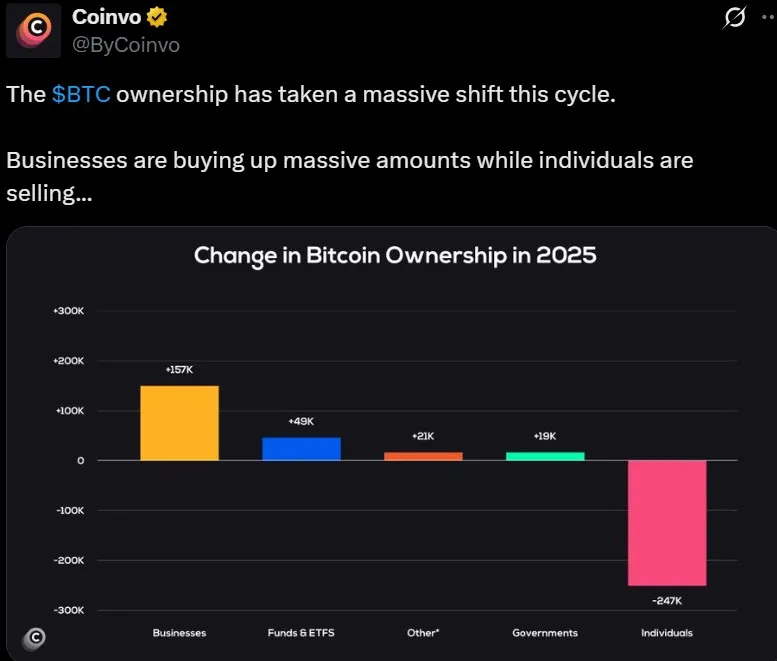
Fresh data from CryptoQuant and Biconomy paints the bigger picture:
-
Businesses gained about +157K tokens
-
Funds & ETFs added +49K
-
Governments secured +19K
-
Individuals lost − 247K
In simple terms, the currency is steadily moving out of personal wallets and into the hands of corporations, investment funds, and even governments — a clear sign of the growing institutional grip on the market.
The Bitcoin's Timeline: 3 Turns Say 2025 Marks the Point of No Return
The history now falls into three clear eras:
-
2010–2014 – Peer-to-Peer Cash phase.
-
2014–2020 – Digital Gold hedge era.
-
2020–2025 – The strategic reserve era, where institutions and states dominate holdings.
Why This Matters – Scarcity, Stability, and Strategic Control
Institutional control could dampen volatility, but it also means fewer coins for retail buyers. Scarcity after the halving may create intense competition for available supply.
This 2025 ownership map makes one thing clear: the answer to who owns most bitcoin by country is increasingly about power, not just wealth. With the US leading, India’s rapid rise, and corporations seizing the moment, Bitcoin has entered its Strategic Reserve era and the future will be decided by the few who hold the most.












