Altcoins Rally Prediction: What History Says


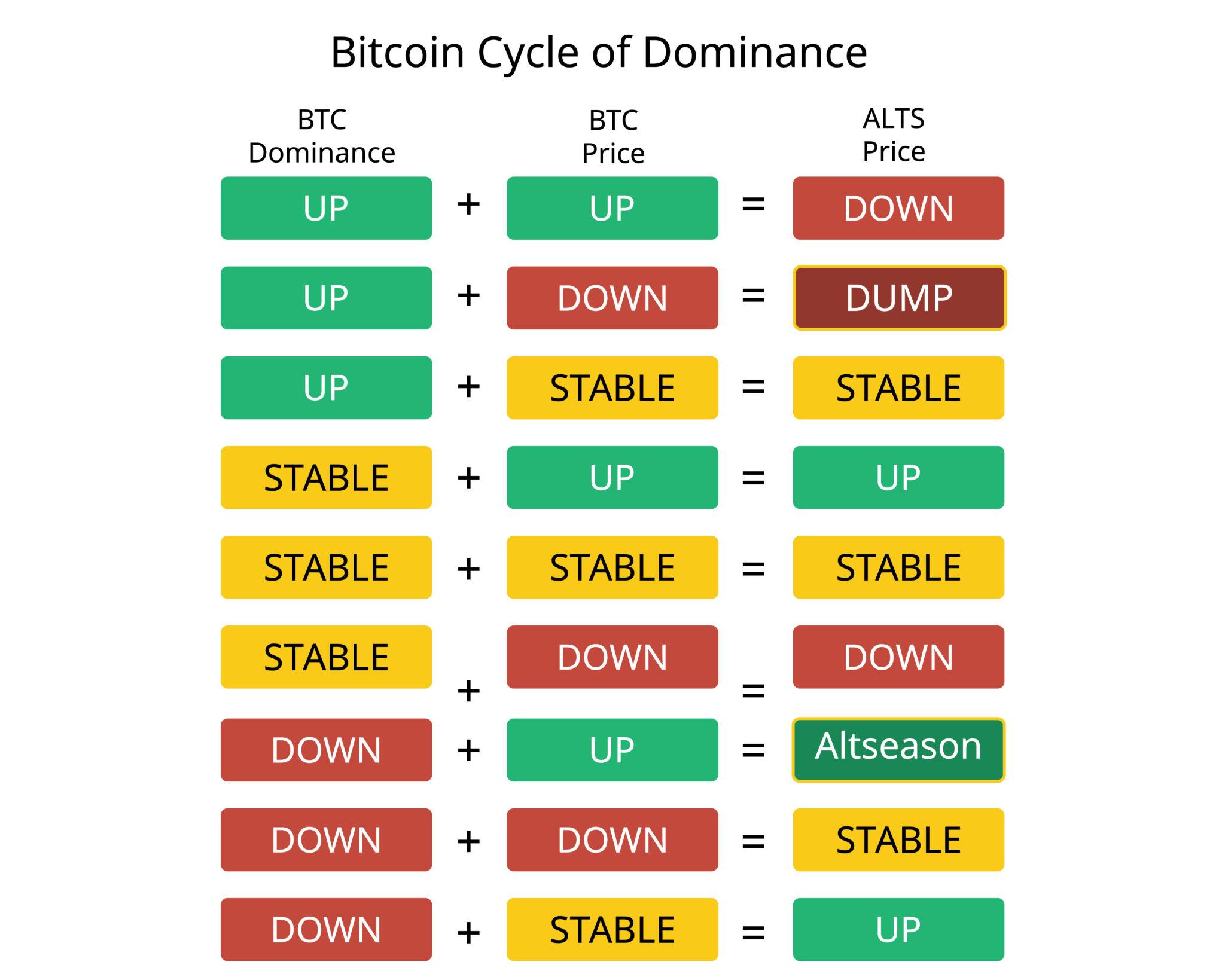
Altcoin season happens when most altcoins outperform Bitcoin.
The Altcoin Season is a time when most coins do well compared to Bitcoin. This usually happens after Bitcoin has a surge and then its share of the market starts to go down.The market is said to be in an Altcoin Season when 75 percent of the top 100 Cryptocurrencies are doing better than Bitcoin. In the past, we saw Seasons in 2017 and 2018 and then again in 2021
Bullish Predictions: The 2026 Mega Altseason Thesis
Historical Cycles: People often talk about 4-year cycles. They say the 2017 and 2021 rallies are happening again, but the delay in 2025 it means it will come around 2026, 2nd quarter.
The next big peak is expected around April 2026. Market Cap Potential: Some people think the total altcoin market cap could go over $4 trillion. A few optimistic targets are even higher, like $4.8 trillion.
Sector Leaders: Blockchains and projects that are doing well, like Solana, Ethereum, and Chainlink, are expected to lead the way in this rally.
During these times, BTC was not dominant, and many coins made a lot of people a lot of money.
For example in 2017 the price of Ethereum went from around $4 to about $1,400 and in 2021 it went from around $100 to $4,800.
Many other Altcoins also did well with some even going up 10 times or even 100 times their original price. The Season is a time for people who, like Altcoins.
Some altcoins achieved 10x to 100x returns during previous seasons.
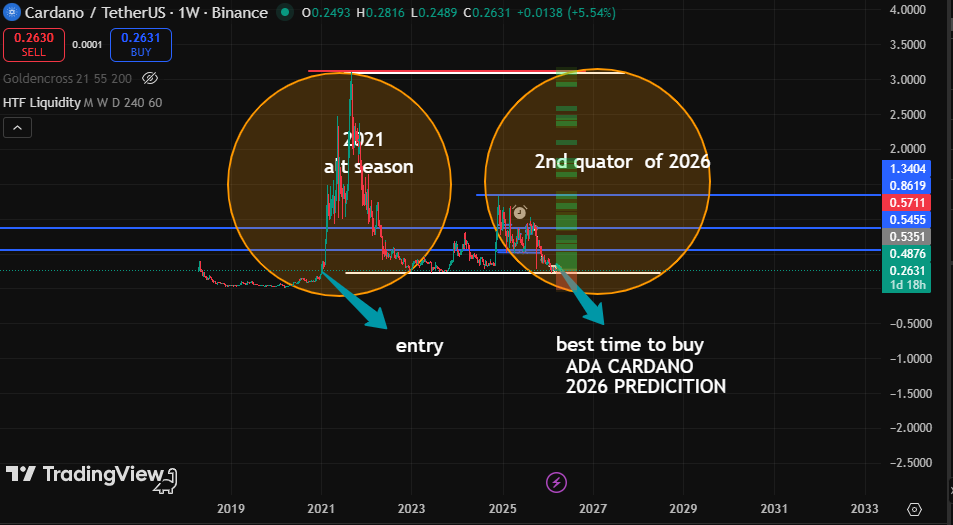
The time when most altcoins do better than Bitcoin is called the altcoin season.
This happens in the crypto market when coin has an increase in price and then the price starts to stay the same.
At this point, many people who invest money start taking their money out of Bitcoin and putting it into altcoins because they want to make money.
When it is season, a lot of cryptocurrencies can go up in price much faster than Bitcoin.
Sometimes these altcoins can go up 10 times or even 100 times in a time.
We know it is altcoin season when 75 percent of the top 100 cryptocurrencies do better, than for a while.
As people put their money into altcoins Bitcoin does not dominate the market much.
This means that people are starting to pay attention to other crypto assets instead of just Bitcoin.
Technical Breakouts
1. The Death Cross in 2021. What Actually Happened
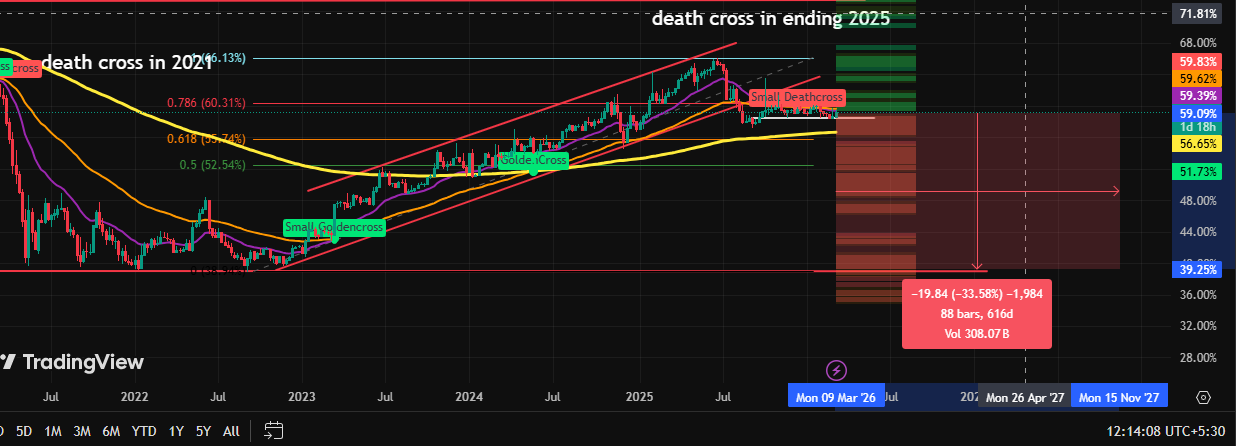
If you look at the side of the chart you will see that I marked the Death Cross in 2021.
The Death Cross in 2021 is a deal. A Death Cross happens when the short term moving average like the 50 day average crosses below the term moving average like the 200 day average.
After the Death Cross in 2021 happened something big changed.
This was a change.The Death Cross in 2021 triggered an Altcoin Season.During that time other coins like Ethereum and Solana did well.
They strongly outperformed Btc.This means that when the B.dominance falls other coins like Ethereum and Solana gain market share and do better.
Possible 2026 Scenario (Based on Historical Pattern)
If the market repeats the previous cycle:
Year | BTC Dominance Projection |
End of 2025 | 60–63% |
Mid 2026 | 50–55% |
End of 2026 | 40–45% |
This would mean altcoins could significantly outperform Btc in 2026.
Resistance Levels
63%
66%
Support Levels
56%
51%
48%
38% (major historical support)
This would mean altcoins could significantly outperform BTC in 2026.
The 2021 cycle demonstrated how a death cross in BTC dominance led to a strong altcoin season.
Conclusion
The chart suggests that a new Death Cross structure may be forming near the end of 2025.
If history repeats the 2021 pattern, BTC dominance could decline from around 60% toward the 40–45% range, potentially triggering a strong altcoin season in 2026.
Disclaimer
This analysis is for informational purposes only and not financial advice. Cryptocurrency markets are highly volatile, and past patterns do not guarantee future results. Always conduct your own research before making any investment decisions.









.jpg)