Ethereum Price Prediction 2040-2050: The Final Frontier


Ethereum Price Prediction 2040–2050: Final Outlook Zone
Forecasting the Ethereum Price Prediction from 2040-2050 is as much about imagining the future of global finance as it is about analyzing ETH. By 2050, if blockchain technology follows the internet's adoption curve—which took 25 years to go from an academic network to the backbone of the global economy—then Ethereum's role in that infrastructure could be profound. The price models reflect this: $25,882 on the conservative end, $245,846 on the aggressive end.
Ethereum Price Prediction from 2040-2050: The internet analogy is imperfect but instructive. In 1995, no analyst could reliably predict Google's 2026 market cap. But they could say, "If this technology achieves mainstream adoption, the value creation will be enormous." The ETH 2050 range is essentially that same statement, quantified.
What Is Ethereum, and Why Does ETH Have Value?
Ethereum is the world's second-largest cryptocurrency by market cap, but calling it just a cryptocurrency misses the point. It is a programmable blockchain—a global settlement layer where decentralized applications run, where stablecoins like USDT and USDC settle, where $50 billion in real-world assets are tokenized, and where the majority of DeFi protocols live.
Why Ethereum Price Prediction 2040-2050 has value: Every time someone uses Ethereum—paying gas fees, executing a smart contract, minting an NFT, or settling an institutional trade—ETH is consumed. Post-Merge, a portion of every transaction fee is permanently burned. This means the ETH supply shrinks when the network is busy. And the network is increasingly busy: staking pools, Layer-2 rollups, and institutional DeFi are all using the base layer as settlement. That is a demand meeting with a shrinking supply.
• ETH ATH: $4,951.66 reached on August 24, 2025
• Current price (March 2026): ~$2,124 — down 57% from ATH
• Circulating supply: ~120.69 million ETH
• Market cap: ~$260 billion, ranked 2nd globally
• Staking APY: approximately 3.5% annually for validators
Ethereum Price Forecast 2040 to 2050: Master Table
Year / Period | Min Price | Avg Price | Max Price |
2040 Conservative | $8,011 | $15,817 | $22,964 |
2040 Moderate | $36,750 | $56,840 | $79,527 |
2040 Bullish | $168,296 | $180,000 | $193,278 |
2050 Conservative | $11,788 | $25,882 | $33,148 |
2050 Moderate | $56,000 | $69,860 | $72,310 |
2050 Bullish | $150,000 | $193,000 | $245,846 |
What Changes Ethereum Price Prediction from 2040-2050
By 2040, Ethereum's role is established. Either it is the dominant global settlement layer, or it has settled into a high-value but specialized niche. The 2040 to 2050 decade is about compounding on that position.
If Ethereum is the settlement layer for $10 trillion in DeFi, $4 trillion in stablecoins, and $50 trillion in tokenized assets by 2040, then the 2040 to 2050 decade is about that infrastructure expanding further into government finance, central bank settlements, and legacy financial system integration. The price implications are straightforward: more usage, more burns, and a higher price floor.
Ethereum Price Prediction from 2040-2050 $100,000 scenario: Requires ETH to be used in settlement of 5% to 10% of global financial transactions annually. Current global financial transaction volume exceeds $2 quadrillion annually. At 0.5% Ethereum market share and current fee economics, the implied ETH price is above $100,000. It is a long path from here to there—but the direction of travel is consistent.
The Risks That Could Cap ETH Below $20,000: Ethereum Price Prediction from 2040-2050
Technological obsolescence is the primary long-term risk. A quantum-computing-resistant successor that processes millions of TPS at zero cost could make Ethereum's current architecture obsolete. Ethereum's development community is aware of this and is working on post-quantum cryptography upgrades.  But 25 years is a long time in technology.
Regulatory risk is the second major factor. If major jurisdictions—the EU, the U.S., and China—impose strict controls on ETH ownership or staking, the global adoption thesis gets constrained. The trend since 2022 has been toward regulatory clarity rather than prohibition, but policy can shift.
The Stablecoin Multiplier Effect by 2050
The stablecoin market currently sits at $280 billion. Analysts project it reaching $4 trillion by 2030. By 2050, in a blockchain-native global economy, that number could be $40 to $100 trillion. 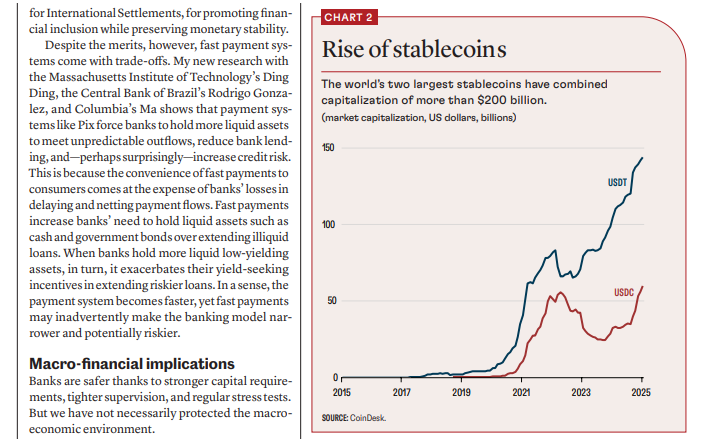 The majority of stablecoins—USDT, USDC, DAI, and institutional variants—are issued on or primarily transact through Ethereum. Every stablecoin transfer burns ETH. If stablecoin volume reaches $40 trillion annually by 2050, the annual ETH burn from stablecoin transactions alone could exceed 2 million ETH per year—creating a powerful deflationary force that supports even the most aggressive price targets.
Disclaimer:
Ethereum Price Prediction 2040-2050 Cryptocurrency investments, including Ethereum, are highly volatile and subject to market risks. The price predictions mentioned are based on current trends, historical data, and speculative analysis, and they do not guarantee future results.